
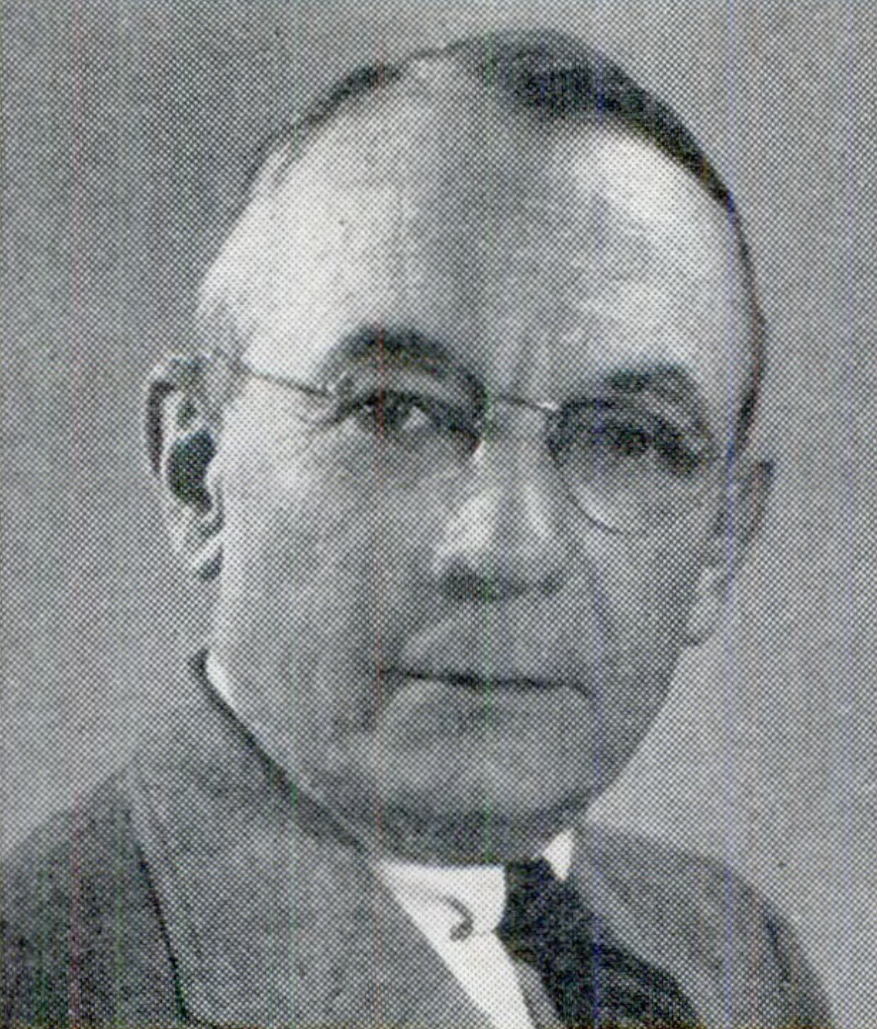
Historical · U.S. House · Pennsylvania · District 19
Simon Stauffer
Former U.S. Representative · Pennsylvania District 19 · 1953–1959 · Republican
Simon Stauffer represented Pennsylvania's District 19 in the United States House of Representatives (1953–1959) for the Republican party. The page below collects sourced biographical facts, term history, committee roles, and provenance for Stauffer.
Bioguide ID: S000819
Key facts
- Full name
- Simon Stauffer
- State
- Pennsylvania
- District
- District 19
- Party
- Republican
- House service
- 1953–1959
- First House term
- 1953
- Status
- Left office
- Current term ends
- —
- Born
- 1888
- Bioguide ID
- S000819
- Committee assignments
- —
- Dataset version
- 1.20260605
Biographical narrative
954 words · sourced from the Wikipedia REST extract
Simon Stauffer was a prominent figure in Pennsylvania's political landscape during the mid-20th century, serving as a U.S. Representative for the state's 19th congressional district. A member of the Republican Party, Stauffer's congressional career spanned two terms, during which he engaged in significant legislative activities, including his support for civil rights legislation. His professional background was rooted in the manufacturing sector, particularly in the lime and stone industries, and he held various leadership roles in both business and civic organizations throughout his life.
Early life and career
Simon Walter Stauffer was born on August 13, 1888, in Walkersville, Maryland. His early education culminated in his graduation from Dickinson College, located in Carlisle, Pennsylvania, in 1912. This academic foundation would later inform his professional endeavors and community involvement. Following his graduation, Stauffer relocated to York, Pennsylvania, in 1915, where he began to establish his career.
In York, Stauffer engaged in the manufacturing of lime, crushed stone, and refractory dolomite from 1916 until 1936. This period marked the beginning of his significant contributions to the local economy and industry. His work in these sectors not only provided him with a substantial understanding of manufacturing processes but also positioned him as a key player in the regional economic landscape.
Stauffer's professional trajectory continued to evolve as he took on various leadership roles. He served as the president of the National Lime Association in Washington, D.C., from 1936 to 1946, a position that underscored his expertise and influence in the lime industry at a national level. His leadership in this organization likely contributed to his understanding of broader economic and regulatory issues, which would later inform his political career.
In addition to his work in manufacturing, Stauffer was actively involved in community service and governance. He was appointed as the chairman of the York City Housing Authority from 1949 to 1952, a role that would have required him to address housing issues and urban development in the city. Furthermore, he served as vice president and chairman of the executive committee of the York County Gas Company from 1950 to 1960, further demonstrating his commitment to local infrastructure and public utilities.
Stauffer's engagement with Dickinson College continued throughout his life, as he was appointed a trustee of the institution in 1930, a position he held until his passing. His long-term association with the college reflects his dedication to education and community development.
In addition to his professional and civic responsibilities, Stauffer was also involved in timbering operations, owning a large tract of woodland from 1947 to 1960. This venture not only diversified his business interests but also connected him to the natural resources sector, which was significant in Pennsylvania's economy.
House tenure
Stauffer's political career began in earnest when he was elected as a Republican to the 83rd United States Congress, representing Pennsylvania's 19th congressional district. His election marked a significant achievement, as he successfully defeated the incumbent Democratic Congressman James F. Lind. This victory indicated Stauffer's growing influence and support within his district, as well as the shifting political dynamics of the time.
Stauffer's first term in Congress began in 1953, during a period characterized by significant national and international challenges, including the Cold War and civil rights movements. His tenure in the House of Representatives was marked by active participation in legislative discussions and decisions that would shape the future of the nation.
Despite his initial success, Stauffer faced challenges in subsequent elections. He was an unsuccessful candidate for reelection in 1954 against Democrat James M. Quigley. However, Stauffer's political career was not over, as he engaged in a rematch against Quigley in 1956 and was elected to the 85th United States Congress. This second term allowed him to continue his legislative work and further establish his political presence.
Stauffer's time in Congress came to an end when he was again unsuccessful in his bid for reelection in 1958, losing to Quigley once more. His congressional career, while relatively brief, was marked by significant political engagement and a commitment to his constituents.
Legislative focus and committees
During his time in the House of Representatives, Stauffer's legislative focus included a range of issues pertinent to his constituents and the broader national context. Notably, he voted in favor of the Civil Rights Act of 1957, a landmark piece of legislation aimed at addressing racial discrimination and protecting voting rights for African Americans. This vote reflects Stauffer's engagement with the pressing social issues of his time and his willingness to support measures aimed at promoting civil rights.
Stauffer's participation in various committees during his congressional tenure allowed him to influence policy and contribute to discussions on key issues. While specific committee assignments are not detailed in the available information, it can be inferred that his background in manufacturing and local governance would have informed his contributions to committees focused on economic development, infrastructure, and public utilities.
His experiences in the lime and stone industries, along with his leadership roles in local organizations, likely provided him with a unique perspective on the challenges facing his constituents. This background would have been valuable in addressing issues related to economic growth, job creation, and community development during his time in office.
Stauffer's legislative work and committee involvement contributed to the broader discourse on important national issues, and his support for civil rights legislation positioned him as a participant in the evolving political landscape of the 1950s.
Following his departure from Congress in 1959, Stauffer continued to be involved in various business and civic activities until his death on September 26, 1975, in York, Pennsylvania. He was interred in Prospect Hill Cemetery, leaving behind a legacy of public service and community engagement that reflected his commitment to the people of Pennsylvania.
Notable legislation
Sponsored and co-sponsored legislation for Simon Stauffer is pending operator curation. The biographical narrative above carries the same provenance trail until per-bill rows are written.
Sources
- [1]https://en.wikipedia.org/wiki/S._Walter_StaufferWikipedia · retrieved 2026-06-05
Notable quotes
Sourced quotes for Simon Stauffer are pending operator curation. Narrative-scope provenance remains attached below.
Sources
- [1]https://en.wikipedia.org/wiki/S._Walter_StaufferWikipedia · retrieved 2026-06-05
Key positions
Curated policy positions for Simon Stauffer are pending operator review. The biographical narrative above carries the same provenance trail until per-topic positions are written.
Sources
- [1]https://en.wikipedia.org/wiki/S._Walter_StaufferWikipedia · retrieved 2026-06-05
Terms served
- 1953–1955U.S. House · Term 1 · Republican
- 1957–1959U.S. House · Term 2 · Republican
Sources & provenance
Every attributable claim above carries a per-section [N] marker that resolves to the corresponding URL below. Each entry records the upstream provider, the canonical URL, and the timestamp at which the source was retrieved by the ingest pipeline.
Key facts
- https://bioguide.congress.gov/search/bio/S000819bioguide · retrieved 2026-06-05
- https://www.govtrack.us/congress/members/410284govtrack · retrieved 2026-06-05
Biographical narrative
- https://en.wikipedia.org/wiki/S._Walter_Staufferwikipedia · retrieved 2026-06-05
Find your representative
Every U.S. state elects representatives by district. Browse Pennsylvania’s delegation, the full former-representative roster, or explore the role and term length.
Related on The Candidate
- Preceded by Guy SwopeEarlier holder of the Pennsylvania District 19 House seat · Democratic.Open
- Succeeded by George GoodlingLater holder of the Pennsylvania District 19 House seat · Republican.Open
- Adam SeybertFormer U.S. Representative · Pennsylvania District 1 · RepublicanOpen
- Benjamin SayFormer U.S. Representative · Pennsylvania District 1 · RepublicanOpen
- Chapman FreemanFormer U.S. Representative · Pennsylvania District 1 · RepublicanOpen
- Harry RansleyFormer U.S. Representative · Pennsylvania District 1 · RepublicanOpen