
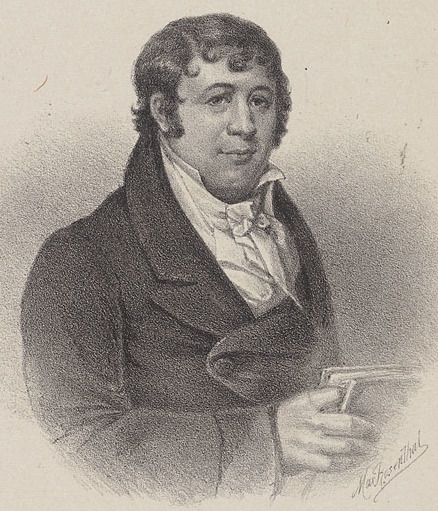
Historical · U.S. House · Pennsylvania · District 2
Joseph Hemphill
Former U.S. Representative · Pennsylvania District 2 · 1801–1831 · Jackson
Joseph Hemphill represented Pennsylvania's District 2 in the United States House of Representatives (1801–1831) for the Jackson party. The page below collects sourced biographical facts, term history, committee roles, and provenance for Hemphill.
Bioguide ID: H000470
Key facts
- Full name
- Joseph Hemphill
- State
- Pennsylvania
- District
- District 2
- Party
- Jackson
- House service
- 1801–1831
- First House term
- 1801
- Status
- Left office
- Current term ends
- —
- Born
- 1770
- Bioguide ID
- H000470
- Committee assignments
- —
- Dataset version
- 1.20260606
Biographical narrative
1,012 words · sourced from the Wikipedia REST extract
Joseph Hemphill was an American politician who served multiple terms as a U.S. Representative from Pennsylvania, representing various congressional districts during his political career. A member of the Jacksonian party, Hemphill's legislative service spanned from the early 19th century until the early 1830s. His career was marked by his involvement in significant political issues of the time, including infrastructure development and the contentious debates surrounding slavery and Native American policies. Hemphill was also active in state politics, serving in the Pennsylvania House of Representatives at different points in his life. He was born on January 7, 1770, and passed away on May 29, 1842.
Early life and career
Joseph Hemphill was born in Thornbury Township, Pennsylvania, to Joseph and Ann (Wills) Hemphill. His early life in the Province of Pennsylvania set the stage for his future endeavors in law and politics. Hemphill pursued higher education at the University of Pennsylvania in Philadelphia, where he graduated in 1791. Following his graduation, he studied law under the guidance of Thomas Ross, a prominent figure in the legal community. Hemphill was admitted to the bar in 1793 and began his legal practice in West Chester, Pennsylvania.
His entry into politics began in the late 18th century when he was elected to the Pennsylvania House of Representatives, serving from 1797 to 1800. This early experience in state politics provided him with a foundation for his later congressional career. In 1801, Hemphill was elected as a Federalist to represent Pennsylvania's 3rd congressional district in the U.S. House of Representatives, marking the beginning of his long tenure in federal office. He served in this capacity until 1803, during which time he was involved in the legislative processes of the early republic.
After his initial term in Congress, Hemphill relocated to Philadelphia in 1803. He continued his political involvement by returning to the Pennsylvania House of Representatives in 1805. His legal expertise and political experience led to his appointment as the first president judge of the district court of the city and county of Philadelphia, a position that underscored his standing in the legal and political community.
House tenure
Hemphill's congressional career was characterized by multiple terms and a shift in party affiliation. After serving as a Federalist in the early 1800s, he transitioned to the Jacksonian party, reflecting the evolving political landscape of the time. He was elected as a Federalist representative for Pennsylvania's 1st congressional district in the Sixteenth and Seventeenth Congresses, serving from 1819 to 1823. His political alignment shifted again when he was elected as a Jackson Federalist to represent Pennsylvania's 2nd congressional district in the Eighteenth Congress. He was subsequently re-elected as a Jacksonian to the Nineteenth Congress, serving until his resignation in 1826.
In 1829, Hemphill returned to Congress as a Jacksonian representative for Pennsylvania's 3rd congressional district, where he served until 1831. Throughout his tenure in the House, Hemphill participated in various legislative debates and discussions that were pivotal to the nation’s development during the early 19th century. His experience in both the state and federal legislatures provided him with a unique perspective on the issues facing the young nation.
During his time in Congress, Hemphill introduced a bill in 1824 that aimed to utilize military personnel for conducting surveys and estimating costs related to the construction of roads and canals. This initiative reflected the growing importance of infrastructure in the United States, as the nation sought to improve transportation and connectivity. Hemphill's focus on infrastructure was indicative of the broader economic and developmental goals of the era.
Legislative focus and committees
Hemphill's legislative focus encompassed a range of issues, notably including infrastructure development and social justice. He was an advocate for anti-slavery measures and expressed his views against slavery in Congress, particularly highlighting the plight of enslaved individuals in Missouri. Hemphill characterized slavery as "the forcible oppression of otherwise powerless people," demonstrating his commitment to social justice and human rights during a time when such views were contentious.
His involvement in the debates surrounding the Indian Removal Act also illustrated the complexities of his political stance. While he supported President Andrew Jackson, he faced pressure from his Quaker constituents, who opposed the removal of Native Americans from their lands. Hemphill proposed delaying the implementation of the Indian Removal Act to allow for surveys of the lands designated for Native American relocation. However, his proposal was ultimately voted down, reflecting the contentious nature of the issue and the challenges faced by politicians who sought to balance competing interests.
In addition to his legislative work, Hemphill's political career was marked by his participation in various committees, where he contributed to discussions on critical national issues. His experience in both the state and federal legislatures allowed him to navigate the complexities of governance and advocate for policies that aligned with his principles.
Hemphill's political career extended beyond his time in Congress. He returned to the Pennsylvania House of Representatives in 1831 and served until 1832, further demonstrating his ongoing commitment to public service. His involvement in both state and federal politics provided him with a comprehensive understanding of the political landscape and the issues facing his constituents.
In his personal life, Hemphill was known for his connections to notable figures and his contributions to local culture. He purchased the Historic Strawberry Mansion in Fairmount Park in 1821, which he used as a summer residence. The mansion became a venue for entertaining distinguished guests, including prominent politicians and international figures.
Joseph Hemphill passed away on May 29, 1842, in Philadelphia, leaving behind a legacy of public service and political engagement. His contributions to the U.S. House of Representatives and the Pennsylvania House of Representatives reflect a commitment to addressing the pressing issues of his time, including infrastructure, social justice, and the rights of marginalized communities. His family continued his legacy, with a descendant, Alexander Hemphill, serving as City Controller for Philadelphia from 1958 to 1968. Hemphill's life and career exemplify the complexities of American politics in the early 19th century and the evolving nature of political thought and action during that period.
Notable legislation
Sponsored and co-sponsored legislation for Joseph Hemphill is pending operator curation. The biographical narrative above carries the same provenance trail until per-bill rows are written.
Sources
- [1]https://en.wikipedia.org/wiki/Joseph_HemphillWikipedia · retrieved 2026-06-06
Notable quotes
Sourced quotes for Joseph Hemphill are pending operator curation. Narrative-scope provenance remains attached below.
Sources
- [1]https://en.wikipedia.org/wiki/Joseph_HemphillWikipedia · retrieved 2026-06-06
Key positions
Curated policy positions for Joseph Hemphill are pending operator review. The biographical narrative above carries the same provenance trail until per-topic positions are written.
Sources
- [1]https://en.wikipedia.org/wiki/Joseph_HemphillWikipedia · retrieved 2026-06-06
Terms served
- 1801–1803U.S. House · Term 1 · Federalist
- 1819–1821U.S. House · Term 2 · Federalist
- 1821–1823U.S. House · Term 3 · Federalist
- 1823–1825U.S. House · Term 4 · Federalist
- 1825–1827U.S. House · Term 5 · Jackson
- 1829–1831U.S. House · Term 6 · Jackson
Sources & provenance
Every attributable claim above carries a per-section [N] marker that resolves to the corresponding URL below. Each entry records the upstream provider, the canonical URL, and the timestamp at which the source was retrieved by the ingest pipeline.
Key facts
- https://bioguide.congress.gov/search/bio/H000470bioguide · retrieved 2026-06-06
- https://www.govtrack.us/congress/members/405333govtrack · retrieved 2026-06-06
Biographical narrative
- https://en.wikipedia.org/wiki/Joseph_Hemphillwikipedia · retrieved 2026-06-06
Find your representative
Every U.S. state elects representatives by district. Browse Pennsylvania’s delegation, the full former-representative roster, or explore the role and term length.
Related on The Candidate
- Preceded by Blair McClenachanEarlier holder of the Pennsylvania District 2 House seat · Republican.Open
- Succeeded by Henry HornLater holder of the Pennsylvania District 2 House seat · Jackson.Open
- Adam SeybertFormer U.S. Representative · Pennsylvania District 1 · RepublicanOpen
- Benjamin SayFormer U.S. Representative · Pennsylvania District 1 · RepublicanOpen
- Chapman FreemanFormer U.S. Representative · Pennsylvania District 1 · RepublicanOpen
- Harry RansleyFormer U.S. Representative · Pennsylvania District 1 · RepublicanOpen