
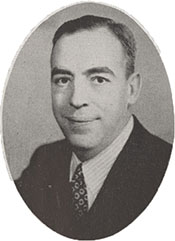
Historical · U.S. House · Pennsylvania · District 2
Joseph Pratt
Former U.S. Representative · Pennsylvania District 2 · 1943–1945 · Republican
Joseph Pratt represented Pennsylvania's District 2 in the United States House of Representatives (1943–1945) for the Republican party. The page below collects sourced biographical facts, term history, committee roles, and provenance for Pratt.
Bioguide ID: P000503
Key facts
- Full name
- Joseph Pratt
- State
- Pennsylvania
- District
- District 2
- Party
- Republican
- House service
- 1943–1945
- First House term
- 1943
- Status
- Left office
- Current term ends
- —
- Born
- 1891
- Bioguide ID
- P000503
- Committee assignments
- —
- Dataset version
- 1.20260605
Biographical narrative
857 words · sourced from the Wikipedia REST extract
Joseph Pratt was a Republican politician who served as a U.S. Representative for Pennsylvania's 2nd congressional district during the early 1940s. His tenure in the House of Representatives was marked by a brief but notable involvement in national legislation, particularly during a time of significant change in the United States. Pratt's political career was preceded by a background in business and local political engagement, which laid the foundation for his entry into federal office.
Early life and career
Joseph Marmaduke Pratt was born on September 4, 1891, in Paterson, New Jersey. Shortly after his birth, his family relocated to Philadelphia, Pennsylvania, in 1892. This move to a major urban center would play a significant role in shaping his future endeavors. Pratt pursued higher education at Temple University in Philadelphia, where he graduated in 1919. Following his academic achievements, he entered the business sector, focusing on the manufacturing of industrial and marine products. This experience in business likely provided him with insights into the economic challenges and opportunities facing his constituents.
In addition to his business pursuits, Pratt became actively involved in local politics. He was a member of the Republican City Committee of Philadelphia from 1937 until 1946, which allowed him to build a network within the party and gain experience in political organization and strategy. His involvement in local politics set the stage for his eventual election to the U.S. Congress.
House tenure
Pratt's congressional career began when he was elected to fill a vacancy in the U.S. House of Representatives caused by the resignation of James P. McGranery. He successfully defeated William A. Barrett, a future congressman, to secure his seat. Pratt was inaugurated on February 8, 1944, and served during the 78th Congress. His time in office was relatively short, lasting less than a year, as he was redistricted to Pennsylvania's 3rd district, where he faced Democratic incumbent Michael J. Bradley in the 1944 election. Ultimately, Pratt lost this election and concluded his term on January 3, 1945.
During his brief tenure, Pratt participated in a total of 44 votes, missing approximately 10.7 percent of roll call votes. His voting record was generally aligned with conservative principles, although he voted with his party slightly less frequently than the median Republican of his time. Specifically, he supported his party's positions 84 percent of the time, compared to the median Republican score of 88 percent. One of the most significant pieces of legislation he supported was the G.I. Bill, which aimed to provide various benefits to returning World War II veterans. This legislation was signed into law by President Franklin D. Roosevelt on June 22, 1944, and represented a pivotal moment in American history, as it facilitated the reintegration of veterans into civilian life.
During his time in Congress, Pratt served on the House War Claims Committee, which dealt with issues related to claims arising from World War II. His involvement in this committee reflected the broader national concerns of the time, as the United States was still deeply engaged in the war effort and its aftermath.
Legislative focus and committees
Pratt's legislative focus during his time in the House was shaped by the context of World War II and the immediate post-war period. His support for the G.I. Bill highlighted his commitment to addressing the needs of veterans, a significant demographic that required assistance in transitioning back to civilian life after military service. This legislation was crucial for providing educational benefits, housing assistance, and other forms of support to millions of returning servicemen and women, thereby influencing the social and economic landscape of the nation.
As a member of the House War Claims Committee, Pratt was involved in discussions and decisions regarding the compensation and claims related to wartime activities. This role was essential during a time when many individuals and families were seeking redress for losses incurred during the war. His participation in this committee indicated an awareness of the complexities and challenges faced by those affected by the conflict, as well as a commitment to addressing these issues through legislative action.
Despite his relatively short time in office, Pratt's voting record and committee assignments suggest a focus on issues pertinent to his constituents and the broader national interest during a critical period in American history. His conservative stance aligned with the Republican Party's platform of the time, reflecting the political dynamics of the era.
After leaving Congress, Pratt returned to his business pursuits in Philadelphia. In 1946, he sought to re-enter the political arena by receiving the Republican nomination for State Senator in Pennsylvania's second state senate district. However, he passed away from a heart attack in Washington, D.C., while on a business trip before the election could take place. Pratt was interred in Arlington Cemetery in Upper Darby Township, Pennsylvania, marking the end of his life and career.
Joseph Pratt's political journey, though brief, was characterized by his engagement in significant legislative issues and his commitment to serving his constituents during a transformative period in American history. His background in business and local politics provided him with a unique perspective that influenced his approach to governance and legislative priorities.
Notable legislation
Sponsored and co-sponsored legislation for Joseph Pratt is pending operator curation. The biographical narrative above carries the same provenance trail until per-bill rows are written.
Sources
- [1]https://en.wikipedia.org/wiki/Joseph_Marmaduke_PrattWikipedia · retrieved 2026-06-05
Notable quotes
Sourced quotes for Joseph Pratt are pending operator curation. Narrative-scope provenance remains attached below.
Sources
- [1]https://en.wikipedia.org/wiki/Joseph_Marmaduke_PrattWikipedia · retrieved 2026-06-05
Key positions
Curated policy positions for Joseph Pratt are pending operator review. The biographical narrative above carries the same provenance trail until per-topic positions are written.
Sources
- [1]https://en.wikipedia.org/wiki/Joseph_Marmaduke_PrattWikipedia · retrieved 2026-06-05
Terms served
- 1943–1945U.S. House · Term 1 · Republican
Sources & provenance
Every attributable claim above carries a per-section [N] marker that resolves to the corresponding URL below. Each entry records the upstream provider, the canonical URL, and the timestamp at which the source was retrieved by the ingest pipeline.
Key facts
- https://bioguide.congress.gov/search/bio/P000503bioguide · retrieved 2026-06-05
- https://www.govtrack.us/congress/members/408888govtrack · retrieved 2026-06-05
Biographical narrative
- https://en.wikipedia.org/wiki/Joseph_Marmaduke_Prattwikipedia · retrieved 2026-06-05
Find your representative
Every U.S. state elects representatives by district. Browse Pennsylvania’s delegation, the full former-representative roster, or explore the role and term length.
Related on The Candidate
- Preceded by William WilsonEarlier holder of the Pennsylvania District 2 House seat · Republican.Open
- Succeeded by William GranahanLater holder of the Pennsylvania District 2 House seat · Democratic.Open
- Adam SeybertFormer U.S. Representative · Pennsylvania District 1 · RepublicanOpen
- Benjamin SayFormer U.S. Representative · Pennsylvania District 1 · RepublicanOpen
- Chapman FreemanFormer U.S. Representative · Pennsylvania District 1 · RepublicanOpen
- Harry RansleyFormer U.S. Representative · Pennsylvania District 1 · RepublicanOpen