
Historical · U.S. House · Pennsylvania · District 2
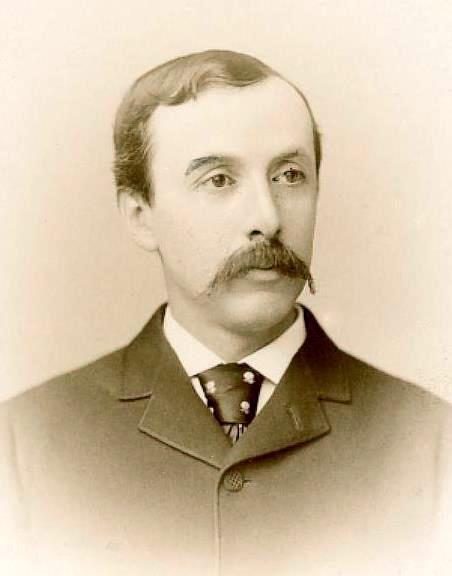
Robert Adams Jr.
Former U.S. Representative · Pennsylvania District 2 · 1893–1907 · Republican
Robert Adams Jr. represented Pennsylvania's District 2 in the United States House of Representatives (1893–1907) for the Republican party. The page below collects sourced biographical facts, term history, committee roles, and provenance for Jr..
Bioguide ID: A000044
Key facts
- Full name
- Robert Adams Jr.
- State
- Pennsylvania
- District
- District 2
- Party
- Republican
- House service
- 1893–1907
- First House term
- 1893
- Status
- Left office
- Current term ends
- —
- Born
- 1849
- Bioguide ID
- A000044
- Committee assignments
- —
- Dataset version
- 1.20260606
Biographical narrative
834 words · sourced from the Wikipedia REST extract
Robert Adams Jr. was an American politician and diplomat who served as a Republican member of the U.S. House of Representatives for Pennsylvania's 2nd congressional district from 1893 until 1906. His political career was marked by significant roles, including his tenure as the United States Minister to Brazil and his involvement in various legislative committees during his time in Congress. Adams's life and career were characterized by a blend of public service, military involvement, and personal challenges, culminating in his tragic death in 1906.
Early life and career
Robert Adams Jr. was born on February 26, 1849, in Philadelphia, Pennsylvania, to Robert and Matilda Maybin Hart Adams. He pursued higher education at the University of Pennsylvania, where he graduated in 1869 and became a member of St. Anthony Hall, a literary and social society. Following his graduation, Adams attended Doctor Fairies Physical Institute in Philadelphia, which focused on physical education and health. He later studied law under the guidance of George W. Biddle and was admitted to the bar in 1872; however, he did not practice law professionally.
Adams's early career included a significant role in the United States Geological Survey, where he participated in the explorations of Yellowstone National Park from 1871 to 1875. His involvement in this groundbreaking survey contributed to the understanding and preservation of one of America's most iconic natural landscapes. In addition to his work with the Geological Survey, Adams was active in the Pennsylvania National Guard from 1881 to 1895, where he held the rank of major and served as judge-advocate. His military service included a position as aide-de-camp on the staff of Governor James Beaver of Pennsylvania, where he achieved the rank of lieutenant-colonel in 1885.
Adams's personal life included a notable incident in 1880, when he participated in a duel with Dr. James William White, a fellow member of the First Troop Philadelphia City Cavalry. The duel arose from a disagreement over military uniform permissions, and although both men fired at each other, neither was injured. This event highlighted the social customs of the time regarding honor and conflict resolution.
In 1889, Adams was appointed as the United States Minister to Brazil, a diplomatic role he held until June 1, 1890. His tenure in Brazil was part of a broader engagement with international relations during a period when the United States was expanding its diplomatic presence in Latin America.
House tenure
Robert Adams Jr. entered the U.S. House of Representatives on December 19, 1893, after being elected to fill the vacancy left by the death of Charles O'Neill. He represented Pennsylvania's 2nd congressional district and was re-elected multiple times, serving a total of seven terms in Congress until his death in 1906. His legislative career spanned the 53rd through the 58th Congresses.
During his time in the House, Adams was involved in significant legislative actions, particularly in matters related to foreign affairs. He served as the acting chairman of the Committee on Foreign Affairs, where he played a role in reporting the Cuban resolutions and the declaration of war against Spain. This period was marked by heightened tensions and military engagements, particularly in the context of the Spanish-American War, which began in 1898. Adams's contributions to these discussions reflected the growing importance of foreign policy in American governance during the late 19th century.
In addition to his work on foreign affairs, Adams was a member of various other committees throughout his congressional career. His involvement in these committees allowed him to influence a range of legislative issues, although specific details about his committee assignments and legislative initiatives are not extensively documented.
Legislative focus and committees
Adams's legislative focus during his tenure in the House of Representatives encompassed a variety of issues, with a notable emphasis on foreign policy and military affairs. His role as acting chairman of the Committee on Foreign Affairs positioned him at the forefront of discussions regarding the United States' international engagements, particularly during a time of significant geopolitical change.
In addition to foreign affairs, Adams's committee work likely included participation in discussions on domestic policies, although specific details about his contributions to domestic legislation are not well-documented. His experience as a diplomat and his military background may have informed his perspectives on issues related to national security and international relations.
Throughout his congressional career, Adams was also known for his contributions to periodicals and public lectures, indicating a commitment to civic engagement and public discourse. His involvement in various societies, such as the Historical Society of Pennsylvania and the Society of the Cincinnati, further demonstrates his interest in history and heritage.
Robert Adams Jr. passed away on June 1, 1906, in Washington, D.C., by suicide, following significant financial difficulties related to stock speculation. His death marked the end of a complex and multifaceted career in public service. He was interred at Laurel Hill Cemetery in Philadelphia, Pennsylvania. Adams's life and career reflect the intricate interplay of politics, diplomacy, and personal challenges in the late 19th and early 20th centuries.
Notable legislation
Sponsored and co-sponsored legislation for Robert Adams Jr. is pending operator curation. The biographical narrative above carries the same provenance trail until per-bill rows are written.
Sources
- [1]https://en.wikipedia.org/wiki/Robert_Adams_Jr.Wikipedia · retrieved 2026-06-06
Notable quotes
Sourced quotes for Robert Adams Jr. are pending operator curation. Narrative-scope provenance remains attached below.
Sources
- [1]https://en.wikipedia.org/wiki/Robert_Adams_Jr.Wikipedia · retrieved 2026-06-06
Key positions
Curated policy positions for Robert Adams Jr. are pending operator review. The biographical narrative above carries the same provenance trail until per-topic positions are written.
Sources
- [1]https://en.wikipedia.org/wiki/Robert_Adams_Jr.Wikipedia · retrieved 2026-06-06
Terms served
- 1893–1895U.S. House · Term 1 · Republican
- 1895–1897U.S. House · Term 2 · Republican
- 1897–1899U.S. House · Term 3 · Republican
- 1899–1901U.S. House · Term 4 · Republican
- 1901–1903U.S. House · Term 5 · Republican
- 1903–1905U.S. House · Term 6 · Republican
- 1905–1907U.S. House · Term 7 · Republican
Sources & provenance
Every attributable claim above carries a per-section [N] marker that resolves to the corresponding URL below. Each entry records the upstream provider, the canonical URL, and the timestamp at which the source was retrieved by the ingest pipeline.
Key facts
- https://bioguide.congress.gov/search/bio/A000044bioguide · retrieved 2026-06-06
- https://www.govtrack.us/congress/members/400705govtrack · retrieved 2026-06-06
Biographical narrative
- https://en.wikipedia.org/wiki/Robert_Adams_Jr.wikipedia · retrieved 2026-06-06
Find your representative
Every U.S. state elects representatives by district. Browse Pennsylvania’s delegation, the full former-representative roster, or explore the role and term length.
Related on The Candidate
- Preceded by John CreelyEarlier holder of the Pennsylvania District 2 House seat · Ind. Republican.Open
- Succeeded by Joel CookLater holder of the Pennsylvania District 2 House seat · Republican.Open
- Adam SeybertFormer U.S. Representative · Pennsylvania District 1 · RepublicanOpen
- Benjamin SayFormer U.S. Representative · Pennsylvania District 1 · RepublicanOpen
- Chapman FreemanFormer U.S. Representative · Pennsylvania District 1 · RepublicanOpen
- Harry RansleyFormer U.S. Representative · Pennsylvania District 1 · RepublicanOpen