
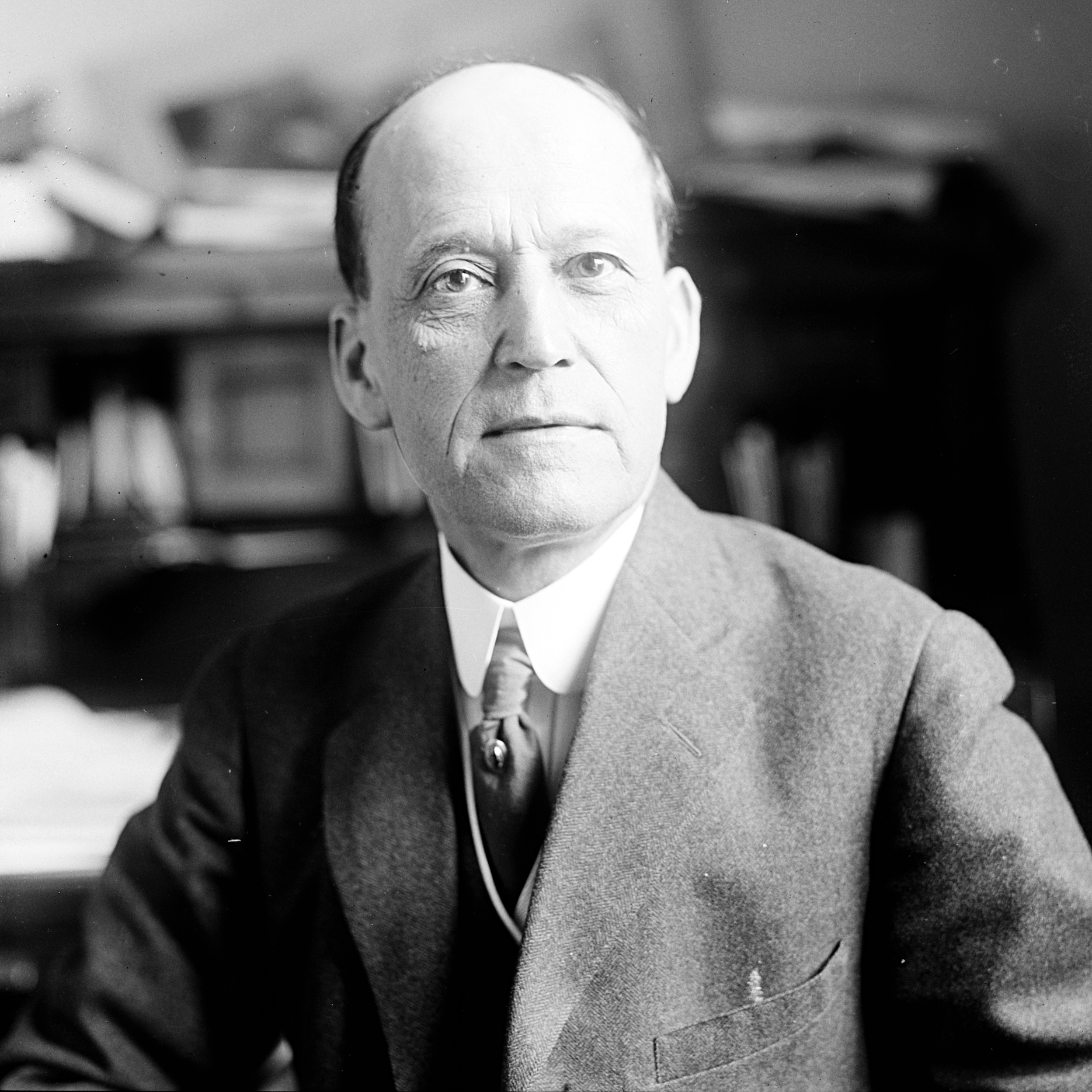
Historical · U.S. House · Pennsylvania · District 20
Anderson Walters
Former U.S. Representative · Pennsylvania District 20 · 1913–1927 · Republican
Anderson Walters represented Pennsylvania's District 20 in the United States House of Representatives (1913–1927) for the Republican party. The page below collects sourced biographical facts, term history, committee roles, and provenance for Walters.
Bioguide ID: W000109
Key facts
- Full name
- Anderson Walters
- State
- Pennsylvania
- District
- District 20
- Party
- Republican
- House service
- 1913–1927
- First House term
- 1913
- Status
- Left office
- Current term ends
- —
- Born
- 1862
- Bioguide ID
- W000109
- Committee assignments
- —
- Dataset version
- 1.20260606
Biographical narrative
970 words · sourced from the Wikipedia REST extract
Anderson Walters was a Republican politician who served as a U.S. Representative for Pennsylvania's 20th congressional district. His tenure in the House of Representatives spanned from 1913 until 1927, during which he was involved in various legislative activities and held significant committee positions. Born in 1862 in Johnstown, Pennsylvania, Walters had a diverse career before entering politics, including roles in the railroad and utility sectors, as well as in local governance and media.
Early life and career
Anderson Howell Walters was born on May 18, 1862, in Johnstown, Pennsylvania. He received his education in the local public school system and graduated from Johnstown High School in 1878. Following his graduation, Walters began his professional career as a telegrapher and clerk with the Pennsylvania Railroad Company, a position he held from 1878 to 1880. This early experience in the railroad industry provided him with insights into the transportation sector, which would later inform his legislative work.
In 1881, Walters transitioned to the utility sector, joining the Johnstown Water Company and the Johnstown Gas Company. His dedication and capabilities led to his promotion to assistant superintendent in 1889. By 1895, he had ascended to the role of general manager and secretary of these companies, a position he maintained until 1902. His work in these capacities not only established him as a prominent figure in local business but also allowed him to develop a network of connections that would be beneficial in his political career.
Walters was actively involved in local Republican politics, serving as a delegate to multiple Republican State conventions in the 1890s and early 1900s, including the 1896 Republican National Convention. His leadership skills were further demonstrated when he served as the chairman of the Republican city committee from 1896 to 1899 and as a member of the Republican State committee from 1898 to 1902. In addition to his political engagements, Walters was a member of the Johnstown City Council from 1900 to 1904, where he contributed to local governance and community development.
In 1902, Walters became the editor and proprietor of the Johnstown Tribune, a role that allowed him to influence public opinion and engage with the community on various issues. His commitment to civic engagement was further exemplified in 1907 when he was elected to the board of trustees of the Johnstown Savings Bank. In 1917, he played a pivotal role in the establishment of the Rotary Club of Johnstown, serving as its first president, which highlighted his dedication to community service and leadership.
House tenure
Anderson Walters was first elected to the U.S. House of Representatives as a Republican in 1912, representing Pennsylvania's 20th congressional district. His initial term began in 1913, marking the start of a significant political career in the federal legislature. Walters served a total of four terms in the House, during which he was involved in various legislative initiatives and discussions pertinent to his constituents and the nation.
During his congressional career, Walters was elected to the Sixty-third Congress and subsequently to the Sixty-sixth and Sixty-seventh Congresses. Notably, he served as the Chairman of the United States House Committee on Expenditures in the Department of Labor during the Sixty-sixth and Sixty-seventh Congresses. This role placed him at the forefront of discussions regarding labor expenditures and policies, reflecting the growing importance of labor issues during this period in American history.
Despite his active participation in Congress, Walters chose not to seek renomination after his terms in the Sixty-third, Sixty-sixth, and Sixty-seventh Congresses. He returned to the House for a final term in the Sixty-ninth Congress, again opting not to pursue further political office after that term concluded. His decision not to seek renomination after multiple terms indicates a strategic approach to his political career, allowing him to focus on his legislative responsibilities without the pressures of continuous campaigning.
Walters's time in the House concluded on March 4, 1927, marking the end of his congressional service. He returned to his hometown of Johnstown, where he continued to be involved in local affairs until his death on December 7, 1927. His interment took place in Grandview Cemetery in Johnstown, Pennsylvania, where he is remembered as a significant figure in the local and state political landscape.
Legislative focus and committees
Throughout his tenure in the U.S. House of Representatives, Anderson Walters focused on various legislative issues that were relevant to his constituents and the broader national context. His role as Chairman of the House Committee on Expenditures in the Department of Labor during the Sixty-sixth and Sixty-seventh Congresses positioned him to influence labor-related policies and expenditures, a crucial area of concern during the early 20th century as the nation faced numerous economic and social challenges.
Walters's legislative focus reflected the interests and needs of his district, which included issues related to labor, infrastructure, and public services. His background in the utility sector likely informed his understanding of the importance of reliable public services, which would have been a priority for his constituents. Additionally, his experience in local governance and business provided him with a practical perspective on the challenges faced by communities in Pennsylvania.
While specific legislative achievements during Walters's terms are not detailed, his committee leadership and participation in congressional debates suggest that he was actively engaged in shaping policies that affected labor and economic conditions. His involvement in the Republican Party at both the state and national levels also indicates that he was part of broader political discussions and strategies during a transformative period in American history.
In summary, Anderson Walters's career as a U.S. Representative was marked by his commitment to public service and his active participation in legislative processes. His background in local business and governance, combined with his leadership roles within the Republican Party, positioned him as a significant figure in Pennsylvania's political landscape during the early 20th century.
Notable legislation
Sponsored and co-sponsored legislation for Anderson Walters is pending operator curation. The biographical narrative above carries the same provenance trail until per-bill rows are written.
Sources
- [1]https://en.wikipedia.org/wiki/Anderson_H._WaltersWikipedia · retrieved 2026-06-06
Notable quotes
Sourced quotes for Anderson Walters are pending operator curation. Narrative-scope provenance remains attached below.
Sources
- [1]https://en.wikipedia.org/wiki/Anderson_H._WaltersWikipedia · retrieved 2026-06-06
Key positions
Curated policy positions for Anderson Walters are pending operator review. The biographical narrative above carries the same provenance trail until per-topic positions are written.
Sources
- [1]https://en.wikipedia.org/wiki/Anderson_H._WaltersWikipedia · retrieved 2026-06-06
Terms served
- 1913–1915U.S. House · Term 1 · Republican
- 1919–1921U.S. House · Term 2 · Republican
- 1921–1923U.S. House · Term 3 · Republican
- 1925–1927U.S. House · Term 4 · Republican
Sources & provenance
Every attributable claim above carries a per-section [N] marker that resolves to the corresponding URL below. Each entry records the upstream provider, the canonical URL, and the timestamp at which the source was retrieved by the ingest pipeline.
Key facts
- https://bioguide.congress.gov/search/bio/W000109bioguide · retrieved 2026-06-06
- https://www.govtrack.us/congress/members/411287govtrack · retrieved 2026-06-06
Biographical narrative
- https://en.wikipedia.org/wiki/Anderson_H._Walterswikipedia · retrieved 2026-06-06
Find your representative
Every U.S. state elects representatives by district. Browse Pennsylvania’s delegation, the full former-representative roster, or explore the role and term length.
Related on The Candidate
- Preceded by Joseph ThroppEarlier holder of the Pennsylvania District 20 House seat · Republican.Open
- Succeeded by James LeechLater holder of the Pennsylvania District 20 House seat · Republican.Open
- Adam SeybertFormer U.S. Representative · Pennsylvania District 1 · RepublicanOpen
- Benjamin SayFormer U.S. Representative · Pennsylvania District 1 · RepublicanOpen
- Chapman FreemanFormer U.S. Representative · Pennsylvania District 1 · RepublicanOpen
- Harry RansleyFormer U.S. Representative · Pennsylvania District 1 · RepublicanOpen