
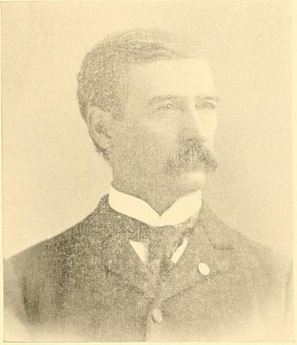
Historical · U.S. House · Pennsylvania · District 20
Josiah Hicks
Former U.S. Representative · Pennsylvania District 20 · 1893–1899 · Republican
Josiah Hicks represented Pennsylvania's District 20 in the United States House of Representatives (1893–1899) for the Republican party. The page below collects sourced biographical facts, term history, committee roles, and provenance for Hicks.
Bioguide ID: H000565
Key facts
- Full name
- Josiah Hicks
- State
- Pennsylvania
- District
- District 20
- Party
- Republican
- House service
- 1893–1899
- First House term
- 1893
- Status
- Left office
- Current term ends
- —
- Born
- 1844
- Bioguide ID
- H000565
- Committee assignments
- —
- Dataset version
- 1.20260606
Biographical narrative
909 words · sourced from the Wikipedia REST extract
Josiah Hicks was a Republican politician who served as a U.S. Representative for Pennsylvania's 20th congressional district. His congressional career spanned three terms from 1893 to 1899. Born in Wales and later immigrating to the United States, Hicks had a diverse background that included military service during the Civil War, a legal career, and involvement in local education and veteran affairs. He is remembered for his contributions to his community and his role in the legislative process during a transformative period in American history.
Early life and career
Josiah Duane Hicks was born on August 1, 1844, in Machen, Monmouthshire, Wales. In 1847, when Hicks was just three years old, he immigrated to the United States with his parents. The family initially settled in Chester County, Pennsylvania, before relocating to Duncansville, Pennsylvania, later that same year. Hicks received his early education in the common schools of Blair and Huntingdon Counties, which laid the foundation for his future pursuits.
In 1861, Hicks moved to Altoona, Pennsylvania, where his life took a significant turn with the onset of the American Civil War. In 1862, he enlisted as a private in the One Hundred and Twenty-fifth Regiment of the Pennsylvania Volunteer Infantry. His military service lasted nearly eighteen months, during which he participated in various campaigns and gained valuable experiences that would shape his character and leadership skills.
After his military service, Hicks transitioned back to civilian life and took a position as a clerk on the Pennsylvania Railroad. This role provided him with insights into the workings of transportation and commerce, which would later inform his legislative priorities. Seeking to further his education and career, Hicks studied law and was admitted to the bar in 1875. He began his legal practice in Tyrone, Pennsylvania, where he established himself as a competent attorney.
Hicks's political career began to take shape when he was elected as the district attorney of Blair County in 1880. He was successful in this role and was reelected in 1883, demonstrating his ability to connect with constituents and navigate the legal landscape of his community. His legal background and experience in public service positioned him well for a future in national politics.
In his personal life, Hicks married Josephine Barrick, who hailed from Frederick County, Maryland. Josephine was a descendant of the Harbaugh family, a lineage that has historical significance dating back to colonial times in Maryland. This connection to a prominent family further rooted Hicks in the fabric of American history.
House tenure
Josiah Hicks's tenure in the U.S. House of Representatives began when he was elected as a Republican to the Fifty-third Congress, serving from 1893 to 1895. He was subsequently reelected to the Fifty-fourth Congress, serving from 1895 to 1897, and then to the Fifty-fifth Congress, from 1897 to 1899. Throughout his time in office, Hicks was involved in various legislative initiatives and contributed to discussions on issues pertinent to his constituents and the nation.
During the Fifty-fifth Congress, Hicks served as the chairman of the United States House Committee on Patents. In this role, he played a significant part in shaping patent policy and addressing the concerns of inventors and businesses regarding intellectual property rights. His leadership on this committee underscored his commitment to fostering innovation and protecting the interests of creators in a rapidly industrializing America.
Despite his active participation in Congress, Hicks chose not to seek renomination in 1898, concluding his congressional career after three terms. Following his departure from the House, he returned to his legal practice, where he continued to serve the community in a different capacity.
Legislative focus and committees
During his time in Congress, Josiah Hicks focused on various legislative matters, particularly those related to patents and intellectual property. As chairman of the House Committee on Patents during the Fifty-fifth Congress, he was responsible for overseeing legislation that impacted inventors and the patent system. This role allowed him to advocate for policies that would encourage innovation and protect the rights of individuals who created new inventions.
Hicks's legislative focus reflected the broader economic and technological changes occurring in the United States during the late 19th century. The period was marked by rapid industrialization, and the need for a robust patent system became increasingly important as new inventions emerged. Hicks's work on the committee contributed to the development of a legal framework that supported inventors and promoted economic growth.
In addition to his legislative responsibilities, Hicks remained engaged in his community after leaving Congress. He served as a member of the Altoona Board of Education from 1911 to 1919, demonstrating his commitment to education and the development of future generations. His involvement in local governance allowed him to continue making a positive impact on the lives of his constituents.
Hicks also took an active role in veteran affairs, serving as the State commander of the Grand Army of the Republic in 1921. This organization was dedicated to honoring the service of Union veterans and advocating for their rights and benefits. Hicks's leadership in this capacity illustrated his ongoing dedication to the values of service and community.
Josiah Hicks passed away on May 9, 1923, in Altoona, Pennsylvania. He was interred in Fairview Cemetery, leaving behind a legacy of public service and commitment to his community. His life and career reflect the complexities of American history during a time of significant change, and his contributions to both local and national governance remain a part of that narrative.
Notable legislation
Sponsored and co-sponsored legislation for Josiah Hicks is pending operator curation. The biographical narrative above carries the same provenance trail until per-bill rows are written.
Sources
- [1]https://en.wikipedia.org/wiki/Josiah_D._HicksWikipedia · retrieved 2026-06-06
Notable quotes
Sourced quotes for Josiah Hicks are pending operator curation. Narrative-scope provenance remains attached below.
Sources
- [1]https://en.wikipedia.org/wiki/Josiah_D._HicksWikipedia · retrieved 2026-06-06
Key positions
Curated policy positions for Josiah Hicks are pending operator review. The biographical narrative above carries the same provenance trail until per-topic positions are written.
Sources
- [1]https://en.wikipedia.org/wiki/Josiah_D._HicksWikipedia · retrieved 2026-06-06
Terms served
- 1893–1895U.S. House · Term 1 · Republican
- 1895–1897U.S. House · Term 2 · Republican
- 1897–1899U.S. House · Term 3 · Republican
Sources & provenance
Every attributable claim above carries a per-section [N] marker that resolves to the corresponding URL below. Each entry records the upstream provider, the canonical URL, and the timestamp at which the source was retrieved by the ingest pipeline.
Key facts
- https://bioguide.congress.gov/search/bio/H000565bioguide · retrieved 2026-06-06
- https://www.govtrack.us/congress/members/405427govtrack · retrieved 2026-06-06
Biographical narrative
- https://en.wikipedia.org/wiki/Josiah_D._Hickswikipedia · retrieved 2026-06-06
Find your representative
Every U.S. state elects representatives by district. Browse Pennsylvania’s delegation, the full former-representative roster, or explore the role and term length.
Related on The Candidate
- Preceded by Edward ScullEarlier holder of the Pennsylvania District 20 House seat · Republican.Open
- Succeeded by Joseph ThroppLater holder of the Pennsylvania District 20 House seat · Republican.Open
- Adam SeybertFormer U.S. Representative · Pennsylvania District 1 · RepublicanOpen
- Benjamin SayFormer U.S. Representative · Pennsylvania District 1 · RepublicanOpen
- Chapman FreemanFormer U.S. Representative · Pennsylvania District 1 · RepublicanOpen
- Harry RansleyFormer U.S. Representative · Pennsylvania District 1 · RepublicanOpen