
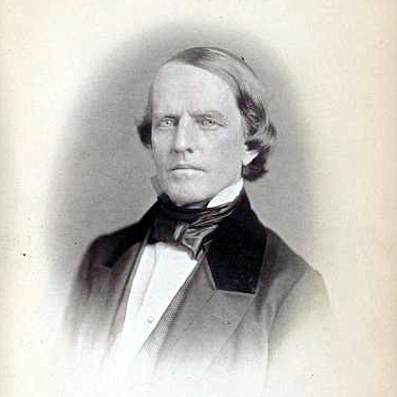
Historical · U.S. House · Pennsylvania · District 21
David Ritchie
Former U.S. Representative · Pennsylvania District 21 · 1853–1859 · Republican
David Ritchie represented Pennsylvania's District 21 in the United States House of Representatives (1853–1859) for the Republican party. The page below collects sourced biographical facts, term history, committee roles, and provenance for Ritchie.
Bioguide ID: R000273
Key facts
- Full name
- David Ritchie
- State
- Pennsylvania
- District
- District 21
- Party
- Republican
- House service
- 1853–1859
- First House term
- 1853
- Status
- Left office
- Current term ends
- —
- Born
- 1812
- Bioguide ID
- R000273
- Committee assignments
- —
- Dataset version
- 1.20260606
Biographical narrative
950 words · sourced from the Wikipedia REST extract
David Ritchie was an American lawyer and politician who served as a U.S. Representative from Pennsylvania. His political career spanned the mid-19th century, during which he was affiliated with both the Whig and Republican parties. Ritchie represented Pennsylvania's 21st congressional district in the House of Representatives for three terms from 1853 to 1859. In addition to his legislative work, he held a judicial position as an associate judge in Allegheny County. Ritchie’s contributions to American politics occurred during a time of significant national change, and his career reflects the complexities of the political landscape of that era.
Early life and career
David Ritchie was born on August 19, 1812, in Canonsburg, Pennsylvania. He was the youngest son of Craig Ritchie Sr., who played a role in shaping his early life and education. Ritchie pursued higher education at Jefferson College in Canonsburg, where he graduated in 1829. Following his undergraduate studies, he furthered his education abroad at a university in Heidelberg, Germany. This international experience likely provided him with a broader perspective on law and governance, which would later inform his political career.
Upon returning to the United States, Ritchie studied law and was admitted to the bar in 1835. He began his legal practice in Pittsburgh, Pennsylvania, where he established himself as a competent lawyer. His legal career provided him with valuable experience and connections that would later serve him well in his political endeavors. Ritchie’s background in law was significant, as many politicians of his time had similar legal training, which influenced their legislative priorities and decision-making processes.
House tenure
David Ritchie's tenure in the U.S. House of Representatives began in 1853 and lasted until 1859. He was initially elected as a member of the Whig Party, which was one of the two major political parties in the United States during the early to mid-19th century. The Whig Party was known for its opposition to the policies of President Andrew Jackson and for advocating for a strong legislative role in economic development and infrastructure improvements.
Ritchie was elected to the Thirty-third Congress as a Whig, marking the beginning of his congressional career. He was subsequently reelected to the Thirty-fourth Congress, continuing his affiliation with the Whig Party. During this time, he was involved in various legislative activities and discussions that shaped the direction of the country. His role as a congressman allowed him to engage with pressing national issues, including debates surrounding economic policy, territorial expansion, and the growing tensions over slavery.
In 1856, as the political landscape shifted, Ritchie transitioned to the Republican Party, which emerged from the anti-slavery movement and attracted many former Whigs. He was elected as a Republican to the Thirty-fifth Congress, reflecting the changing political dynamics of the time. His ability to adapt to the evolving political environment demonstrated his commitment to public service and his responsiveness to the concerns of his constituents.
During his time in the House, Ritchie served as chairman of the United States House Committee on Revolutionary Claims during the Thirty-fourth Congress. This committee was responsible for addressing claims related to the American Revolutionary War, a topic of historical significance that connected the present to the nation’s founding. His leadership in this role indicated his involvement in matters of historical importance and his dedication to addressing the needs of those who had served the country in its early years.
Legislative focus and committees
Throughout his congressional career, David Ritchie was involved in a range of legislative issues that reflected the priorities of his constituents and the broader national context. As a member of the Whig Party and later the Republican Party, he engaged in discussions about economic development, infrastructure, and social issues, which were critical during a period of rapid change in the United States.
Ritchie's role as chairman of the House Committee on Revolutionary Claims was particularly noteworthy. This committee dealt with claims made by individuals or their descendants who sought compensation for losses incurred during the Revolutionary War. By overseeing this committee, Ritchie contributed to the recognition and resolution of historical grievances, emphasizing the importance of addressing the legacies of the past in shaping contemporary policy.
In addition to his work on the committee, Ritchie participated in broader legislative debates that encompassed the political and social challenges of the time. The mid-19th century was marked by significant tensions over issues such as slavery, westward expansion, and economic policy. Ritchie’s legislative focus likely included discussions on these critical topics, as they were central to the national discourse during his time in office.
After completing his terms in the House, Ritchie’s career took a turn toward the judiciary. In 1862, he was appointed as an associate judge of the court of common pleas of Allegheny County, Pennsylvania. This position allowed him to apply his legal expertise in a judicial capacity, further contributing to his community and the legal system. However, his tenure as a judge lasted only nine months, after which he returned to the practice of law.
Following his legislative and judicial careers, Ritchie resumed his legal practice, continuing to serve his community in a professional capacity. His return to law allowed him to remain engaged in the legal and political issues of the day, even after his time in elected office.
David Ritchie passed away on January 24, 1867, in Pittsburgh, Pennsylvania. His life and career reflect the complexities of American politics during a transformative period in the nation’s history. Through his work as a lawyer, politician, and judge, Ritchie contributed to the legal and political frameworks that shaped the United States in the 19th century. His legacy is intertwined with the broader narrative of American governance during a time of significant change and challenge.
Notable legislation
Sponsored and co-sponsored legislation for David Ritchie is pending operator curation. The biographical narrative above carries the same provenance trail until per-bill rows are written.
Sources
- [1]https://en.wikipedia.org/wiki/David_Ritchie_(politician)Wikipedia · retrieved 2026-06-06
Notable quotes
Sourced quotes for David Ritchie are pending operator curation. Narrative-scope provenance remains attached below.
Sources
- [1]https://en.wikipedia.org/wiki/David_Ritchie_(politician)Wikipedia · retrieved 2026-06-06
Key positions
Curated policy positions for David Ritchie are pending operator review. The biographical narrative above carries the same provenance trail until per-topic positions are written.
Sources
- [1]https://en.wikipedia.org/wiki/David_Ritchie_(politician)Wikipedia · retrieved 2026-06-06
Terms served
- 1853–1855U.S. House · Term 1 · Whig
- 1855–1857U.S. House · Term 2 · Ind. Republican-Democrat
- 1857–1859U.S. House · Term 3 · Republican
Sources & provenance
Every attributable claim above carries a per-section [N] marker that resolves to the corresponding URL below. Each entry records the upstream provider, the canonical URL, and the timestamp at which the source was retrieved by the ingest pipeline.
Key facts
- https://bioguide.congress.gov/search/bio/R000273bioguide · retrieved 2026-06-06
- https://www.govtrack.us/congress/members/409247govtrack · retrieved 2026-06-06
Biographical narrative
- https://en.wikipedia.org/wiki/David_Ritchie_(politician)wikipedia · retrieved 2026-06-06
Find your representative
Every U.S. state elects representatives by district. Browse Pennsylvania’s delegation, the full former-representative roster, or explore the role and term length.
Related on The Candidate
- Preceded by Moses HamptonEarlier holder of the Pennsylvania District 21 House seat · Whig.Open
- Succeeded by Alexander TaylorLater holder of the Pennsylvania District 21 House seat · Republican.Open
- Adam SeybertFormer U.S. Representative · Pennsylvania District 1 · RepublicanOpen
- Benjamin SayFormer U.S. Representative · Pennsylvania District 1 · RepublicanOpen
- Chapman FreemanFormer U.S. Representative · Pennsylvania District 1 · RepublicanOpen
- Harry RansleyFormer U.S. Representative · Pennsylvania District 1 · RepublicanOpen