
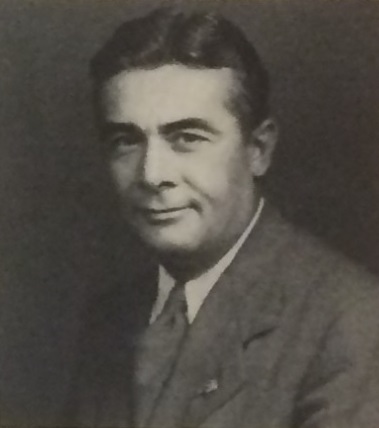
Historical · U.S. House · Pennsylvania · District 21
James Lind
Former U.S. Representative · Pennsylvania District 21 · 1949–1953 · Democratic
James Lind represented Pennsylvania's District 21 in the United States House of Representatives (1949–1953) for the Democratic party. The page below collects sourced biographical facts, term history, committee roles, and provenance for Lind.
Bioguide ID: L000318
Key facts
- Full name
- James Lind
- State
- Pennsylvania
- District
- District 21
- Party
- Democratic
- House service
- 1949–1953
- First House term
- 1949
- Status
- Left office
- Current term ends
- —
- Born
- 1900
- Bioguide ID
- L000318
- Committee assignments
- —
- Dataset version
- 1.20260605
Biographical narrative
973 words · sourced from the Wikipedia REST extract
James Lind was a Democratic politician who served as a U.S. Representative for Pennsylvania's 21st congressional district from 1949 until 1953. His tenure in the House of Representatives was marked by his commitment to public service and his engagement with various community and veteran affairs. Lind's background as a veteran and his professional experiences prior to entering Congress shaped his legislative priorities and his approach to governance.
Early life and career
James Francis Lind was born on October 17, 1900, in York, Pennsylvania, to William E. Lind and Alice E. Lind (née Shanabrough). Growing up in York, Lind was influenced by the local culture and values of his community, which would later inform his political career. He pursued higher education at a branch campus of Pennsylvania State University, where he graduated with a degree in accounting. This educational background provided him with a solid foundation in financial matters, which would be beneficial in his later roles in public office.
Lind's commitment to service began early in his life. He enlisted in the United States Army during World War I, serving from 1917 to 1920. His military service instilled in him a sense of duty and responsibility towards his country. After a brief period in civilian life, he returned to military service during World War II, serving from 1941 to 1946. Lind's dedication to his country did not end with active duty; he also served in the United States Army Reserve and the Pennsylvania National Guard from 1934 until 1941. This extensive military background would later influence his advocacy for veterans' issues during his time in Congress.
Following his military service, Lind became involved in local governance and community affairs. He served on the Veterans’ Administration of York County from 1946 to 1947, where he worked to support local veterans returning from the war. His commitment to veterans' issues was a significant aspect of his public service. In 1948, he took on the role of chief clerk to the York County Board of Commissioners, a position that further solidified his understanding of local governance and the needs of his constituents.
In 1922, Lind married Grace Elizabeth Stahl, and the couple had one son, R. James Lind. His family life was an important aspect of his identity, providing him with personal motivation to serve his community and advocate for policies that would benefit families like his own.
House tenure
James Lind's political career in the U.S. House of Representatives began when he was elected as a Democrat to the 81st Congress in 1948. He successfully defeated the incumbent Republican Congressman Chester H. Gross, marking a significant political shift in Pennsylvania's 21st congressional district. Lind's election was indicative of the changing political landscape in the post-war era, as many voters were looking for representatives who would address the pressing issues of the time, including economic recovery and veterans' affairs.
During his time in Congress, Lind was re-elected to the 82nd Congress in 1950, further solidifying his position as a representative of his district. His tenure was characterized by a focus on issues that were relevant to his constituents, particularly those related to veterans and public service. Lind's background as a veteran and his previous work with the Veterans’ Administration positioned him as a knowledgeable advocate for policies that would support those who had served in the military.
Despite his initial success, Lind faced challenges in his political career. In 1952, he sought re-election but was defeated by Republican candidate S. Walter Stauffer. This loss marked the end of his congressional tenure, which lasted from 1949 until January 3, 1953. The political dynamics of the time were complex, and Lind's defeat reflected the competitive nature of congressional elections during this period.
Legislative focus and committees
During his time in the House of Representatives, James Lind was involved in various legislative initiatives and discussions that were pertinent to his constituents and the broader national context. His military background and experience with veterans' affairs informed much of his legislative focus. Lind was particularly attentive to the needs of veterans, advocating for policies that would provide support and resources for those who had served in the armed forces. This focus was consistent with the post-World War II era, where many veterans were returning home and seeking assistance in reintegrating into civilian life.
Lind's work on veterans' issues was complemented by his broader interest in public service and community welfare. He recognized the importance of addressing the needs of families and individuals in his district, which included advocating for economic policies that would promote growth and stability. His background in accounting likely influenced his approach to fiscal matters, as he understood the significance of sound financial management in government.
In addition to his work on veterans' affairs, Lind was involved in discussions related to local governance and community development. His experience as chief clerk to the York County Board of Commissioners provided him with insights into the challenges faced by local governments, and he sought to bring those concerns to the national stage. Lind's legislative efforts were characterized by a commitment to serving the interests of his constituents, reflecting his belief in the importance of responsive and responsible governance.
After his congressional career, Lind continued to serve his community by taking on the role of controller of York County. This position allowed him to remain engaged in public service and to contribute to the financial oversight of local government operations. Lind's dedication to his community and his ongoing involvement in public affairs exemplified his lifelong commitment to service.
James Lind passed away on April 11, 1975, in York, Pennsylvania. His contributions to his community and his service in the U.S. House of Representatives are remembered as part of his legacy. He is interred in Arlington National Cemetery, a testament to his military service and dedication to his country.
Notable legislation
Sponsored and co-sponsored legislation for James Lind is pending operator curation. The biographical narrative above carries the same provenance trail until per-bill rows are written.
Sources
- [1]https://en.wikipedia.org/wiki/James_F._LindWikipedia · retrieved 2026-06-05
Notable quotes
Sourced quotes for James Lind are pending operator curation. Narrative-scope provenance remains attached below.
Sources
- [1]https://en.wikipedia.org/wiki/James_F._LindWikipedia · retrieved 2026-06-05
Key positions
Curated policy positions for James Lind are pending operator review. The biographical narrative above carries the same provenance trail until per-topic positions are written.
Sources
- [1]https://en.wikipedia.org/wiki/James_F._LindWikipedia · retrieved 2026-06-05
Terms served
- 1949–1951U.S. House · Term 1 · Democratic
- 1951–1953U.S. House · Term 2 · Democratic
Sources & provenance
Every attributable claim above carries a per-section [N] marker that resolves to the corresponding URL below. Each entry records the upstream provider, the canonical URL, and the timestamp at which the source was retrieved by the ingest pipeline.
Key facts
- https://bioguide.congress.gov/search/bio/L000318bioguide · retrieved 2026-06-05
- https://www.govtrack.us/congress/members/406812govtrack · retrieved 2026-06-05
Biographical narrative
- https://en.wikipedia.org/wiki/James_F._Lindwikipedia · retrieved 2026-06-05
Find your representative
Every U.S. state elects representatives by district. Browse Pennsylvania’s delegation, the full former-representative roster, or explore the role and term length.
Related on The Candidate
- Preceded by Chester GrossEarlier holder of the Pennsylvania District 21 House seat · Republican.Open
- Succeeded by John DentLater holder of the Pennsylvania District 21 House seat · Democratic.Open
- Adam SeybertFormer U.S. Representative · Pennsylvania District 1 · RepublicanOpen
- Benjamin SayFormer U.S. Representative · Pennsylvania District 1 · RepublicanOpen
- Chapman FreemanFormer U.S. Representative · Pennsylvania District 1 · RepublicanOpen
- Harry RansleyFormer U.S. Representative · Pennsylvania District 1 · RepublicanOpen