
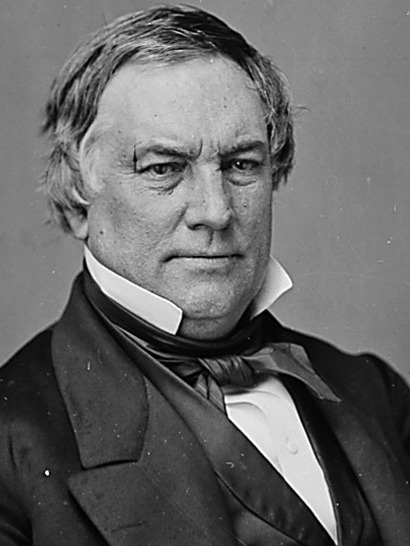
Historical · U.S. House · Pennsylvania · District 21
John Dawson
Former U.S. Representative · Pennsylvania District 21 · 1851–1867 · Democratic
John Dawson represented Pennsylvania's District 21 in the United States House of Representatives (1851–1867) for the Democratic party. The page below collects sourced biographical facts, term history, committee roles, and provenance for Dawson.
Bioguide ID: D000153
Key facts
- Full name
- John Dawson
- State
- Pennsylvania
- District
- District 21
- Party
- Democratic
- House service
- 1851–1867
- First House term
- 1851
- Status
- Left office
- Current term ends
- —
- Born
- 1813
- Bioguide ID
- D000153
- Committee assignments
- —
- Dataset version
- 1.20260606
Biographical narrative
1,032 words · sourced from the Wikipedia REST extract
John Dawson was a Democratic politician who served as a U.S. Representative from Pennsylvania's 21st congressional district during the mid-19th century. His political career spanned four terms in the House of Representatives, where he was known for his involvement in agricultural issues and his participation in significant legislative matters of his time. Dawson's early career included legal practice and public service in various capacities, and he was involved in the Democratic Party at both the state and national levels. His legacy includes being honored as the namesake of Dawson County in Nebraska, reflecting his influence beyond Pennsylvania.
Early life and career
John Dawson was born on February 7, 1813, in Uniontown, Pennsylvania. He spent his formative years in Brownsville, Pennsylvania, a town that would later play a significant role in his political and professional life. Dawson pursued higher education and graduated from Washington College, where he earned a degree in law. Following his graduation, he was admitted to the bar in 1835, allowing him to establish a legal practice. His early career in law included serving as the deputy attorney general for Fayette County in 1838, which marked the beginning of his public service.
Dawson's legal career progressed as he took on the role of district attorney for the western district of Pennsylvania from 1845 until 1848. This position not only enhanced his legal expertise but also provided him with valuable experience in the workings of the legal and political systems. His tenure as district attorney likely contributed to his understanding of the issues facing his constituents and the broader community, shaping his future political ambitions.
In 1848, Dawson made his first attempt to enter Congress as a Democrat. Although he was unsuccessful in this initial bid, his aspirations did not wane. He continued to engage in political activities and remained active within the Democratic Party, which ultimately set the stage for his future electoral successes.
House tenure
Dawson's congressional career began when he was elected to the 32nd Congress, serving from March 4, 1851, to March 3, 1855. During this time, he represented Pennsylvania's 21st congressional district. His election to Congress marked a significant milestone in his political journey, as he transitioned from local legal practice to national legislative responsibilities. Throughout his first term, Dawson was appointed as the chairman of the Committee on Agriculture, a role that underscored his commitment to agricultural issues, which were particularly relevant to his constituents in Pennsylvania.
After completing his first term, Dawson chose not to seek re-election, stepping down from Congress. His decision to decline the nomination for the next term reflected a strategic choice to focus on other opportunities. During his time away from Congress, he received an offer from President Franklin Pierce to serve as the governor of the Kansas Territory. However, Dawson declined this opportunity, opting instead to pursue another congressional campaign.
In 1863, Dawson returned to Congress after being elected to the 38th Congress, where he served until March 3, 1867. His re-election demonstrated his continued support among constituents and his ability to navigate the political landscape of the time. During this second tenure, he participated in significant legislative discussions, including his recorded vote on the Thirteenth Amendment, which abolished slavery in the United States. His vote on this pivotal piece of legislation was noted as a "nay," reflecting his position on the issue during a critical period in American history.
Throughout his time in Congress, Dawson was involved in various legislative initiatives and discussions that shaped the nation during the mid-19th century. His role as chairman of the Committee on Agriculture during his first term indicated his focus on issues pertinent to farming and rural communities, which were vital to Pennsylvania's economy. This focus on agriculture likely resonated with his constituents, many of whom were engaged in farming and related industries.
Dawson's political career was characterized by his dedication to public service and his involvement in the Democratic Party. He was a delegate to multiple Democratic National Conventions, representing Pennsylvania in 1844, 1848, 1860, and 1868. His participation in these conventions highlighted his active engagement in shaping the party's platform and direction during a tumultuous period in American politics.
Legislative focus and committees
During his time in the House of Representatives, John Dawson's legislative focus was primarily on agricultural issues, reflecting both his professional background as a lawyer and his understanding of the needs of his constituents. As chairman of the Committee on Agriculture, he played a significant role in addressing the challenges faced by farmers and agricultural producers during a time when agriculture was a cornerstone of the American economy.
Dawson's legislative work included advocating for policies that supported agricultural development, land use, and rural economic growth. His position on the committee allowed him to influence legislation that aimed to improve the conditions for farmers and promote agricultural innovation. This focus was particularly important in Pennsylvania, where agriculture was a key component of the state's economy.
In addition to his work on agricultural issues, Dawson's tenure in Congress coincided with significant national events, including the Civil War and the subsequent efforts to address the social and economic changes that arose from it. His vote against the Thirteenth Amendment, which abolished slavery, positioned him within a complex political landscape, as the nation grappled with issues of civil rights and the future of the Union.
Dawson's involvement in the Democratic Party extended beyond his congressional duties. His participation as a delegate in multiple national conventions demonstrated his commitment to the party's principles and his desire to influence its direction. These conventions were critical in shaping the party's platform and responding to the evolving political climate of the time.
After concluding his service in Congress in 1867, Dawson returned to his home in Springfield Township, Fayette County, Pennsylvania. He continued to engage with his community until his death on September 18, 1870. His contributions to Pennsylvania and the nation were recognized posthumously, as he was honored with the naming of Dawson County in Nebraska, reflecting his lasting impact on American history and politics. He was laid to rest at Christ Episcopal Churchyard in Brownsville, Pennsylvania, marking the end of a life dedicated to public service and legal advocacy.
Notable legislation
Sponsored and co-sponsored legislation for John Dawson is pending operator curation. The biographical narrative above carries the same provenance trail until per-bill rows are written.
Sources
- [1]https://en.wikipedia.org/wiki/John_L._DawsonWikipedia · retrieved 2026-06-06
Notable quotes
Sourced quotes for John Dawson are pending operator curation. Narrative-scope provenance remains attached below.
Sources
- [1]https://en.wikipedia.org/wiki/John_L._DawsonWikipedia · retrieved 2026-06-06
Key positions
Curated policy positions for John Dawson are pending operator review. The biographical narrative above carries the same provenance trail until per-topic positions are written.
Sources
- [1]https://en.wikipedia.org/wiki/John_L._DawsonWikipedia · retrieved 2026-06-06
Terms served
- 1851–1853U.S. House · Term 1 · Democratic
- 1853–1855U.S. House · Term 2 · Democratic
- 1863–1865U.S. House · Term 3 · Democratic
- 1865–1867U.S. House · Term 4 · Democratic
Sources & provenance
Every attributable claim above carries a per-section [N] marker that resolves to the corresponding URL below. Each entry records the upstream provider, the canonical URL, and the timestamp at which the source was retrieved by the ingest pipeline.
Key facts
- https://bioguide.congress.gov/search/bio/D000153bioguide · retrieved 2026-06-06
- https://www.govtrack.us/congress/members/403286govtrack · retrieved 2026-06-06
Biographical narrative
- https://en.wikipedia.org/wiki/John_L._Dawsonwikipedia · retrieved 2026-06-06
Find your representative
Every U.S. state elects representatives by district. Browse Pennsylvania’s delegation, the full former-representative roster, or explore the role and term length.
Related on The Candidate
- Preceded by Moses HamptonEarlier holder of the Pennsylvania District 21 House seat · Whig.Open
- Succeeded by Alexander TaylorLater holder of the Pennsylvania District 21 House seat · Republican.Open
- Adam SeybertFormer U.S. Representative · Pennsylvania District 1 · RepublicanOpen
- Benjamin SayFormer U.S. Representative · Pennsylvania District 1 · RepublicanOpen
- Chapman FreemanFormer U.S. Representative · Pennsylvania District 1 · RepublicanOpen
- Harry RansleyFormer U.S. Representative · Pennsylvania District 1 · RepublicanOpen