
Historical · U.S. House · Pennsylvania · District 22
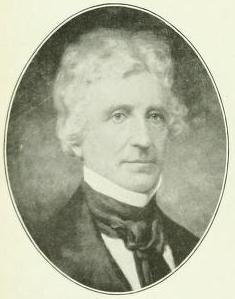
Harmar Denny
Former U.S. Representative · Pennsylvania District 22 · 1829–1837 · Anti Masonic
Harmar Denny represented Pennsylvania's District 22 in the United States House of Representatives (1829–1837) for the Anti Masonic party. The page below collects sourced biographical facts, term history, committee roles, and provenance for Denny.
Bioguide ID: D000248
Key facts
- Full name
- Harmar Denny
- State
- Pennsylvania
- District
- District 22
- Party
- Anti Masonic
- House service
- 1829–1837
- First House term
- 1829
- Status
- Left office
- Current term ends
- —
- Born
- 1794
- Bioguide ID
- D000248
- Committee assignments
- —
- Dataset version
- 1.20260606
Biographical narrative
855 words · sourced from the Wikipedia REST extract
Harmar Denny was an American businessman and politician who served as a U.S. Representative for Pennsylvania's 22nd congressional district. A member of the Anti-Masonic Party, Denny's congressional career spanned from 1829 to 1837. He was born on May 13, 1794, in Pittsburgh, Pennsylvania, and was involved in various civic and professional activities throughout his life, including law, local governance, and railroad development.
Early life and career
Harmar Denny was born to Ebenezer Denny and Nancy Wilkins in Pittsburgh. His father had a notable military background, having served as an adjutant to General Harmar during conflicts on the western frontier. This early exposure to military and civic duty may have influenced Denny's later public service. He pursued his education at Dickinson College in Carlisle, Pennsylvania, graduating in 1813. Following his graduation, Denny was admitted to the bar in Pennsylvania in 1816, marking the beginning of his legal career.
Denny established a law practice in Pittsburgh, where he became a partner with Henry Baldwin, another prominent lawyer of the time. His legal career coincided with his growing interest in public service. In 1817, he married Elizabeth F. O'Hara, who was the daughter of General James O'Hara and Mary Carson O'Hara. The couple had a large family, raising eleven children together. Denny's commitment to his community was evident in his active participation in local institutions, including his role as a ruling elder of the First Presbyterian Church of Pittsburgh, which he assumed in 1829.
Before entering Congress, Denny served in the Pennsylvania State House of Representatives from 1824 to 1829. His tenure in the state legislature provided him with valuable experience in governance and legislative processes, laying the groundwork for his future role in the U.S. Congress.
House tenure
Harmar Denny's congressional career began when he was elected as an Anti-Masonic candidate to the Twenty-first Congress. He filled the vacancy left by the resignation of William Wilkins and took office on December 15, 1829. Denny was subsequently reelected to the Twenty-second, Twenty-third, and Twenty-fourth Congresses, serving until March 3, 1837. His time in the House of Representatives was marked by the political climate of the era, which was characterized by the rise of the Anti-Masonic movement in response to the perceived secrecy and influence of Masonic organizations in American society.
During his four terms in the House, Denny participated in various legislative activities and discussions relevant to his constituents and the broader national context. His alignment with the Anti-Masonic Party reflected a significant political movement of the time, which sought to challenge the established political norms and promote transparency in governance. After completing his final term in Congress, Denny returned to his legal practice in Pittsburgh, continuing to engage in civic affairs.
Legislative focus and committees
While specific details regarding the committees Denny served on during his congressional tenure are not documented, his legislative focus likely aligned with the interests of his constituents in Pennsylvania and the broader goals of the Anti-Masonic Party. This party was known for advocating against the influence of secret societies and promoting moral governance, which may have influenced Denny's legislative priorities.
Following his time in Congress, Denny remained active in public service. He was a delegate to the Pennsylvania State Constitutional Convention in 1837, where he contributed to discussions on state governance and constitutional matters. In 1840, he served as a presidential elector on the Whig ticket, further demonstrating his ongoing involvement in political processes.
Denny's contributions extended to infrastructure development as well. He was appointed as a commissioner under the act of incorporation of the Pennsylvania Railroad in 1846 and played a role in the establishment of the Ohio and Pennsylvania Railroad Company in 1848. His engagement in railroad development reflected the growing importance of transportation infrastructure in the United States during the 19th century.
In addition to his work in transportation, Denny was recognized for his intellectual contributions. He was admitted to the American Philosophical Society in 1848, an organization that fostered scholarly research and discussion. His civic involvement continued as he was elected president of the common council of Pittsburgh in 1849 and served as president of the Pittsburgh and Steubenville Railroad in the early 1850s.
Denny's commitment to education and community service was evident in his roles as a trustee of the Western University of Pennsylvania, now known as the University of Pittsburgh, and as a director of the Pittsburgh Theological Seminary. These positions underscored his dedication to advancing education and religious scholarship in the region.
Harmar Denny declined a nomination to run for Congress again in 1850, choosing instead to focus on his other civic responsibilities. He passed away on January 29, 1852, and was laid to rest at Allegheny Cemetery in Pittsburgh's Lawrenceville neighborhood. His legacy includes not only his political contributions but also his impact on local governance, education, and infrastructure development in Pennsylvania. The town of Harmarville, located twelve miles up the Allegheny River, was named in his honor, reflecting his lasting influence in the region. Denny's family continued his legacy in public service, with notable descendants including New York State Senator Henry E. H. Brereton and Congressman Harmar D. Denny, Jr.
Notable legislation
Sponsored and co-sponsored legislation for Harmar Denny is pending operator curation. The biographical narrative above carries the same provenance trail until per-bill rows are written.
Sources
- [1]https://en.wikipedia.org/wiki/Harmar_DennyWikipedia · retrieved 2026-06-06
Notable quotes
Sourced quotes for Harmar Denny are pending operator curation. Narrative-scope provenance remains attached below.
Sources
- [1]https://en.wikipedia.org/wiki/Harmar_DennyWikipedia · retrieved 2026-06-06
Key positions
Curated policy positions for Harmar Denny are pending operator review. The biographical narrative above carries the same provenance trail until per-topic positions are written.
Sources
- [1]https://en.wikipedia.org/wiki/Harmar_DennyWikipedia · retrieved 2026-06-06
Terms served
- 1829–1831U.S. House · Term 1 · Anti Masonic
- 1831–1833U.S. House · Term 2 · Anti Masonic
- 1833–1835U.S. House · Term 3 · Anti Masonic
- 1835–1837U.S. House · Term 4 · Anti Masonic
Sources & provenance
Every attributable claim above carries a per-section [N] marker that resolves to the corresponding URL below. Each entry records the upstream provider, the canonical URL, and the timestamp at which the source was retrieved by the ingest pipeline.
Key facts
- https://bioguide.congress.gov/search/bio/D000248bioguide · retrieved 2026-06-06
- https://www.govtrack.us/congress/members/403386govtrack · retrieved 2026-06-06
Biographical narrative
- https://en.wikipedia.org/wiki/Harmar_Dennywikipedia · retrieved 2026-06-06
Find your representative
Every U.S. state elects representatives by district. Browse Pennsylvania’s delegation, the full former-representative roster, or explore the role and term length.
Related on The Candidate
- Succeeded by Richard BiddleLater holder of the Pennsylvania District 22 House seat · Anti Masonic.Open
- Adam SeybertFormer U.S. Representative · Pennsylvania District 1 · RepublicanOpen
- Benjamin SayFormer U.S. Representative · Pennsylvania District 1 · RepublicanOpen
- Chapman FreemanFormer U.S. Representative · Pennsylvania District 1 · RepublicanOpen
- Harry RansleyFormer U.S. Representative · Pennsylvania District 1 · RepublicanOpen
- Representatives from PennsylvaniaEvery former U.S. Representative who has represented Pennsylvania.Open