
Historical · U.S. House · Pennsylvania · District 23
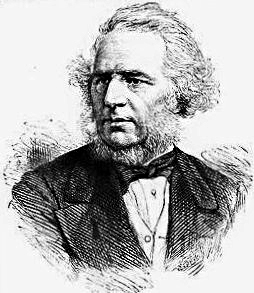
Charles Reed
Former U.S. Representative · Pennsylvania District 23 · 1843–1845 · Whig
Charles Reed represented Pennsylvania's District 23 in the United States House of Representatives (1843–1845) for the Whig party. The page below collects sourced biographical facts, term history, committee roles, and provenance for Reed.
Bioguide ID: R000110
Key facts
- Full name
- Charles Reed
- State
- Pennsylvania
- District
- District 23
- Party
- Whig
- House service
- 1843–1845
- First House term
- 1843
- Status
- Left office
- Current term ends
- —
- Born
- 1803
- Bioguide ID
- R000110
- Committee assignments
- —
- Dataset version
- 1.20260606
Biographical narrative
888 words · sourced from the Wikipedia REST extract
Charles Reed was a prominent figure in 19th-century American politics, serving as a U.S. Representative for Pennsylvania's 23rd congressional district. A member of the Whig Party, Reed's political career was marked by his involvement in various business ventures and military service, reflecting the multifaceted nature of public life during his era. His tenure in the House of Representatives lasted from 1843 until 1845, after which he returned to his business interests. Reed's legacy continued through his family, notably with his son, who later served as the mayor of Erie, Pennsylvania.
Early life and career
Charles Manning Reed was born on April 3, 1803, in Erie, Pennsylvania. He was the grandson of Seth Reed, who was recognized as the first settler of Erie, thus establishing a familial legacy in the region. Growing up in Erie, Reed received his education in the local public schools, which laid the groundwork for his later academic pursuits. He graduated from Washington College, located in Washington, Pennsylvania, where he likely developed the foundational skills and knowledge that would serve him in his future endeavors.
After completing his education, Reed pursued a career in law. He studied the legal profession and was admitted to the bar in Philadelphia in 1824. However, despite his qualifications, he chose not to practice law actively. Instead, he returned to Erie, where he engaged in business alongside his father, who was involved in shipping and owned vessels operating on the Great Lakes. This business background provided Reed with valuable experience in commerce and trade, which would later inform his political career.
In addition to his business pursuits, Reed also held a significant position in the military. In 1831, he was appointed as a colonel of militia, a role that underscored his leadership capabilities and commitment to public service. His military career progressed, and he attained the rank of brigadier general upon the expiration of his commission. This military experience not only enhanced his public profile but also contributed to his understanding of governance and civic responsibility.
Reed's political career began to take shape when he was elected to the Pennsylvania House of Representatives, serving terms in 1837 and 1838. His time in the state legislature allowed him to gain insights into the legislative process and the needs of his constituents, further preparing him for his future role in the U.S. Congress.
House tenure
In 1843, Charles Reed was elected to the U.S. House of Representatives as a member of the Whig Party, representing Pennsylvania's 23rd congressional district. His election to the Twenty-eighth Congress marked a significant milestone in his political career, as he transitioned from state-level politics to the national stage. During his time in the House, Reed participated in the legislative process at a time when the nation was grappling with various issues, including economic development, territorial expansion, and the growing tensions surrounding slavery.
Reed's tenure in Congress lasted until March 3, 1845. Although he served only one term, his contributions during this period were part of a larger narrative of the Whig Party's efforts to address the challenges facing the nation. The Whig Party, which emerged in the 1830s, sought to promote economic modernization and infrastructure development, aligning with Reed's background in business and commerce.
Despite his efforts, Reed faced challenges in securing re-election. In 1844, he ran for a second term but was unsuccessful in his bid. Following his departure from Congress, Reed returned to his business interests, which included shipping on the Great Lakes, banking, mercantile activities, and involvement in the railroad industry. This return to the private sector illustrated the fluidity of political and economic roles during this period in American history, where individuals often transitioned between public service and private enterprise.
Legislative focus and committees
While specific details regarding Reed's legislative focus and committee assignments during his time in the House of Representatives are not extensively documented, it can be inferred that his background in business and military service likely influenced his priorities. The Whig Party, to which he belonged, advocated for policies that promoted economic growth, infrastructure development, and a strong national government. Reed's experiences in shipping and commerce would have provided him with a unique perspective on issues related to trade, transportation, and economic policy.
During the early to mid-19th century, Congress was engaged in significant debates over various topics, including internal improvements, land policies, and the expansion of the nation. Reed's involvement in these discussions would have been shaped by his understanding of the economic landscape, particularly in relation to the Great Lakes region, which was vital for trade and transportation.
After his congressional tenure, Reed continued to be active in business until 1849, engaging in various ventures that reflected the economic opportunities of the time. His work in banking and mercantile pursuits further underscored his commitment to economic development, which was a hallmark of the Whig Party's platform.
Charles Reed passed away on December 16, 1871, in Erie, Pennsylvania, where he was interred in Erie Cemetery. His contributions to both his community and the nation are remembered as part of the broader historical context of American politics during the 19th century. His legacy continued through his family, particularly his son, Charles M. Reed, Jr., who served as the mayor of Erie shortly after his father's death, indicating the family's ongoing involvement in public service and local governance.
Notable legislation
Sponsored and co-sponsored legislation for Charles Reed is pending operator curation. The biographical narrative above carries the same provenance trail until per-bill rows are written.
Sources
- [1]https://en.wikipedia.org/wiki/Charles_Manning_ReedWikipedia · retrieved 2026-06-06
Notable quotes
Sourced quotes for Charles Reed are pending operator curation. Narrative-scope provenance remains attached below.
Sources
- [1]https://en.wikipedia.org/wiki/Charles_Manning_ReedWikipedia · retrieved 2026-06-06
Key positions
Curated policy positions for Charles Reed are pending operator review. The biographical narrative above carries the same provenance trail until per-topic positions are written.
Sources
- [1]https://en.wikipedia.org/wiki/Charles_Manning_ReedWikipedia · retrieved 2026-06-06
Terms served
- 1843–1845U.S. House · Term 1 · Whig
Sources & provenance
Every attributable claim above carries a per-section [N] marker that resolves to the corresponding URL below. Each entry records the upstream provider, the canonical URL, and the timestamp at which the source was retrieved by the ingest pipeline.
Key facts
- https://bioguide.congress.gov/search/bio/R000110bioguide · retrieved 2026-06-06
- https://www.govtrack.us/congress/members/409090govtrack · retrieved 2026-06-06
Biographical narrative
- https://en.wikipedia.org/wiki/Charles_Manning_Reedwikipedia · retrieved 2026-06-06
Find your representative
Every U.S. state elects representatives by district. Browse Pennsylvania’s delegation, the full former-representative roster, or explore the role and term length.
Related on The Candidate
- Preceded by William JackEarlier holder of the Pennsylvania District 23 House seat · Democratic.Open
- Succeeded by James ThompsonLater holder of the Pennsylvania District 23 House seat · Democratic.Open
- Adam SeybertFormer U.S. Representative · Pennsylvania District 1 · RepublicanOpen
- Benjamin SayFormer U.S. Representative · Pennsylvania District 1 · RepublicanOpen
- Chapman FreemanFormer U.S. Representative · Pennsylvania District 1 · RepublicanOpen
- Harry RansleyFormer U.S. Representative · Pennsylvania District 1 · RepublicanOpen