
Historical · U.S. House · Pennsylvania · District 23
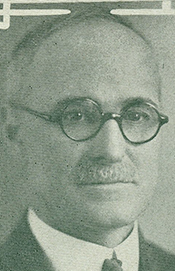
Jacob Kurtz
Former U.S. Representative · Pennsylvania District 23 · 1923–1935 · Republican
Jacob Kurtz represented Pennsylvania's District 23 in the United States House of Representatives (1923–1935) for the Republican party. The page below collects sourced biographical facts, term history, committee roles, and provenance for Kurtz.
Bioguide ID: K000344
Key facts
- Full name
- Jacob Kurtz
- State
- Pennsylvania
- District
- District 23
- Party
- Republican
- House service
- 1923–1935
- First House term
- 1923
- Status
- Left office
- Current term ends
- —
- Born
- 1867
- Bioguide ID
- K000344
- Committee assignments
- —
- Dataset version
- 1.20260606
Biographical narrative
946 words · sourced from the Wikipedia REST extract
Jacob Kurtz was a Republican politician who served as a U.S. Representative from Pennsylvania. His political career spanned over a decade, during which he represented two congressional districts. Kurtz was known for his legal background and his involvement in local governance, particularly during World War I. After serving six terms in the House of Representatives, he returned to his legal practice and remained active in political circles as a delegate to national conventions.
Early life and career
Jacob Banks Kurtz was born on October 31, 1867, in Delaware Township, located in Juniata County, Pennsylvania. His early life in this rural area of Pennsylvania laid the foundation for his future pursuits in law and politics. He pursued higher education at Dickinson College in Carlisle, Pennsylvania, where he completed his undergraduate studies. Following his graduation, Kurtz continued his education at the Dickinson School of Law, from which he graduated in 1893. During his time at Dickinson, he was actively involved in campus life, becoming a member of the Union Philosophical Society, as well as the Phi Delta Theta and Delta Chi fraternities. These affiliations likely provided him with a network of peers that would be beneficial in his future endeavors.
After being admitted to the bar, Kurtz began his legal career in Altoona, Pennsylvania. His practice in law allowed him to gain significant experience and recognition in the legal community. His legal expertise was further demonstrated when he was elected as the district attorney of Blair County, serving from 1905 to 1912. In this role, he was responsible for prosecuting criminal cases and overseeing legal matters within the county, which provided him with valuable insights into the workings of the judicial system and local governance.
Kurtz's involvement in public service extended beyond his legal career. During World War I, he took on the role of chairman of the committee of public safety and the council of national defense for Blair County. This position involved coordinating local efforts to support the war, including mobilizing resources and ensuring community engagement in national defense initiatives. His leadership during this critical time demonstrated his commitment to public service and his ability to mobilize community efforts in support of broader national goals.
House tenure
Jacob Kurtz's political career in the U.S. House of Representatives began when he was elected as a Republican to the sixty-eighth United States Congress. He served in this capacity from 1923, representing Pennsylvania's 21st congressional district for his first five terms. His tenure in Congress was marked by a commitment to his constituents and a focus on issues relevant to Pennsylvania and the nation. As a member of the House, Kurtz participated in legislative discussions and contributed to the development of policies that affected his district and the country at large.
Kurtz's representation of Pennsylvania's 21st congressional district lasted until the redistricting that occurred after the 1930 Census, which led to the creation of the 23rd congressional district. He continued to serve in this new district for his final term in the House. Throughout his six terms, Kurtz was involved in various legislative initiatives and debates, although specific details about the bills he supported or opposed are not documented in the available records.
Despite his experience and contributions, Kurtz faced challenges in his political career. He was an unsuccessful candidate for reelection in 1934, which marked the end of his time in the House of Representatives. Following his departure from Congress, he returned to his legal practice, where he continued to apply his legal knowledge and experience in the community.
Legislative focus and committees
During his time in the House of Representatives, Jacob Kurtz was involved in various legislative matters, although specific details regarding his legislative focus are not extensively documented. As a member of the Republican Party, he likely aligned with the party's platform and priorities during the 1920s and early 1930s, a period marked by significant social and economic changes in the United States. The legislative agenda during this time included issues related to economic recovery, social welfare, and national defense, particularly in the context of the Great Depression and the aftermath of World War I.
Kurtz's legal background may have influenced his approach to legislative matters, as he would have been familiar with the intricacies of law and policy. His experience as district attorney and his involvement in public safety during World War I could have provided him with a unique perspective on issues related to justice, public safety, and national defense. However, without specific records of his committee assignments or legislative initiatives, it is difficult to ascertain the full extent of his contributions in these areas.
In addition to his legislative work, Kurtz remained engaged in the political process after leaving Congress. He served as a delegate to the Republican National Conventions in 1936, 1940, and 1948, indicating his continued involvement in party politics and national issues. His participation in these conventions allowed him to influence the direction of the Republican Party and engage with key political figures of the time.
Kurtz also held the position of city solicitor of Altoona from 1944 to 1946, further demonstrating his commitment to public service and local governance. This role involved providing legal advice to the city government and representing the city in legal matters, allowing him to continue contributing to his community even after his congressional tenure.
Jacob Kurtz passed away on September 18, 1960, in Altoona, Pennsylvania. He was interred at Alto Reste Burial Park, marking the end of a life dedicated to public service, law, and community engagement. His legacy as a U.S. Representative and local leader reflects a commitment to the principles of governance and civic responsibility that characterized his career.
Notable legislation
Sponsored and co-sponsored legislation for Jacob Kurtz is pending operator curation. The biographical narrative above carries the same provenance trail until per-bill rows are written.
Sources
- [1]https://en.wikipedia.org/wiki/J._Banks_KurtzWikipedia · retrieved 2026-06-06
Notable quotes
Sourced quotes for Jacob Kurtz are pending operator curation. Narrative-scope provenance remains attached below.
Sources
- [1]https://en.wikipedia.org/wiki/J._Banks_KurtzWikipedia · retrieved 2026-06-06
Key positions
Curated policy positions for Jacob Kurtz are pending operator review. The biographical narrative above carries the same provenance trail until per-topic positions are written.
Sources
- [1]https://en.wikipedia.org/wiki/J._Banks_KurtzWikipedia · retrieved 2026-06-06
Terms served
- 1923–1925U.S. House · Term 1 · Republican
- 1925–1927U.S. House · Term 2 · Republican
- 1927–1929U.S. House · Term 3 · Republican
- 1929–1931U.S. House · Term 4 · Republican
- 1931–1933U.S. House · Term 5 · Republican
- 1933–1935U.S. House · Term 6 · Republican
Sources & provenance
Every attributable claim above carries a per-section [N] marker that resolves to the corresponding URL below. Each entry records the upstream provider, the canonical URL, and the timestamp at which the source was retrieved by the ingest pipeline.
Key facts
- https://bioguide.congress.gov/search/bio/K000344bioguide · retrieved 2026-06-06
- https://www.govtrack.us/congress/members/406497govtrack · retrieved 2026-06-06
Biographical narrative
- https://en.wikipedia.org/wiki/J._Banks_Kurtzwikipedia · retrieved 2026-06-06
Find your representative
Every U.S. state elects representatives by district. Browse Pennsylvania’s delegation, the full former-representative roster, or explore the role and term length.
Related on The Candidate
- Preceded by Bruce SterlingEarlier holder of the Pennsylvania District 23 House seat · Democratic.Open
- Succeeded by Don GingeryLater holder of the Pennsylvania District 23 House seat · Democratic.Open
- Adam SeybertFormer U.S. Representative · Pennsylvania District 1 · RepublicanOpen
- Benjamin SayFormer U.S. Representative · Pennsylvania District 1 · RepublicanOpen
- Chapman FreemanFormer U.S. Representative · Pennsylvania District 1 · RepublicanOpen
- Harry RansleyFormer U.S. Representative · Pennsylvania District 1 · RepublicanOpen