
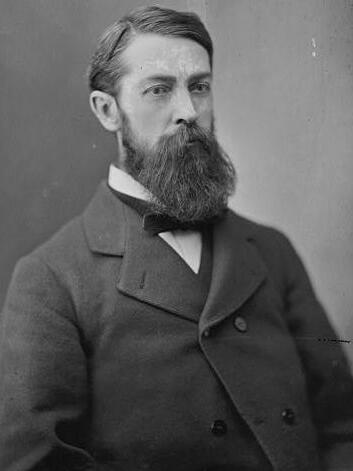
Historical · U.S. House · Pennsylvania · District 23
Thomas Bayne
Former U.S. Representative · Pennsylvania District 23 · 1877–1891 · Republican
Thomas Bayne represented Pennsylvania's District 23 in the United States House of Representatives (1877–1891) for the Republican party. The page below collects sourced biographical facts, term history, committee roles, and provenance for Bayne.
Bioguide ID: B000261
Key facts
- Full name
- Thomas Bayne
- State
- Pennsylvania
- District
- District 23
- Party
- Republican
- House service
- 1877–1891
- First House term
- 1877
- Status
- Left office
- Current term ends
- —
- Born
- 1836
- Bioguide ID
- B000261
- Committee assignments
- —
- Dataset version
- 1.20260606
Biographical narrative
1,034 words · sourced from the Wikipedia REST extract
Thomas Bayne was a notable figure in American history, serving as a U.S. Representative from Pennsylvania's 23rd congressional district. A member of the Republican Party, Bayne's political career spanned seven terms in the House of Representatives from 1877 until his departure from office in 1891. His background included significant military service during the American Civil War, a legal career, and a brief foray into journalism. Bayne's life came to a tragic end in 1894, raising questions about his mental health in the years leading up to his death.
Early life and career
Thomas Bayne was born on June 14, 1836, in Bellevue, Pennsylvania. His early education took place in local public schools, after which he attended Westminster College located in New Wilmington, Pennsylvania. This academic foundation provided him with the skills and knowledge that would later serve him in his various professional endeavors. Following his education, Bayne pursued a career in law, a field that would become central to his public service and political life.
In July 1862, during the tumult of the American Civil War, Bayne enlisted in the Union Army, rising to the rank of colonel in the 136th Pennsylvania Infantry. His military service included participation in significant battles such as Fredericksburg and Chancellorsville, where he demonstrated leadership and commitment to the Union cause. After the war concluded, Bayne returned to his legal studies, completing his education in law and gaining admission to the Allegheny County bar in April 1866.
Bayne's legal career began in earnest when he was elected as the district attorney for Allegheny County in October 1870. He served in this capacity until January 1, 1874, gaining valuable experience in the legal and political landscape of Pennsylvania. However, his political aspirations faced a setback when he ran for re-election in 1874 but was unsuccessful. Despite this defeat, Bayne's political career was far from over.
House tenure
Bayne's political fortunes changed when he was elected as a Republican to the U.S. House of Representatives, beginning his first term in 1877. Over the course of his career, he was elected to a total of seven consecutive terms in the House, serving until March 3, 1891. His tenure in Congress was marked by a commitment to his constituents in Pennsylvania, where he represented the interests of the 23rd congressional district.
During his time in the House, Bayne was involved in various legislative activities and discussions that shaped the political landscape of the era. His party affiliation with the Republicans placed him in the midst of significant national debates, particularly those surrounding post-Civil War reconstruction, economic policies, and the evolving role of the federal government. While specific details of his legislative contributions are not documented here, it is clear that Bayne's long service reflects a dedication to public service and governance.
In addition to his legislative duties, Bayne also took on the role of editor and publisher for The Evening Penny Press, a newspaper that would later be known as The Pittsburgh Press. This venture into journalism allowed him to engage with the public in a different capacity, providing a platform for discussion and dissemination of news relevant to his constituents. His involvement in the media further illustrates his commitment to communication and public discourse during a time when newspapers were a primary source of information for the American populace.
Despite his successful political career, Bayne eventually chose to decline the nomination for re-election to the Fifty-second Congress, opting to retire from public life and active business pursuits. This decision marked the end of his formal political career, but it did not diminish his previous contributions to the legislative process and the community he served.
Legislative focus and committees
While specific legislative initiatives and committee assignments during Bayne's time in Congress are not detailed in the available information, it can be inferred that his background as a lawyer and district attorney likely influenced his legislative focus. Representatives of this era often dealt with issues related to law, governance, and civil rights, particularly in the context of the post-Civil War United States. Bayne's military service and legal expertise would have provided him with a unique perspective on the challenges facing the nation during his tenure.
As a member of the Republican Party, Bayne would have participated in discussions and decisions that aligned with the party's platform, which during this period often included support for economic development, infrastructure projects, and policies aimed at integrating the Southern states back into the Union. The late 19th century was a time of significant change in America, with industrialization and urbanization reshaping the country, and Bayne's legislative work would have reflected these broader societal trends.
In addition to his legislative duties, Bayne's role as a newspaper editor may have influenced his approach to public policy and communication with his constituents. The ability to articulate ideas and engage with the public through the press was an important aspect of a representative's responsibilities during this time, and Bayne's dual roles in politics and journalism likely provided him with a comprehensive understanding of the issues affecting his district.
Bayne's career in the House of Representatives concluded in 1891, after which he withdrew from public life. His departure from politics marked the end of a significant chapter in his life, but his earlier contributions to both the military and the legal fields left a lasting impact on his community and the state of Pennsylvania.
In the years following his retirement, Bayne faced personal challenges, particularly concerning his health. Reports indicate that he expressed concerns about a potential lung hemorrhage, which may have contributed to his mental state. Tragically, on June 16, 1894, just two days after his 58th birthday, Bayne took his own life in Washington, D.C. His death was a somber conclusion to a life marked by service and dedication, and he was laid to rest in Union Dale Cemetery in Pittsburgh, Pennsylvania.
Thomas Bayne's life encapsulates the complexities of public service during a transformative period in American history. His experiences as a soldier, lawyer, and legislator reflect the multifaceted nature of civic engagement in the United States, while his tragic end serves as a reminder of the personal struggles that can accompany a life in the public eye.
Notable legislation
Sponsored and co-sponsored legislation for Thomas Bayne is pending operator curation. The biographical narrative above carries the same provenance trail until per-bill rows are written.
Sources
- [1]https://en.wikipedia.org/wiki/Thomas_M._BayneWikipedia · retrieved 2026-06-06
Notable quotes
Sourced quotes for Thomas Bayne are pending operator curation. Narrative-scope provenance remains attached below.
Sources
- [1]https://en.wikipedia.org/wiki/Thomas_M._BayneWikipedia · retrieved 2026-06-06
Key positions
Curated policy positions for Thomas Bayne are pending operator review. The biographical narrative above carries the same provenance trail until per-topic positions are written.
Sources
- [1]https://en.wikipedia.org/wiki/Thomas_M._BayneWikipedia · retrieved 2026-06-06
Terms served
- 1877–1879U.S. House · Term 1 · Republican
- 1879–1881U.S. House · Term 2 · Republican
- 1881–1883U.S. House · Term 3 · Republican
- 1883–1885U.S. House · Term 4 · Republican
- 1885–1887U.S. House · Term 5 · Republican
- 1887–1889U.S. House · Term 6 · Republican
- 1889–1891U.S. House · Term 7 · Republican
Sources & provenance
Every attributable claim above carries a per-section [N] marker that resolves to the corresponding URL below. Each entry records the upstream provider, the canonical URL, and the timestamp at which the source was retrieved by the ingest pipeline.
Key facts
- https://bioguide.congress.gov/search/bio/B000261bioguide · retrieved 2026-06-06
- https://www.govtrack.us/congress/members/401255govtrack · retrieved 2026-06-06
Biographical narrative
- https://en.wikipedia.org/wiki/Thomas_M._Baynewikipedia · retrieved 2026-06-06
Find your representative
Every U.S. state elects representatives by district. Browse Pennsylvania’s delegation, the full former-representative roster, or explore the role and term length.
Related on The Candidate
- Preceded by Alexander CochranEarlier holder of the Pennsylvania District 23 House seat · Democratic.Open
- Succeeded by William StoneLater holder of the Pennsylvania District 23 House seat · Republican.Open
- Adam SeybertFormer U.S. Representative · Pennsylvania District 1 · RepublicanOpen
- Benjamin SayFormer U.S. Representative · Pennsylvania District 1 · RepublicanOpen
- Chapman FreemanFormer U.S. Representative · Pennsylvania District 1 · RepublicanOpen
- Harry RansleyFormer U.S. Representative · Pennsylvania District 1 · RepublicanOpen