
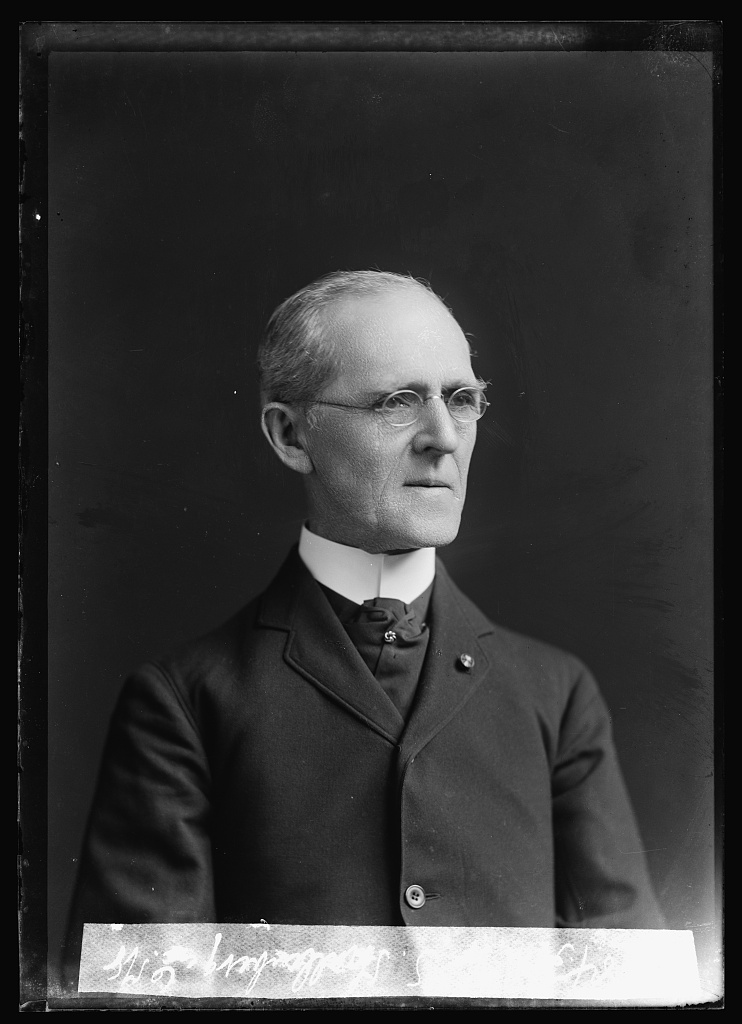
Historical · U.S. House · Pennsylvania · District 24
William Shallenberger
Former U.S. Representative · Pennsylvania District 24 · 1877–1883 · Republican
William Shallenberger represented Pennsylvania's District 24 in the United States House of Representatives (1877–1883) for the Republican party. The page below collects sourced biographical facts, term history, committee roles, and provenance for Shallenberger.
Bioguide ID: S000281
Key facts
- Full name
- William Shallenberger
- State
- Pennsylvania
- District
- District 24
- Party
- Republican
- House service
- 1877–1883
- First House term
- 1877
- Status
- Left office
- Current term ends
- —
- Born
- 1839
- Bioguide ID
- S000281
- Committee assignments
- —
- Dataset version
- 1.20260606
Biographical narrative
981 words · sourced from the Wikipedia REST extract
William Shallenberger was a Republican politician who served as a U.S. Representative for Pennsylvania's 24th congressional district. His political career spanned three terms in the House of Representatives, during which he engaged in various legislative activities and held significant positions, including chairing a key committee. Born in 1839, Shallenberger's early life and career were marked by education, military service during the Civil War, and involvement in local politics. After leaving Congress, he continued to serve the public in various capacities until his death in 1914.
Early life and career
William Shallenberger was born on November 24, 1839, in Mount Pleasant, Pennsylvania. He grew up in a community that valued education, which was reflected in his early schooling. Shallenberger attended public schools and furthered his education at Mount Pleasant Academy, an institution that prepared students for higher learning. He eventually graduated from Lewisburg University, now known as Bucknell University, in 1862. During his time at university, he became a member of the Phi Kappa Psi fraternity, which is known for fostering leadership and academic excellence among its members.
After completing his education, Shallenberger entered the mercantile business, engaging in commercial activities that likely provided him with insights into the economic conditions and needs of his community. His career in commerce was interrupted by the outbreak of the American Civil War. In 1862, he enlisted in the Union Army, joining the One Hundred and Fortieth Regiment of the Pennsylvania Volunteer Infantry. His commitment to the war effort led to his appointment as adjutant of the regiment, a role that involved significant responsibility in managing the regiment's administrative affairs. Shallenberger served in this capacity until he was mustered out of service in October 1864.
Following his military service, Shallenberger returned to his mercantile pursuits in Rochester, Pennsylvania. His experiences during the war and his business background likely influenced his later political career. In the early 1870s, he became active in local Republican politics, serving as chairman of the Beaver County Republican Committee in both 1872 and 1874. This involvement laid the groundwork for his eventual election to the U.S. House of Representatives.
House tenure
William Shallenberger was elected to the U.S. House of Representatives as a member of the Republican Party, representing Pennsylvania's 24th congressional district. His first term began in 1877, and he served a total of three consecutive terms in the House, concluding his service on March 3, 1883. During his time in Congress, Shallenberger participated in various legislative activities and contributed to discussions on a range of issues affecting his constituents and the nation.
Throughout his tenure, Shallenberger was recognized for his leadership abilities and was appointed as chairman of the United States House Committee on Public Buildings and Grounds during the Forty-seventh Congress. In this role, he was responsible for overseeing matters related to public infrastructure, including the construction and maintenance of federal buildings. This position was significant, as it allowed him to influence decisions regarding the allocation of federal resources for public works, which were crucial for the development of communities across the nation.
Shallenberger's legislative focus during his time in Congress was shaped by the political and social dynamics of the post-Civil War era. The country was undergoing significant changes, including industrialization and urbanization, which brought about new challenges and opportunities. As a representative from Pennsylvania, a state with a strong industrial base, Shallenberger was likely involved in discussions related to economic development, labor issues, and infrastructure improvements.
After completing his terms in the House, Shallenberger continued to be active in public service. He was appointed by President William McKinley as the Second Assistant Postmaster General, a position he held from 1897 to 1907. In this role, he was involved in the administration of postal services, which were vital for communication and commerce in the growing nation.
Legislative focus and committees
During his time in the House of Representatives, William Shallenberger's legislative focus encompassed a range of issues pertinent to his constituents and the broader national context. As a member of the Republican Party, he aligned with the party's platform, which during this period emphasized economic growth, infrastructure development, and support for veterans. His experiences as a businessman and a veteran likely informed his perspectives on these matters.
As chairman of the House Committee on Public Buildings and Grounds, Shallenberger played a crucial role in shaping policies related to the construction and maintenance of federal properties. This committee was responsible for overseeing projects that had a direct impact on communities, including the establishment of post offices, courthouses, and other public facilities. His leadership in this committee allowed him to advocate for the needs of his district and ensure that federal resources were allocated effectively.
In addition to his work on public buildings, Shallenberger's legislative activities would have included participation in debates and discussions on various bills and resolutions. The late 19th century was a time of significant transformation in the United States, with issues such as economic regulation, labor rights, and civil rights gaining prominence. While specific details of his legislative initiatives are not documented, his role as a representative would have required him to engage with these pressing topics.
Beyond his congressional duties, Shallenberger remained active in community and religious affairs. He was involved in Baptist life and served as President of the Home Mission Society from 1904 to 1906. His commitment to community service extended to his participation in the formation of the Northern Baptist Convention in 1907, where he contributed to the establishment of a significant religious organization aimed at addressing social and spiritual needs.
William Shallenberger passed away on April 15, 1914, in Washington, D.C. His contributions to public service, both as a congressman and in various leadership roles, left a lasting impact on his community and the nation. He was interred at Arlington National Cemetery, a testament to his service to the country during a pivotal time in its history.
Notable legislation
Sponsored and co-sponsored legislation for William Shallenberger is pending operator curation. The biographical narrative above carries the same provenance trail until per-bill rows are written.
Sources
- [1]https://en.wikipedia.org/wiki/William_S._ShallenbergerWikipedia · retrieved 2026-06-06
Notable quotes
Sourced quotes for William Shallenberger are pending operator curation. Narrative-scope provenance remains attached below.
Sources
- [1]https://en.wikipedia.org/wiki/William_S._ShallenbergerWikipedia · retrieved 2026-06-06
Key positions
Curated policy positions for William Shallenberger are pending operator review. The biographical narrative above carries the same provenance trail until per-topic positions are written.
Sources
- [1]https://en.wikipedia.org/wiki/William_S._ShallenbergerWikipedia · retrieved 2026-06-06
Terms served
- 1877–1879U.S. House · Term 1 · Republican
- 1879–1881U.S. House · Term 2 · Republican
- 1881–1883U.S. House · Term 3 · Republican
Sources & provenance
Every attributable claim above carries a per-section [N] marker that resolves to the corresponding URL below. Each entry records the upstream provider, the canonical URL, and the timestamp at which the source was retrieved by the ingest pipeline.
Key facts
- https://bioguide.congress.gov/search/bio/S000281bioguide · retrieved 2026-06-06
- https://www.govtrack.us/congress/members/409780govtrack · retrieved 2026-06-06
Biographical narrative
- https://en.wikipedia.org/wiki/William_S._Shallenbergerwikipedia · retrieved 2026-06-06
Find your representative
Every U.S. state elects representatives by district. Browse Pennsylvania’s delegation, the full former-representative roster, or explore the role and term length.
Related on The Candidate
- Preceded by John WallaceEarlier holder of the Pennsylvania District 24 House seat · Republican.Open
- Succeeded by Oscar JacksonLater holder of the Pennsylvania District 24 House seat · Republican.Open
- Adam SeybertFormer U.S. Representative · Pennsylvania District 1 · RepublicanOpen
- Benjamin SayFormer U.S. Representative · Pennsylvania District 1 · RepublicanOpen
- Chapman FreemanFormer U.S. Representative · Pennsylvania District 1 · RepublicanOpen
- Harry RansleyFormer U.S. Representative · Pennsylvania District 1 · RepublicanOpen