
Historical · U.S. House · Pennsylvania · District 25
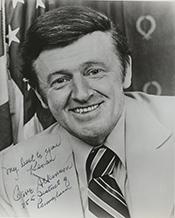
Eugene Atkinson
Former U.S. Representative · Pennsylvania District 25 · 1979–1983 · Republican
Eugene Atkinson represented Pennsylvania's District 25 in the United States House of Representatives (1979–1983) for the Republican party. The page below collects sourced biographical facts, term history, committee roles, and provenance for Atkinson.
Bioguide ID: A000329
Key facts
- Full name
- Eugene Atkinson
- State
- Pennsylvania
- District
- District 25
- Party
- Republican
- House service
- 1979–1983
- First House term
- 1979
- Status
- Left office
- Current term ends
- —
- Born
- 1927
- Bioguide ID
- A000329
- Committee assignments
- —
- Dataset version
- 1.20260605
Biographical narrative
847 words · sourced from the Wikipedia REST extract
Eugene V. Atkinson was an American politician who served as a U.S. Representative for Pennsylvania's 25th congressional district from 1979 to 1983. Initially a member of the Democratic Party, Atkinson later switched to the Republican Party during his time in office. His political career was marked by significant events, including his early support for President Jimmy Carter and a later endorsement of Senator Ted Kennedy. Atkinson's tenure in Congress was characterized by his involvement in budget discussions and party dynamics, culminating in a defeat in his bid for re-election in 1982.
Early life and career
Eugene Vincent Atkinson was born on April 5, 1927, in Aliquippa, Pennsylvania, a city located within the Pittsburgh metropolitan area. He pursued higher education at the University of Pittsburgh, where he completed his studies before embarking on a career in public service. Atkinson's professional journey began in the realm of customs management; he served as the director of customs for the port of Pittsburgh from 1962 until 1969. This role allowed him to gain valuable experience in government operations and trade regulations.
Following his tenure in customs, Atkinson transitioned to local government, becoming a Beaver County commissioner in 1972. He held this position until 1978, during which he was involved in various initiatives aimed at improving the county's infrastructure and services. His work as a commissioner helped to establish his reputation as a dedicated public servant and laid the groundwork for his subsequent entry into national politics.
House tenure
Atkinson's political career at the federal level began when he was elected to the U.S. House of Representatives in 1978. He represented Pennsylvania's 25th congressional district, which encompasses parts of Beaver County and surrounding areas. During his first term, Atkinson was recognized for his active engagement in legislative matters and his ability to connect with constituents.
Initially, Atkinson aligned himself with the Democratic Party and was an early supporter of President Jimmy Carter's administration. His political stance reflected the Democratic values of the time, emphasizing social programs and economic reforms. However, his political affiliations began to shift in the early 1980s. In 1980, Atkinson endorsed Senator Ted Kennedy for the Democratic presidential nomination, a move that indicated his willingness to support candidates who aligned with his evolving views.
A notable event during Atkinson's tenure occurred in 1981 when he participated in a radio call-in show. During this broadcast, President Ronald Reagan, who was recovering from an assassination attempt, called in to discuss budget cuts. This interaction had a significant impact on Atkinson, leading him to reconsider his political alignment. Shortly thereafter, on October 14, 1981, Atkinson announced his decision to switch parties, joining the Republican Party. He cited the Democratic Party's reaction to his support for Reagan's policies as a key factor in his decision to change affiliations.
Atkinson's party switch was met with mixed reactions. House Speaker Tip O'Neill publicly predicted that Atkinson would face challenges in his re-election campaign due to his new alignment. Despite these warnings, Atkinson continued to campaign for his second term. However, the political landscape had shifted, and in the 1982 election, he was defeated by Democratic challenger Joseph P. Kolter. The loss was significant, as Atkinson faced a substantial margin of defeat, which underscored the challenges he encountered as a result of his party switch.
Legislative focus and committees
During his time in the U.S. House of Representatives, Atkinson was involved in various legislative initiatives and discussions that reflected the priorities of his constituents and the broader political climate. His early support for President Carter's policies indicated a focus on social welfare and economic issues, which were central to the Democratic agenda of the late 1970s. However, as he transitioned to the Republican Party, Atkinson's legislative focus began to align more closely with conservative principles, particularly regarding fiscal responsibility and budgetary matters.
Atkinson's participation in congressional committees allowed him to engage with a range of issues pertinent to his district and the nation. While specific committee assignments during his tenure are not detailed, it is common for representatives to serve on committees that align with their interests and the needs of their constituents. These committees typically address areas such as appropriations, commerce, and public works, among others.
Throughout his congressional career, Atkinson navigated the complexities of party politics and the shifting dynamics within the House of Representatives. His decision to switch parties was emblematic of a broader trend during the early 1980s, as many politicians reassessed their affiliations in response to changing voter sentiments and national leadership. Atkinson's experiences in Congress reflected the challenges faced by representatives who sought to balance their personal beliefs with the expectations of their constituents and party leadership.
After leaving office in 1983, Atkinson continued to be recognized for his contributions to public service. He passed away on August 4, 2016, at the age of 89, leaving behind a legacy that included his unique journey through the political landscape of Pennsylvania and the United States. His career serves as a reminder of the evolving nature of political affiliation and the impact of individual representatives on the legislative process.
Notable legislation
Sponsored and co-sponsored legislation for Eugene Atkinson is pending operator curation. The biographical narrative above carries the same provenance trail until per-bill rows are written.
Sources
- [1]https://en.wikipedia.org/wiki/Eugene_AtkinsonWikipedia · retrieved 2026-06-05
Notable quotes
Sourced quotes for Eugene Atkinson are pending operator curation. Narrative-scope provenance remains attached below.
Sources
- [1]https://en.wikipedia.org/wiki/Eugene_AtkinsonWikipedia · retrieved 2026-06-05
Key positions
Curated policy positions for Eugene Atkinson are pending operator review. The biographical narrative above carries the same provenance trail until per-topic positions are written.
Sources
- [1]https://en.wikipedia.org/wiki/Eugene_AtkinsonWikipedia · retrieved 2026-06-05
Terms served
- 1979–1981U.S. House · Term 1 · Democratic
- 1981–1983U.S. House · Term 2 · Republican
Sources & provenance
Every attributable claim above carries a per-section [N] marker that resolves to the corresponding URL below. Each entry records the upstream provider, the canonical URL, and the timestamp at which the source was retrieved by the ingest pipeline.
Key facts
- https://bioguide.congress.gov/search/bio/A000329bioguide · retrieved 2026-06-05
- https://www.govtrack.us/congress/members/400978govtrack · retrieved 2026-06-05
Biographical narrative
- https://en.wikipedia.org/wiki/Eugene_Atkinsonwikipedia · retrieved 2026-06-05
Find your representative
Every U.S. state elects representatives by district. Browse Pennsylvania’s delegation, the full former-representative roster, or explore the role and term length.
Related on The Candidate
- Preceded by Gary MyersEarlier holder of the Pennsylvania District 25 House seat · Republican.Open
- Adam SeybertFormer U.S. Representative · Pennsylvania District 1 · RepublicanOpen
- Benjamin SayFormer U.S. Representative · Pennsylvania District 1 · RepublicanOpen
- Chapman FreemanFormer U.S. Representative · Pennsylvania District 1 · RepublicanOpen
- Harry RansleyFormer U.S. Representative · Pennsylvania District 1 · RepublicanOpen
- Republican PartyFederal candidates and office holders on the Republican line.Open