
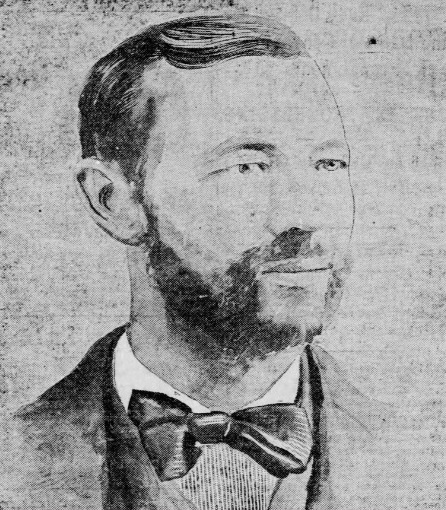
Historical · U.S. House · Pennsylvania · District 25
Eugene Gillespie
Former U.S. Representative · Pennsylvania District 25 · 1891–1893 · Democratic
Eugene Gillespie represented Pennsylvania's District 25 in the United States House of Representatives (1891–1893) for the Democratic party. The page below collects sourced biographical facts, term history, committee roles, and provenance for Gillespie.
Bioguide ID: G000195
Key facts
- Full name
- Eugene Gillespie
- State
- Pennsylvania
- District
- District 25
- Party
- Democratic
- House service
- 1891–1893
- First House term
- 1891
- Status
- Left office
- Current term ends
- —
- Born
- 1852
- Bioguide ID
- G000195
- Committee assignments
- —
- Dataset version
- 1.20260606
Biographical narrative
876 words · sourced from the Wikipedia REST extract
Eugene Gillespie was a Democratic politician who served as a U.S. Representative for Pennsylvania's 25th congressional district during the early 1890s. His tenure in the House of Representatives was marked by his involvement in legislative processes during a period of significant political and social change in the United States. Born in the mid-19th century, Gillespie's life and career reflect the dynamics of American politics during that era, as well as the professional pathways available to individuals in the legal and political fields.
Early life and career
Eugene Gillespie was born on September 24, 1852, in Greenville, Pennsylvania. His early education took place in the local public schools, where he likely received a foundational education that would prepare him for future academic pursuits. Gillespie furthered his education at Allegheny College, located in Meadville, Pennsylvania, which is known for its liberal arts curriculum and commitment to developing critical thinking skills. He also attended St. Michael's College in Toronto, Ontario, Canada, indicating a broader educational experience that extended beyond U.S. borders.
After completing his studies, Gillespie chose to pursue a career in law, a common profession for many individuals seeking to enter public service during that time. He studied law diligently and was admitted to the bar in August 1874, which allowed him to practice law officially. Following his admission, Gillespie began his legal career in Greenville, where he established himself as a practicing attorney. His work in the legal field would have provided him with valuable insights into the workings of government and the legal system, likely shaping his future political aspirations.
Gillespie's legal practice in Greenville not only contributed to his professional development but also positioned him within the community, allowing him to build relationships and gain recognition. These connections would later prove beneficial as he transitioned into a political career. His background in law would have equipped him with skills in argumentation, negotiation, and understanding complex legislative issues, all of which are essential for a successful career in politics.
House tenure
Eugene Gillespie's political career began when he was elected as a Democrat to the Fifty-second Congress, representing Pennsylvania's 25th congressional district. His election to the House of Representatives marked a significant milestone in his career, as it provided him with an opportunity to influence national legislation and represent the interests of his constituents in Washington, D.C. Gillespie's term in the House began in 1891, a time when the United States was undergoing considerable transformation, including industrialization, urbanization, and various social movements.
During his time in Congress, Gillespie participated in the legislative process, contributing to discussions and decisions that shaped policies affecting a wide range of issues. However, his tenure was relatively brief, as he faced challenges in securing reelection. Gillespie was an unsuccessful candidate for reelection in 1892, which marked the end of his time in the House. Despite the challenges he faced in maintaining his congressional seat, his service in the House represented a significant chapter in his professional life.
After concluding his term on March 3, 1893, Gillespie returned to his legal practice in Greenville. His experience in Congress would have enriched his understanding of law and governance, allowing him to apply his knowledge in his legal work. Gillespie's return to law after his congressional service illustrates a common trajectory for politicians of his time, who often returned to their professional careers after serving in public office.
Legislative focus and committees
While specific details regarding the legislative focus and committee assignments of Eugene Gillespie during his time in Congress are not extensively documented, it can be inferred that his background in law would have influenced his approach to legislative matters. As a member of the Democratic Party during the early 1890s, Gillespie would have aligned himself with the party's platform, which typically emphasized issues such as labor rights, economic reform, and social justice. The political landscape of this era was characterized by debates over tariffs, labor conditions, and the role of government in regulating the economy, all of which would have been relevant to Gillespie's work in Congress.
Given the context of his time in office, Gillespie likely engaged in discussions surrounding the economic challenges faced by his constituents, particularly those related to the industrial economy that was rapidly developing in Pennsylvania and across the nation. His legal expertise may have provided him with a unique perspective on the implications of legislation affecting business practices, labor relations, and the rights of workers.
After leaving Congress, Gillespie continued to practice law until his death on December 16, 1899. His legal career, combined with his experience as a congressman, contributed to his understanding of the complexities of governance and the importance of legal frameworks in shaping public policy. Gillespie was laid to rest at the Shenango Valley Cemetery, marking the end of his life and career.
In summary, Eugene Gillespie's life and career reflect the multifaceted nature of American political life in the late 19th century. His educational background, legal career, and brief tenure in the U.S. House of Representatives illustrate the pathways available to individuals seeking to influence public policy and serve their communities. Although his time in Congress was limited, Gillespie's contributions to the legal and political landscape of Pennsylvania remain a part of the historical narrative of the era.
Notable legislation
Sponsored and co-sponsored legislation for Eugene Gillespie is pending operator curation. The biographical narrative above carries the same provenance trail until per-bill rows are written.
Sources
- [1]https://en.wikipedia.org/wiki/Eugene_P._GillespieWikipedia · retrieved 2026-06-06
Notable quotes
Sourced quotes for Eugene Gillespie are pending operator curation. Narrative-scope provenance remains attached below.
Sources
- [1]https://en.wikipedia.org/wiki/Eugene_P._GillespieWikipedia · retrieved 2026-06-06
Key positions
Curated policy positions for Eugene Gillespie are pending operator review. The biographical narrative above carries the same provenance trail until per-topic positions are written.
Sources
- [1]https://en.wikipedia.org/wiki/Eugene_P._GillespieWikipedia · retrieved 2026-06-06
Terms served
- 1891–1893U.S. House · Term 1 · Democratic
Sources & provenance
Every attributable claim above carries a per-section [N] marker that resolves to the corresponding URL below. Each entry records the upstream provider, the canonical URL, and the timestamp at which the source was retrieved by the ingest pipeline.
Key facts
- https://bioguide.congress.gov/search/bio/G000195bioguide · retrieved 2026-06-06
- https://www.govtrack.us/congress/members/404560govtrack · retrieved 2026-06-06
Biographical narrative
- https://en.wikipedia.org/wiki/Eugene_P._Gillespiewikipedia · retrieved 2026-06-06
Find your representative
Every U.S. state elects representatives by district. Browse Pennsylvania’s delegation, the full former-representative roster, or explore the role and term length.
Related on The Candidate
- Preceded by Charles TownsendEarlier holder of the Pennsylvania District 25 House seat · Republican.Open
- Succeeded by Thomas PhillipsLater holder of the Pennsylvania District 25 House seat · Republican.Open
- Adam SeybertFormer U.S. Representative · Pennsylvania District 1 · RepublicanOpen
- Benjamin SayFormer U.S. Representative · Pennsylvania District 1 · RepublicanOpen
- Chapman FreemanFormer U.S. Representative · Pennsylvania District 1 · RepublicanOpen
- Harry RansleyFormer U.S. Representative · Pennsylvania District 1 · RepublicanOpen