
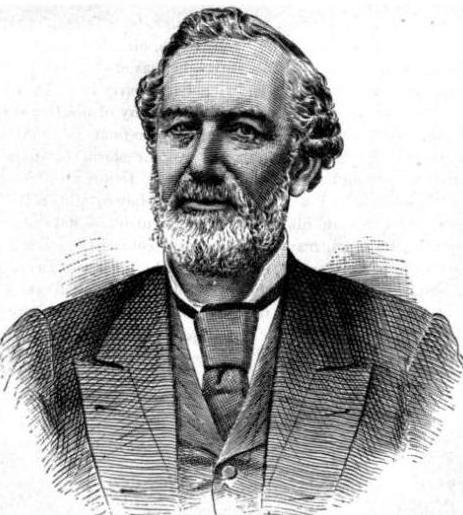
Historical · U.S. House · Pennsylvania · District 25
James Mosgrove
Former U.S. Representative · Pennsylvania District 25 · 1881–1883 · National Greenbacker
James Mosgrove represented Pennsylvania's District 25 in the United States House of Representatives (1881–1883) for the National Greenbacker party. The page below collects sourced biographical facts, term history, committee roles, and provenance for Mosgrove.
Bioguide ID: M001030
Key facts
- Full name
- James Mosgrove
- State
- Pennsylvania
- District
- District 25
- Party
- National Greenbacker
- House service
- 1881–1883
- First House term
- 1881
- Status
- Left office
- Current term ends
- —
- Born
- 1821
- Bioguide ID
- M001030
- Committee assignments
- —
- Dataset version
- 1.20260606
Biographical narrative
1,002 words · sourced from the Wikipedia REST extract
James Mosgrove was a notable figure in American politics during the late 19th century, serving as a U.S. Representative for Pennsylvania's 25th congressional district. A member of the National Greenbacker Party, he held office in the U.S. House of Representatives from 1881 until 1883. His career was marked by his engagement in both business and politics, reflecting the economic and social dynamics of his time. Mosgrove's contributions to public service and his involvement in banking after his congressional tenure highlight his multifaceted career and the impact he had on his local community.
Early life and career
James Mosgrove was born on June 14, 1821, in Kittanning, Pennsylvania, a town located along the Allegheny River. His early education took place in the common schools of the area, which provided him with a foundational understanding of reading, writing, and arithmetic. While specific details about his family background and early influences are not extensively documented, it is evident that his upbringing in Pennsylvania played a significant role in shaping his future endeavors.
Before entering politics, Mosgrove established himself in the iron business, a sector that was vital to the industrial growth of the United States during the 19th century. This experience in the iron industry likely provided him with insights into the economic challenges and opportunities faced by his community and the nation. His involvement in business would have also contributed to his understanding of financial matters, which later became relevant during his time in public office and in his banking career.
In 1878, Mosgrove sought to enter the political arena by running for office as a candidate on the Greenback ticket. The Greenback Party emerged in the post-Civil War era, advocating for the issuance of paper currency not backed by gold or silver, which they believed would help alleviate economic distress and promote the interests of farmers and laborers. Although Mosgrove's initial bid for elected office was unsuccessful, it marked the beginning of his political aspirations and his commitment to addressing economic issues.
Mosgrove's political career gained momentum when he was elected to the U.S. House of Representatives as a Greenback candidate for the Forty-seventh Congress. His election to Congress in 1881 represented a significant achievement, as he became a voice for his constituents in Washington, D.C. During his time in office, he focused on issues that were pertinent to the economic landscape of the time, reflecting the interests of his party and the needs of his district.
House tenure
James Mosgrove's tenure in the U.S. House of Representatives began in 1881 and concluded in 1883. As a member of the National Greenbacker Party, he was part of a political movement that sought to address the economic challenges faced by many Americans during the post-Civil War period. The Greenbackers advocated for monetary reform, particularly the expansion of the money supply through the issuance of paper currency. This was a contentious issue at the time, as it pitted the interests of agrarian and labor groups against those of bankers and industrialists who favored a gold-backed currency.
During his time in Congress, Mosgrove participated in the legislative process, contributing to discussions and debates that shaped national policy. Although specific details regarding the bills he supported or opposed are not documented, his alignment with the Greenback Party suggests that he was involved in efforts to promote economic reforms aimed at benefiting working-class citizens and farmers. His election to the House came at a time when the country was grappling with economic fluctuations, and his role as a legislator would have placed him at the center of these critical discussions.
Mosgrove's congressional career was relatively brief, as he chose not to seek renomination in 1882. This decision may have been influenced by various factors, including the political landscape of the time and his personal aspirations. Additionally, he declined to pursue the Democratic nomination for governor, indicating a strategic choice to step back from electoral politics after his term in the House. This decision reflects a common practice among politicians who, after serving in a particular capacity, may opt to focus on other professional pursuits or personal interests.
Legislative focus and committees
While specific details about the committees on which James Mosgrove served during his time in the House of Representatives are not available, it can be inferred that his legislative focus aligned with the priorities of the Greenback Party. The party's platform emphasized monetary reform, economic justice, and the needs of the working class. As a representative from Pennsylvania, a state with a significant industrial base, Mosgrove likely engaged with issues related to labor, trade, and economic development.
The Greenback Party's advocacy for the expansion of the money supply was particularly relevant during Mosgrove's tenure, as many Americans were struggling with the effects of deflation and economic instability. His support for policies that aimed to increase the availability of currency would have resonated with his constituents, who were often affected by the economic challenges of the era. This focus on monetary reform was a central tenet of the Greenback movement, which sought to empower ordinary citizens and promote economic equity.
After concluding his term in Congress, Mosgrove transitioned to a career in banking. He became the president of the First National Bank, a position he held from 1882 until his death. This role allowed him to continue influencing the economic landscape of his community, utilizing his experience in business and finance to contribute to local economic development. His involvement in banking reflects a common trajectory for politicians of his time, who often leveraged their public service experience into roles within the private sector.
James Mosgrove passed away on November 27, 1900, in Kittanning, Pennsylvania. His contributions to public service and his engagement in the banking sector left a lasting impact on his community. He was interred in the Kittanning Cemetery, where he is remembered as a figure who navigated the complexities of 19th-century American politics and economics. His life and career exemplify the intersection of business and politics during a transformative period in U.S. history.
Notable legislation
Sponsored and co-sponsored legislation for James Mosgrove is pending operator curation. The biographical narrative above carries the same provenance trail until per-bill rows are written.
Sources
- [1]https://en.wikipedia.org/wiki/James_MosgroveWikipedia · retrieved 2026-06-06
Notable quotes
Sourced quotes for James Mosgrove are pending operator curation. Narrative-scope provenance remains attached below.
Sources
- [1]https://en.wikipedia.org/wiki/James_MosgroveWikipedia · retrieved 2026-06-06
Key positions
Curated policy positions for James Mosgrove are pending operator review. The biographical narrative above carries the same provenance trail until per-topic positions are written.
Sources
- [1]https://en.wikipedia.org/wiki/James_MosgroveWikipedia · retrieved 2026-06-06
Terms served
- 1881–1883U.S. House · Term 1 · National Greenbacker
Sources & provenance
Every attributable claim above carries a per-section [N] marker that resolves to the corresponding URL below. Each entry records the upstream provider, the canonical URL, and the timestamp at which the source was retrieved by the ingest pipeline.
Key facts
- https://bioguide.congress.gov/search/bio/M001030bioguide · retrieved 2026-06-06
- https://www.govtrack.us/congress/members/407997govtrack · retrieved 2026-06-06
Biographical narrative
- https://en.wikipedia.org/wiki/James_Mosgrovewikipedia · retrieved 2026-06-06
Find your representative
Every U.S. state elects representatives by district. Browse Pennsylvania’s delegation, the full former-representative roster, or explore the role and term length.
Related on The Candidate
- Preceded by Harry WhiteEarlier holder of the Pennsylvania District 25 House seat · Republican.Open
- Succeeded by John PattonLater holder of the Pennsylvania District 25 House seat · Democratic.Open
- Adam SeybertFormer U.S. Representative · Pennsylvania District 1 · RepublicanOpen
- Benjamin SayFormer U.S. Representative · Pennsylvania District 1 · RepublicanOpen
- Chapman FreemanFormer U.S. Representative · Pennsylvania District 1 · RepublicanOpen
- Harry RansleyFormer U.S. Representative · Pennsylvania District 1 · RepublicanOpen