
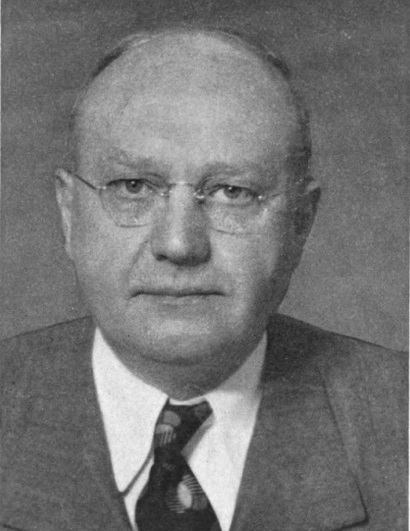
Historical · U.S. House · Pennsylvania · District 28
Herman Eberharter
Former U.S. Representative · Pennsylvania District 28 · 1937–1959 · Democratic
Herman Eberharter represented Pennsylvania's District 28 in the United States House of Representatives (1937–1959) for the Democratic party. The page below collects sourced biographical facts, term history, committee roles, and provenance for Eberharter.
Bioguide ID: E000029
Key facts
- Full name
- Herman Eberharter
- State
- Pennsylvania
- District
- District 28
- Party
- Democratic
- House service
- 1937–1959
- First House term
- 1937
- Status
- Left office
- Current term ends
- —
- Born
- 1892
- Bioguide ID
- E000029
- Committee assignments
- —
- Dataset version
- 1.20260605
Biographical narrative
897 words · sourced from the Wikipedia REST extract
Herman Eberharter was a Democratic politician who served as a U.S. Representative for Pennsylvania's 28th congressional district from 1937 until his death in 1958. Known for his long tenure in Congress, Eberharter was involved in significant legislative actions during a transformative period in American history. His career was marked by his commitment to various social issues and his participation in key congressional committees.
Early life and career
Herman Peter Eberharter was born on April 29, 1892, in Pittsburgh, Pennsylvania. He was the son of an Austrian immigrant father and the grandson of German immigrant grandparents. This diverse heritage influenced his worldview and political perspectives. Eberharter's early life in Pittsburgh, a city known for its industrial base and immigrant communities, shaped his understanding of the challenges faced by working-class families.
Eberharter's education culminated in a law degree from Duquesne University Law School, which he obtained in 1925. Following his graduation, he began practicing law in Pittsburgh, establishing himself in the legal community. His legal career was complemented by a commitment to public service, which led him to enter politics. Eberharter's political career began at the state level when he was elected to the Pennsylvania House of Representatives, where he served in 1935 and 1936. His experience in state politics laid the groundwork for his subsequent election to the U.S. Congress.
During World War I, Eberharter served in the United States Army, where he began his military career as a private in the 20th Infantry Regiment. His service was marked by a commitment to his country, and he eventually attained the rank of second lieutenant. After the war, he continued to serve in the military as a member of the Officers' Reserve Corps, ultimately rising to the rank of major. This military background contributed to his understanding of national issues and informed his legislative priorities in Congress.
House tenure
Eberharter was first elected to the U.S. House of Representatives in 1936, representing Pennsylvania's 28th congressional district. His first term began on January 3, 1937, and he continued to serve in this capacity until his death on January 3, 1959. Over the course of his congressional career, Eberharter was elected to a total of eleven terms, reflecting his sustained support from constituents and his ability to navigate the political landscape of the time.
Throughout his tenure, Eberharter was involved in various legislative initiatives and debates that shaped the nation during a period of significant change. His long service in Congress allowed him to witness and participate in the evolution of federal policies, particularly those related to social welfare, labor rights, and foreign affairs. Eberharter's alignment with the Democratic Party positioned him to advocate for New Deal policies and other progressive reforms aimed at addressing the economic challenges of the Great Depression and the post-war era.
Eberharter's legislative career was characterized by his commitment to his constituents and his active participation in congressional committees. He was a member of the House Committee on Ways and Means, one of the most influential committees in Congress, which is responsible for taxation and revenue-related legislation. His involvement in this committee allowed him to play a significant role in shaping fiscal policy during a critical time in American history.
Legislative focus and committees
Eberharter's legislative focus encompassed a range of issues, reflecting the diverse needs of his constituents and the broader national context. One notable achievement during his time in Congress was his introduction of legislation that granted official Congressional approval of the Pledge of Allegiance in 1945. This act underscored his commitment to American values and national unity during a time when the country was grappling with the aftermath of World War II.
In addition to his work on the Ways and Means Committee, Eberharter was also a member of the Dies Committee, which investigated allegations of espionage and subversion during World War II. This committee was known for its controversial findings, including the "Yellow Report," which made unfounded claims about Japanese-American espionage based on cultural stereotypes. Eberharter distinguished himself as the only member of the committee to publicly oppose the wartime internment of Japanese Americans, demonstrating his willingness to stand against prevailing sentiments and advocate for civil liberties.
Eberharter's political ideology was characterized by a commitment to internationalism and progressive values. A confidential analysis from 1943 described him as a "New Dealer" with a focus on international cooperation and a belief in the importance of humanitarian aid. His advocacy for policies such as Lend-Lease, which provided assistance to allied nations during World War II, reflected his belief in the necessity of global solidarity in times of crisis.
Throughout his congressional career, Eberharter maintained a focus on issues that affected working families, including labor rights and social welfare. His background as a lawyer and his experiences in the military informed his understanding of the complexities of governance and the importance of equitable policies. Eberharter's legacy is marked by his contributions to significant legislative initiatives and his commitment to representing the interests of his constituents in Pennsylvania.
Eberharter passed away on September 9, 1958, in Arlington, Virginia, leaving behind a legacy of public service and dedication to the principles of democracy. He was laid to rest at Mount Carmel Cemetery in Pittsburgh, Pennsylvania. His long tenure in the U.S. House of Representatives and his involvement in pivotal legislative actions reflect a career dedicated to the service of his country and his constituents.
Notable legislation
Sponsored and co-sponsored legislation for Herman Eberharter is pending operator curation. The biographical narrative above carries the same provenance trail until per-bill rows are written.
Sources
- [1]https://en.wikipedia.org/wiki/Herman_P._EberharterWikipedia · retrieved 2026-06-05
Notable quotes
Sourced quotes for Herman Eberharter are pending operator curation. Narrative-scope provenance remains attached below.
Sources
- [1]https://en.wikipedia.org/wiki/Herman_P._EberharterWikipedia · retrieved 2026-06-05
Key positions
Curated policy positions for Herman Eberharter are pending operator review. The biographical narrative above carries the same provenance trail until per-topic positions are written.
Sources
- [1]https://en.wikipedia.org/wiki/Herman_P._EberharterWikipedia · retrieved 2026-06-05
Terms served
- 1937–1939U.S. House · Term 1 · Democratic
- 1939–1941U.S. House · Term 2 · Democratic
- 1941–1943U.S. House · Term 3 · Democratic
- 1943–1945U.S. House · Term 4 · Democratic
- 1945–1947U.S. House · Term 5 · Democratic
- 1947–1949U.S. House · Term 6 · Democratic
- 1949–1951U.S. House · Term 7 · Democratic
- 1951–1953U.S. House · Term 8 · Democratic
- 1953–1955U.S. House · Term 9 · Democratic
- 1955–1957U.S. House · Term 10 · Democratic
- 1957–1959U.S. House · Term 11 · Democratic
Sources & provenance
Every attributable claim above carries a per-section [N] marker that resolves to the corresponding URL below. Each entry records the upstream provider, the canonical URL, and the timestamp at which the source was retrieved by the ingest pipeline.
Key facts
- https://bioguide.congress.gov/search/bio/E000029bioguide · retrieved 2026-06-05
- https://www.govtrack.us/congress/members/403724govtrack · retrieved 2026-06-05
Biographical narrative
- https://en.wikipedia.org/wiki/Herman_P._Eberharterwikipedia · retrieved 2026-06-05
Find your representative
Every U.S. state elects representatives by district. Browse Pennsylvania’s delegation, the full former-representative roster, or explore the role and term length.
Related on The Candidate
- Preceded by William BerlinEarlier holder of the Pennsylvania District 28 House seat · Democratic.Open
- Adam SeybertFormer U.S. Representative · Pennsylvania District 1 · RepublicanOpen
- Benjamin SayFormer U.S. Representative · Pennsylvania District 1 · RepublicanOpen
- Chapman FreemanFormer U.S. Representative · Pennsylvania District 1 · RepublicanOpen
- Harry RansleyFormer U.S. Representative · Pennsylvania District 1 · RepublicanOpen
- Democratic PartyFederal candidates and office holders on the Democratic line.Open