
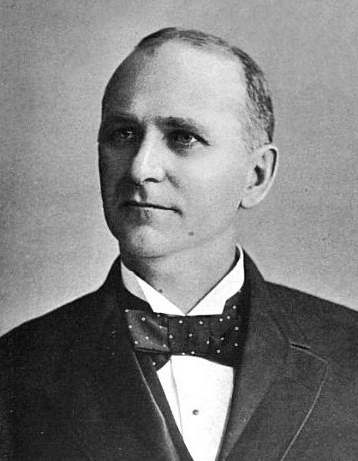
Historical · U.S. House · Pennsylvania · District 28
Joseph Sibley
Former U.S. Representative · Pennsylvania District 28 · 1893–1907 · Republican
Joseph Sibley represented Pennsylvania's District 28 in the United States House of Representatives (1893–1907) for the Republican party. The page below collects sourced biographical facts, term history, committee roles, and provenance for Sibley.
Bioguide ID: S000398
Key facts
- Full name
- Joseph Sibley
- State
- Pennsylvania
- District
- District 28
- Party
- Republican
- House service
- 1893–1907
- First House term
- 1893
- Status
- Left office
- Current term ends
- —
- Born
- 1850
- Bioguide ID
- S000398
- Committee assignments
- —
- Dataset version
- 1.20260606
Biographical narrative
992 words · sourced from the Wikipedia REST extract
Joseph Sibley was a prominent American livestock breeder, farmer, and politician who served as a U.S. Representative for Pennsylvania's 28th congressional district. A member of the Republican Party, Sibley had a notable political career that spanned five terms in the United States House of Representatives from the early 1890s until the early 1900s. His legislative focus included issues related to monetary policy, tariff reform, and political term limits. Sibley was also known for his entrepreneurial ventures in the oil and livestock industries prior to his political career.
Early life and career
Joseph Crocker Sibley, Jr. was born on February 18, 1850, in Friendship, Allegany County, New York. He was the son of Joseph Crocker Sibley, Sr., a medical doctor, and Lucy Elvira Babcock, who worked as a school teacher before her marriage. From an early age, Sibley exhibited a strong affinity for reading, encouraged by his parents, which allowed him to develop a precocious intellect. By the age of six, he was already reading books that were intended for older audiences.
In 1859, Sibley’s family relocated to Boston, a small town in Erie County, New York. There, he attended local schools and academies in the surrounding areas, including Springville and Friendship. The death of his father in 1866 significantly impacted Sibley’s education, leading him to leave school a year or two later. Although he initially pursued a career in education, teaching for a brief period, Sibley soon transitioned to working as a clerk in a dry goods store. He harbored aspirations of attending college to study medicine, dedicating his spare time to reading medical texts. Ultimately, he chose not to pursue this path.
On March 10, 1870, Sibley married Metta Evalina Babcock, a fellow resident of Friendship. The couple would remain together for over four decades and raised two daughters. Metta Sibley passed away on July 26, 1911.
Sibley ventured into the oil-refining business in the early 1870s, where he made significant contributions to the industry. By 1873, he had developed a specialized product known as signal oil, which was designed for railway use and offered superior illuminating properties compared to existing lighting oils. He founded the Signal Oil Works to manufacture and market this innovative product. His entrepreneurial spirit led him to further advancements in petroleum refining, including the creation of a successful oil for valve lubrication.
In 1882, Sibley entered the livestock breeding business with a partner, forming Miller & Sibley. This company gained recognition for its breeding of horses and cattle, particularly race trotters, and at its peak, owned a substantial number of livestock. In 1902, he partnered with his brother-in-law, Charles Miller, to establish the Galena-Signal Oil Company, which also achieved considerable success and contributed to Sibley’s wealth. This company eventually became part of the Standard Oil conglomerate, which later evolved into well-known brands such as Texaco and Valvoline.
House tenure
Sibley’s political career began in 1879 when he was elected mayor of Franklin, Pennsylvania, at the age of 29. His entry into national politics occurred during the 1892 election cycle when he was nominated for Congress by the Prohibition Party. Although not a strict abstainer from alcohol, Sibley gained respect for his principled stance against drinking at a banquet hosted by local brewers, which demonstrated his commitment to the Prohibitionist cause. His candidacy was later supported by the Democratic Party and the People's Party.
Sibley proved to be a vigorous campaigner, delivering numerous speeches and showcasing his oratorical skills. His efforts culminated in a surprising victory in November 1892, which secured him a seat in the Fifty-third Congress. During his initial term, he emerged as a vocal critic of the gold standard and advocated for the unlimited coinage of silver. Additionally, he supported efforts to remove political considerations from tariff policies and proposed a constitutional amendment to limit the presidency to a single six-year term.
After losing his re-election bids in 1894 and 1896, Sibley returned to Congress in 1898, this time as a Democrat, winning a seat in the Fifty-sixth Congress. In 1900, he switched his party affiliation to Republican and was subsequently elected to the 57th United States Congress. He successfully secured re-election in 1902 and 1904, serving in the Fifty-eighth and Fifty-ninth Congresses. During these terms, he held the position of chairman of the House Committee on Manufactures.
Despite his successes, Sibley chose not to seek renomination in 1906, opting instead to retire from public office and return to private life. He had plans to re-enter politics in 1910, aiming for a sixth term in Congress. However, a severe heart attack that year prevented him from campaigning, leading to his withdrawal from the race and effectively concluding his political career.
Legislative focus and committees
Throughout his time in the House of Representatives, Joseph Sibley was known for his active engagement in legislative matters, particularly concerning monetary policy and economic reform. His opposition to the gold standard and advocacy for the unlimited coinage of silver reflected the economic concerns of many constituents during a period marked by financial instability and debates over currency. Sibley’s efforts to depoliticize tariff issues indicated his desire to create a more stable economic environment, free from the influence of partisan politics.
As a member of the House Committee on Manufactures, Sibley played a significant role in shaping policies related to industry and commerce. His leadership in this committee during the Fifty-eighth and Fifty-ninth Congresses allowed him to influence legislation that affected manufacturing and economic growth in the United States.
Sibley’s political career was characterized by his willingness to engage in complex issues and advocate for reforms that he believed would benefit the public. His legislative focus and committee work reflected his commitment to addressing the economic challenges of his time, as well as his desire to contribute to the development of sound public policy. After leaving Congress, Sibley returned to private life, where he continued to engage in business ventures until his passing on May 19, 1926.
Notable legislation
Sponsored and co-sponsored legislation for Joseph Sibley is pending operator curation. The biographical narrative above carries the same provenance trail until per-bill rows are written.
Sources
- [1]https://en.wikipedia.org/wiki/Joseph_C._SibleyWikipedia · retrieved 2026-06-06
Notable quotes
Sourced quotes for Joseph Sibley are pending operator curation. Narrative-scope provenance remains attached below.
Sources
- [1]https://en.wikipedia.org/wiki/Joseph_C._SibleyWikipedia · retrieved 2026-06-06
Key positions
Curated policy positions for Joseph Sibley are pending operator review. The biographical narrative above carries the same provenance trail until per-topic positions are written.
Sources
- [1]https://en.wikipedia.org/wiki/Joseph_C._SibleyWikipedia · retrieved 2026-06-06
Terms served
- 1893–1895U.S. House · Term 1 · Democratic
- 1899–1901U.S. House · Term 2 · Democratic
- 1901–1903U.S. House · Term 3 · Republican
- 1903–1905U.S. House · Term 4 · Republican
- 1905–1907U.S. House · Term 5 · Republican
Sources & provenance
Every attributable claim above carries a per-section [N] marker that resolves to the corresponding URL below. Each entry records the upstream provider, the canonical URL, and the timestamp at which the source was retrieved by the ingest pipeline.
Key facts
- https://bioguide.congress.gov/search/bio/S000398bioguide · retrieved 2026-06-06
- https://www.govtrack.us/congress/members/409892govtrack · retrieved 2026-06-06
Biographical narrative
- https://en.wikipedia.org/wiki/Joseph_C._Sibleywikipedia · retrieved 2026-06-06
Find your representative
Every U.S. state elects representatives by district. Browse Pennsylvania’s delegation, the full former-representative roster, or explore the role and term length.
Related on The Candidate
- Preceded by James KerrEarlier holder of the Pennsylvania District 28 House seat · Democratic.Open
- Succeeded by Nelson WheelerLater holder of the Pennsylvania District 28 House seat · Republican.Open
- Adam SeybertFormer U.S. Representative · Pennsylvania District 1 · RepublicanOpen
- Benjamin SayFormer U.S. Representative · Pennsylvania District 1 · RepublicanOpen
- Chapman FreemanFormer U.S. Representative · Pennsylvania District 1 · RepublicanOpen
- Harry RansleyFormer U.S. Representative · Pennsylvania District 1 · RepublicanOpen