
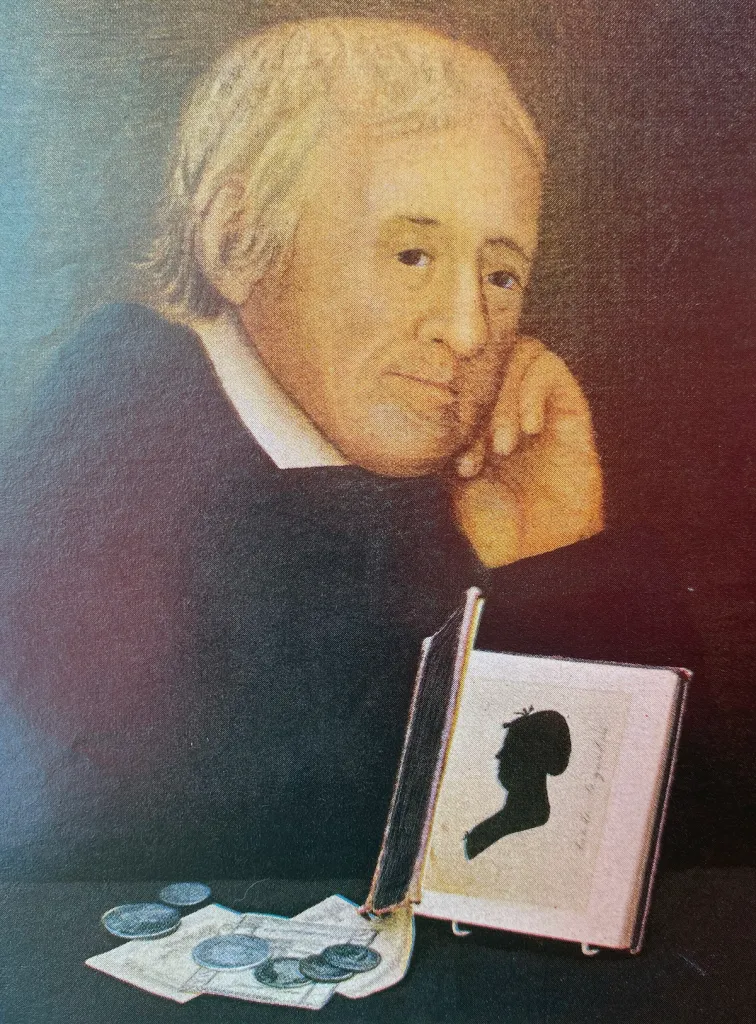
Historical · U.S. House · Pennsylvania · District 3
Amos Slaymaker
Former U.S. Representative · Pennsylvania District 3 · 1813–1815 · Federalist
Amos Slaymaker represented Pennsylvania's District 3 in the United States House of Representatives (1813–1815) for the Federalist party. The page below collects sourced biographical facts, term history, committee roles, and provenance for Slaymaker.
Bioguide ID: S000483
Key facts
- Full name
- Amos Slaymaker
- State
- Pennsylvania
- District
- District 3
- Party
- Federalist
- House service
- 1813–1815
- First House term
- 1813
- Status
- Left office
- Current term ends
- —
- Born
- 1755
- Bioguide ID
- S000483
- Committee assignments
- —
- Dataset version
- 1.20260606
Biographical narrative
823 words · sourced from the Wikipedia REST extract
Amos Slaymaker was a U.S. Representative from Pennsylvania who served in the Thirteenth Congress as a member of the Federalist Party. His political career was marked by his involvement in local governance and his contributions during a pivotal time in American history. Slaymaker's life spanned significant events, including the American Revolutionary War, and he played a role in both state and national politics before his death in 1837.
Early life and career
Amos Slaymaker was born on March 11, 1755, in London Lands, located in Lancaster County, Pennsylvania. His early life in this region, which was part of the Province of Pennsylvania, laid the foundation for his later involvement in local and national affairs. Slaymaker's family background included notable connections; his younger sister, Faithful, was the mother of George Duffield, a prominent Presbyterian minister in the nineteenth century.
Before entering politics, Slaymaker established himself in the community through various ventures, including the construction and operation of a hotel situated along the Philadelphia and Lancaster Turnpike. This location was significant as it served as a major route for travelers and commerce, enhancing his visibility and influence within the region.
During the American Revolutionary War, Slaymaker demonstrated his commitment to the cause of independence by serving as an ensign in a military company led by Captain John Slaymaker. His service in the military was complemented by his active participation in local governance, where he was involved in efforts to suppress Loyalist activities in Lancaster County. This involvement reflected the turbulent political climate of the time and showcased his dedication to the revolutionary ideals that shaped the emerging nation.
In addition to his military service, Slaymaker held various local offices, including that of justice of the peace in Salisbury Township, Pennsylvania. His role as a county commissioner from 1806 to 1810 further established his reputation as a public servant committed to the welfare of his community. Following his tenure as a commissioner, he was elected to the Pennsylvania State Senate, where he served from 1810 to 1811. These experiences provided him with a solid foundation in governance and public policy, which would later inform his work at the national level.
House tenure
Amos Slaymaker's congressional career began when he was elected to the U.S. House of Representatives as a member of the Federalist Party. He filled a vacancy in the Thirteenth Congress, which arose due to the resignation of James Whitehill. Slaymaker's election marked his transition from state to federal politics, allowing him to contribute to the legislative process at a national level.
His term in the House of Representatives commenced in 1813, during a period characterized by significant political and social changes in the United States. The nation was grappling with the challenges posed by the War of 1812, which influenced many aspects of governance and policy-making. As a member of the Federalist Party, Slaymaker aligned himself with a political faction that was often critical of the war and advocated for a more cautious approach to foreign affairs.
Slaymaker's tenure in the House lasted until March 3, 1815, when he completed his service. His time in Congress was marked by the broader context of Federalist opposition to the war and the shifting political landscape that would soon lead to the decline of the party. Although Slaymaker served only one term, his involvement in the legislative process during this tumultuous period contributed to the ongoing debates surrounding national identity, governance, and the role of the federal government.
Legislative focus and committees
During his time in the U.S. House of Representatives, Amos Slaymaker's legislative focus was influenced by the pressing issues of his era, particularly those related to the War of 1812 and its implications for American society. As a member of the Federalist Party, he was part of a political group that often expressed concerns about the war's impact on trade and national security. The Federalists were known for their advocacy of strong commercial ties with Great Britain and a cautious approach to military engagement, which shaped Slaymaker's perspectives on various legislative matters.
While specific details regarding the bills he sponsored or the committees he served on are not documented, it can be inferred that Slaymaker's background as a local leader and his experiences in state governance would have informed his contributions to discussions on economic policy, military readiness, and civil liberties. His previous roles in local government and the state senate likely provided him with insights into the needs and concerns of his constituents, which he would have aimed to represent in Congress.
After completing his term in the House, Slaymaker returned to his community, where he continued to be involved in local affairs until his death on June 21, 1837. He was interred in the Leacock Presbyterian Cemetery in Paradise, Pennsylvania. His life and career reflect the complexities of early American politics and the challenges faced by those who sought to navigate the evolving landscape of governance in the United States.
Notable legislation
Sponsored and co-sponsored legislation for Amos Slaymaker is pending operator curation. The biographical narrative above carries the same provenance trail until per-bill rows are written.
Sources
- [1]https://en.wikipedia.org/wiki/Amos_SlaymakerWikipedia · retrieved 2026-06-06
Notable quotes
Sourced quotes for Amos Slaymaker are pending operator curation. Narrative-scope provenance remains attached below.
Sources
- [1]https://en.wikipedia.org/wiki/Amos_SlaymakerWikipedia · retrieved 2026-06-06
Key positions
Curated policy positions for Amos Slaymaker are pending operator review. The biographical narrative above carries the same provenance trail until per-topic positions are written.
Sources
- [1]https://en.wikipedia.org/wiki/Amos_SlaymakerWikipedia · retrieved 2026-06-06
Terms served
- 1813–1815U.S. House · Term 1 · Federalist
Sources & provenance
Every attributable claim above carries a per-section [N] marker that resolves to the corresponding URL below. Each entry records the upstream provider, the canonical URL, and the timestamp at which the source was retrieved by the ingest pipeline.
Key facts
- https://bioguide.congress.gov/search/bio/S000483bioguide · retrieved 2026-06-06
- https://www.govtrack.us/congress/members/409971govtrack · retrieved 2026-06-06
Biographical narrative
- https://en.wikipedia.org/wiki/Amos_Slaymakerwikipedia · retrieved 2026-06-06
Find your representative
Every U.S. state elects representatives by district. Browse Pennsylvania’s delegation, the full former-representative roster, or explore the role and term length.
Related on The Candidate
- Preceded by Joseph LefeverEarlier holder of the Pennsylvania District 3 House seat · Republican.Open
- Succeeded by James WallaceLater holder of the Pennsylvania District 3 House seat · Republican.Open
- Adam SeybertFormer U.S. Representative · Pennsylvania District 1 · RepublicanOpen
- Benjamin SayFormer U.S. Representative · Pennsylvania District 1 · RepublicanOpen
- Chapman FreemanFormer U.S. Representative · Pennsylvania District 1 · RepublicanOpen
- Harry RansleyFormer U.S. Representative · Pennsylvania District 1 · RepublicanOpen