
Historical · U.S. House · Pennsylvania · District 3
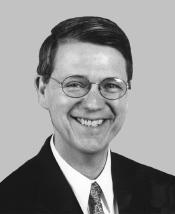
Robert Borski
Former U.S. Representative · Pennsylvania District 3 · 1983–2003 · Democratic
Robert Borski represented Pennsylvania's District 3 in the United States House of Representatives (1983–2003) for the Democratic party. The page below collects sourced biographical facts, term history, committee roles, and provenance for Borski.
Bioguide ID: B000644
Key facts
- Full name
- Robert Borski
- State
- Pennsylvania
- District
- District 3
- Party
- Democratic
- House service
- 1983–2003
- First House term
- 1983
- Status
- Left office
- Current term ends
- —
- Born
- 1948
- Bioguide ID
- B000644
- Committee assignments
- —
- Dataset version
- 1.20260605
Biographical narrative
887 words · sourced from the Wikipedia REST extract
Robert A. Borski is a former American politician who served as a Democratic U.S. Representative for Pennsylvania's 3rd congressional district from 1983 until 2003. His tenure in Congress spanned two decades, during which he participated in significant legislative activities and held influential positions within the House of Representatives. Borski's political career began in the Pennsylvania state legislature, where he served prior to his election to Congress. He is recognized for his contributions to transportation and infrastructure policy, as well as his involvement in various legislative initiatives during his time in office.
Early life and career
Robert Anthony Borski Jr. was born on October 20, 1948, in Philadelphia, Pennsylvania. He completed his secondary education at Frankford High School before pursuing higher education at the University of Baltimore, from which he graduated in 1971. Following his graduation, Borski began his political career in the Pennsylvania House of Representatives, where he served from 1977 to 1982. His experience at the state level provided him with a foundation in legislative processes and public service, which he would later apply during his time in Congress.
In 1982, Borski sought to expand his political influence by running for the U.S. House of Representatives. He contested the 3rd congressional district, a seat that had been renumbered from the 4th district following the 1980 Census. His opponent was the incumbent Republican Representative Charles F. Dougherty. The political climate of the time was challenging for Republicans, primarily due to a recession that had led to widespread public discontent. Borski capitalized on this sentiment, aided by favorable redistricting that shifted several heavily Democratic wards into the 3rd district. His campaign culminated in a narrow victory, where he won by less than 3,000 votes, marking the end of Dougherty's tenure and making Borski the first Democrat to represent a significant portion of Philadelphia in the House.
House tenure
Borski's congressional career began in 1983, and he would go on to serve a total of ten terms in the House of Representatives. Throughout his time in office, he became a prominent figure within the Democratic Party and was recognized for his leadership on various issues. Borski was known for his alignment with liberal Democratic values, although he held a notable position on the issue of abortion, opposing it in most circumstances.
During his two decades in Congress, Borski ascended to the role of the second-ranking Democrat on the Transportation and Infrastructure Committee. This position allowed him to play a critical role in shaping policies related to transportation, infrastructure development, and related funding initiatives. His work on this committee was significant, given the importance of infrastructure in the United States and its impact on local and national economies.
Borski's legislative record includes a variety of votes and initiatives. Notably, on October 10, 2002, he was among the 81 House Democrats who voted in favor of authorizing military action in Iraq. This decision was part of a broader national debate regarding U.S. foreign policy and military engagement at the time. His support for this measure reflected a complex stance on national security issues, balancing party lines with his own views.
Borski faced challenges during his tenure, particularly related to redistricting. In 2002, the Republican-controlled Pennsylvania State Legislature enacted changes that affected his district. Following the 2000 Census, Pennsylvania was required to eliminate two congressional districts, leading to the dismantling of Borski's northeast Philadelphia district. His residence was drawn into the Montgomery County-based 13th District, which was represented by two-term Democrat Joe Hoeffel. Anticipating a contentious primary battle, Borski chose not to seek re-election, ultimately retiring from Congress in January 2003. His decision allowed Hoeffel to avoid a costly primary campaign, demonstrating a level of strategic consideration in the face of political changes.
Legislative focus and committees
Throughout his congressional career, Robert Borski's legislative focus primarily revolved around transportation and infrastructure issues, reflecting his leadership role on the Transportation and Infrastructure Committee. His tenure on this committee allowed him to influence significant legislation that impacted the development and maintenance of transportation systems across the United States. Borski's work in this area was crucial, as it addressed the needs of constituents and the broader public regarding infrastructure improvements and funding.
In addition to his committee work, Borski participated in various legislative initiatives that aligned with his party's goals and the interests of his constituents. His voting record and public statements indicated a commitment to addressing issues such as urban development, public transportation, and infrastructure funding. While he was generally classified as a liberal Democrat, his opposition to abortion in most cases highlighted the complexity of his political positions and the diversity of views within the Democratic Party.
After retiring from Congress, Borski transitioned to a career in lobbying, establishing his own firm, Borski Associates. He was subsequently hired by Pennsylvania Governor Ed Rendell in 2003 to assist in lobbying efforts on behalf of the state in Congress. His experience and connections from his time in office likely contributed to his effectiveness in this new role.
In 2010, Borski was recognized by Politics Magazine as one of the most influential Democrats in Pennsylvania, underscoring his continued relevance in the political landscape of the state even after his departure from Congress. His career reflects a commitment to public service and a focus on issues that have lasting impacts on communities and infrastructure.
Notable legislation
Sponsored and co-sponsored legislation for Robert Borski is pending operator curation. The biographical narrative above carries the same provenance trail until per-bill rows are written.
Sources
- [1]https://en.wikipedia.org/wiki/Robert_BorskiWikipedia · retrieved 2026-06-05
Notable quotes
Sourced quotes for Robert Borski are pending operator curation. Narrative-scope provenance remains attached below.
Sources
- [1]https://en.wikipedia.org/wiki/Robert_BorskiWikipedia · retrieved 2026-06-05
Key positions
Curated policy positions for Robert Borski are pending operator review. The biographical narrative above carries the same provenance trail until per-topic positions are written.
Sources
- [1]https://en.wikipedia.org/wiki/Robert_BorskiWikipedia · retrieved 2026-06-05
Terms served
- 1983–1985U.S. House · Term 1 · Democratic
- 1985–1987U.S. House · Term 2 · Democratic
- 1987–1989U.S. House · Term 3 · Democratic
- 1989–1991U.S. House · Term 4 · Democratic
- 1991–1993U.S. House · Term 5 · Democratic
- 1993–1995U.S. House · Term 6 · Democratic
- 1995–1997U.S. House · Term 7 · Democratic
- 1997–1999U.S. House · Term 8 · Democratic
- 1999–2001U.S. House · Term 9 · Democratic
- 2001–2003U.S. House · Term 10 · Democratic
Sources & provenance
Every attributable claim above carries a per-section [N] marker that resolves to the corresponding URL below. Each entry records the upstream provider, the canonical URL, and the timestamp at which the source was retrieved by the ingest pipeline.
Key facts
- https://bioguide.congress.gov/search/bio/B000644bioguide · retrieved 2026-06-05
- https://www.govtrack.us/congress/members/400542govtrack · retrieved 2026-06-05
Biographical narrative
- https://en.wikipedia.org/wiki/Robert_Borskiwikipedia · retrieved 2026-06-05
Find your representative
Every U.S. state elects representatives by district. Browse Pennsylvania’s delegation, the full former-representative roster, or explore the role and term length.
Related on The Candidate
- Preceded by Joseph SmithEarlier holder of the Pennsylvania District 3 House seat · Democratic.Open
- Succeeded by Kathleen DahlkemperLater holder of the Pennsylvania District 3 House seat · Democratic.Open
- Adam SeybertFormer U.S. Representative · Pennsylvania District 1 · RepublicanOpen
- Benjamin SayFormer U.S. Representative · Pennsylvania District 1 · RepublicanOpen
- Chapman FreemanFormer U.S. Representative · Pennsylvania District 1 · RepublicanOpen
- Harry RansleyFormer U.S. Representative · Pennsylvania District 1 · RepublicanOpen