
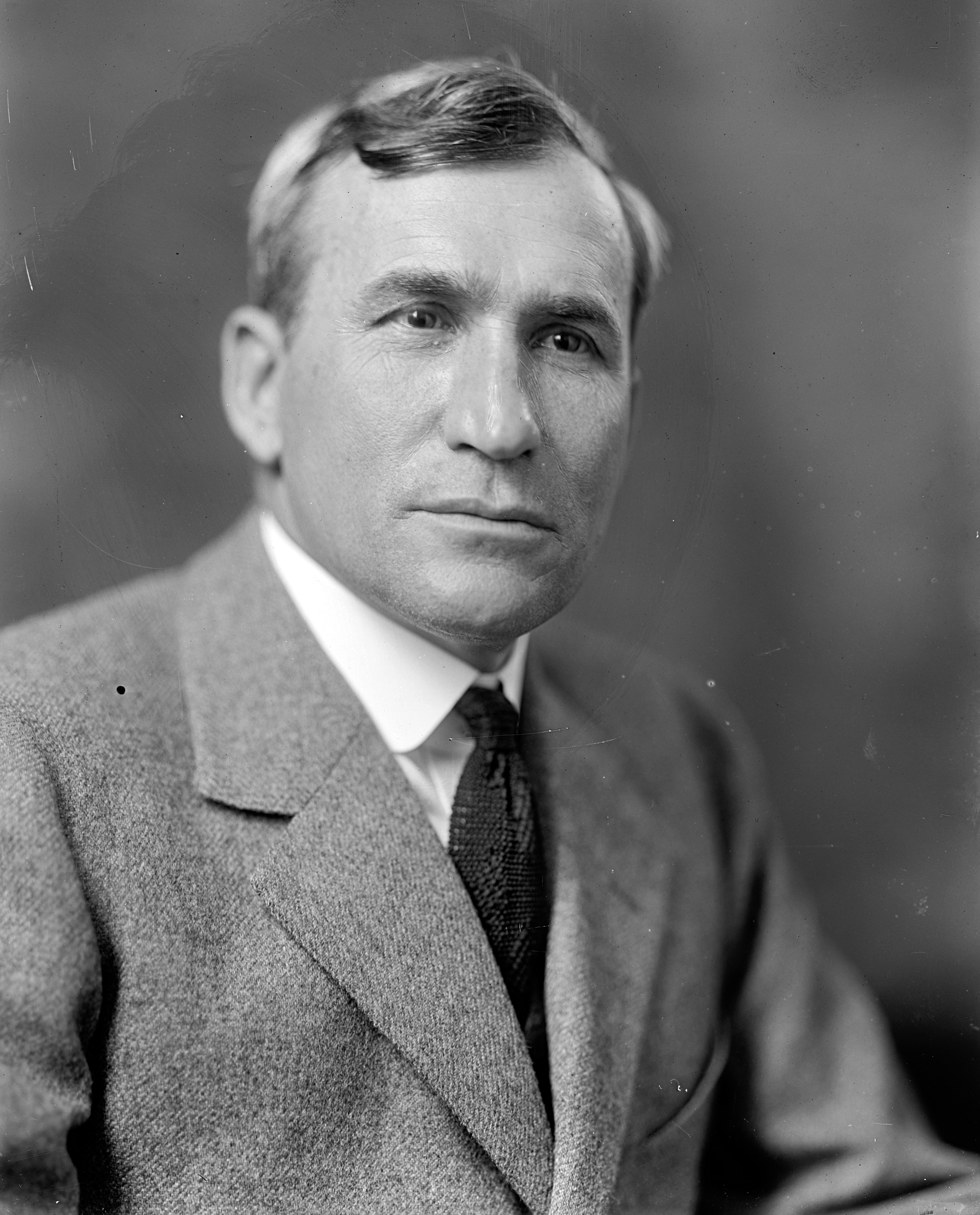
Historical · U.S. House · Pennsylvania · District 31
Adam Wyant
Former U.S. Representative · Pennsylvania District 31 · 1921–1933 · Republican
Adam Wyant represented Pennsylvania's District 31 in the United States House of Representatives (1921–1933) for the Republican party. The page below collects sourced biographical facts, term history, committee roles, and provenance for Wyant.
Bioguide ID: W000776
Key facts
- Full name
- Adam Wyant
- State
- Pennsylvania
- District
- District 31
- Party
- Republican
- House service
- 1921–1933
- First House term
- 1921
- Status
- Left office
- Current term ends
- —
- Born
- 1869
- Bioguide ID
- W000776
- Committee assignments
- —
- Dataset version
- 1.20260606
Biographical narrative
859 words · sourced from the Wikipedia REST extract
Adam Wyant was an American politician and former U.S. Representative from Pennsylvania, serving as a member of the Republican Party. His congressional career spanned six terms, during which he represented Pennsylvania's 31st congressional district. In addition to his political achievements, Wyant is notable for being the first professional football player elected to the United States Congress. His life journey included a significant athletic career, a commitment to education, and a transition into law and politics.
Early life and career
Adam Martin Wyant was born on September 15, 1869, in Montgomeryville, Pennsylvania, near Kittanning. He was the son of Christian Yerty Wyant and Elizabeth John, both of whom were residents of Washington Township in Armstrong County. His family lineage traces back to early German settlers who arrived in Bedford County, Pennsylvania, in 1770. Wyant's name honors his paternal grandfather, reflecting a connection to his family's heritage.
Wyant's educational journey began at the Mount Pleasant Institute in Lewisburg, Pennsylvania. He later attended Bucknell University for three years, where he played on early football teams alongside his brother, Andy Wyant. After Andy transferred to the University of Chicago, Adam followed suit and continued his football career under the guidance of the renowned coach Amos Alonzo Stagg. Wyant played as a guard and graduated from the University of Chicago in 1895.
Following his graduation, Wyant returned to western Pennsylvania, where he took on a teaching role in Mt. Pleasant. In 1896, he moved to Greensburg, Pennsylvania, where he became known for his athletic prowess. Standing at 6 feet tall and weighing 196 pounds, Wyant was considered a formidable athlete for his time. In the fall of 1895, he joined the Greensburg Athletic Association, one of the early professional football clubs, where he played quarterback, a position that was evolving during that era. His teammates included notable players such as Lawson Fiscus and Charlie Atherton.
In addition to his football career, Wyant made significant contributions to education. While still playing professionally, he became the first principal of Greensburg High School and subsequently served as the city's first superintendent of schools. However, his football career came to an end in the summer of 1897 when he decided to pursue a legal education at the University of Pittsburgh. He was admitted to the Westmoreland County Bar in 1902 and began practicing law in Greensburg. Wyant also engaged in various business ventures, including interests in coal mining.
In 1910, Wyant married Katherine N. Doty, the daughter of a Westmoreland County judge. This personal milestone marked a new chapter in his life as he balanced his professional and personal commitments.
House tenure
Adam Wyant's political career began in earnest when he was elected as a Republican to the 67th United States Congress in 1920. He represented Pennsylvania's 22nd congressional district, achieving a significant electoral victory with the largest majority ever recorded for a Republican candidate in that district's history. His tenure in the House of Representatives lasted for twelve years, during which he was re-elected five additional times, demonstrating a sustained level of support from his constituents.
Wyant's congressional service began in 1921 and continued until March 3, 1933. Throughout his six terms, he participated in various legislative activities and contributed to discussions on a range of issues pertinent to his district and the nation. His political career coincided with a period of significant change in the United States, including the economic challenges of the Great Depression. Despite his previous electoral successes, Wyant faced a challenging political landscape in 1932 and was ultimately unsuccessful in his bid for re-election.
After concluding his time in Congress, Wyant returned to his previous business pursuits, focusing on his legal practice and other interests. His post-congressional career allowed him to remain engaged in his community and continue contributing to the local economy.
Legislative focus and committees
During his time in the U.S. House of Representatives, Adam Wyant was involved in various legislative matters, although specific details regarding his committee assignments and legislative initiatives are not extensively documented. His role as a congressman would have included participation in discussions and votes on legislation that affected both his constituents in Pennsylvania and the broader national context.
Wyant's background in education and law likely informed his perspectives on various issues, particularly those related to education policy, labor, and economic development. Given the historical context of his tenure, it is reasonable to assume that he addressed the challenges posed by the Great Depression and sought to advocate for measures that would benefit his district.
The combination of his professional football background and his political career marks Wyant as a unique figure in American history, particularly as he bridged the worlds of athletics and politics. His election to Congress as a former professional athlete reflects the evolving nature of American society and the increasing recognition of sports figures in public life.
Adam Wyant passed away on January 5, 1935, in Greensburg, Pennsylvania, after a battle with cancer. His contributions to education, athletics, and public service left a lasting impact on his community. He was interred in St. Clair Cemetery, where he is remembered for his multifaceted life as an athlete, educator, lawyer, and politician.
Notable legislation
Sponsored and co-sponsored legislation for Adam Wyant is pending operator curation. The biographical narrative above carries the same provenance trail until per-bill rows are written.
Sources
- [1]https://en.wikipedia.org/wiki/Adam_WyantWikipedia · retrieved 2026-06-06
Notable quotes
Sourced quotes for Adam Wyant are pending operator curation. Narrative-scope provenance remains attached below.
Sources
- [1]https://en.wikipedia.org/wiki/Adam_WyantWikipedia · retrieved 2026-06-06
Key positions
Curated policy positions for Adam Wyant are pending operator review. The biographical narrative above carries the same provenance trail until per-topic positions are written.
Sources
- [1]https://en.wikipedia.org/wiki/Adam_WyantWikipedia · retrieved 2026-06-06
Terms served
- 1921–1923U.S. House · Term 1 · Republican
- 1923–1925U.S. House · Term 2 · Republican
- 1925–1927U.S. House · Term 3 · Republican
- 1927–1929U.S. House · Term 4 · Republican
- 1929–1931U.S. House · Term 5 · Republican
- 1931–1933U.S. House · Term 6 · Republican
Sources & provenance
Every attributable claim above carries a per-section [N] marker that resolves to the corresponding URL below. Each entry records the upstream provider, the canonical URL, and the timestamp at which the source was retrieved by the ingest pipeline.
Key facts
- https://bioguide.congress.gov/search/bio/W000776bioguide · retrieved 2026-06-06
- https://www.govtrack.us/congress/members/411925govtrack · retrieved 2026-06-06
Biographical narrative
- https://en.wikipedia.org/wiki/Adam_Wyantwikipedia · retrieved 2026-06-06
Find your representative
Every U.S. state elects representatives by district. Browse Pennsylvania’s delegation, the full former-representative roster, or explore the role and term length.
Related on The Candidate
- Preceded by James BurkeEarlier holder of the Pennsylvania District 31 House seat · Republican.Open
- Succeeded by James QuinnLater holder of the Pennsylvania District 31 House seat · Democratic.Open
- Adam SeybertFormer U.S. Representative · Pennsylvania District 1 · RepublicanOpen
- Benjamin SayFormer U.S. Representative · Pennsylvania District 1 · RepublicanOpen
- Chapman FreemanFormer U.S. Representative · Pennsylvania District 1 · RepublicanOpen
- Harry RansleyFormer U.S. Representative · Pennsylvania District 1 · RepublicanOpen