
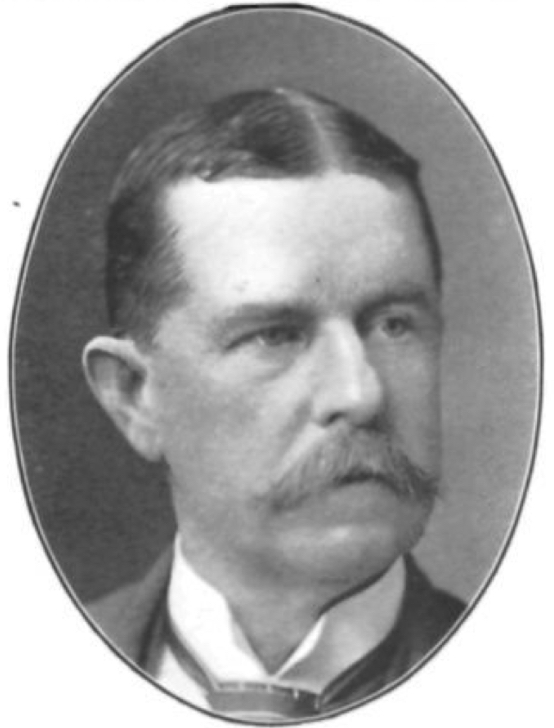
Historical · U.S. House · Pennsylvania · District 4
James Young
Former U.S. Representative · Pennsylvania District 4 · 1897–1903 · Republican
James Young represented Pennsylvania's District 4 in the United States House of Representatives (1897–1903) for the Republican party. The page below collects sourced biographical facts, term history, committee roles, and provenance for Young.
Bioguide ID: Y000041
Key facts
- Full name
- James Young
- State
- Pennsylvania
- District
- District 4
- Party
- Republican
- House service
- 1897–1903
- First House term
- 1897
- Status
- Left office
- Current term ends
- —
- Born
- 1847
- Bioguide ID
- Y000041
- Committee assignments
- —
- Dataset version
- 1.20260606
Biographical narrative
952 words · sourced from the Wikipedia REST extract
James Young was an American newspaperman and Civil War veteran who served as a Republican member of the U.S. House of Representatives for Pennsylvania's 4th congressional district from 1897 to 1903. His career spanned various roles in journalism and government, reflecting a commitment to public service and political engagement. Young's background in the newspaper industry and his experiences during the Civil War shaped his perspectives and contributions to American society.
Early life and career
James Young was born on March 10, 1847, in Philadelphia, Pennsylvania. He received his early education at Central High School, where he studied until 1863. His formative years in Philadelphia, a city with a rich political and cultural history, likely influenced his later pursuits in journalism and public service.
In June 1863, amid the ongoing Civil War, Young enlisted in the Union Army, joining the Thirty-second Regiment of the Pennsylvania Volunteer Infantry. His military service lasted until 1865, during which he participated in significant campaigns that contributed to the Union's efforts in the conflict. This experience not only instilled in him a sense of duty and patriotism but also provided him with insights into the challenges facing the nation during a tumultuous period.
Following the war, Young transitioned into the newspaper business, becoming one of the founders of the Philadelphia Evening Star in 1866. His involvement in journalism allowed him to engage with the public and influence political discourse. Young's career in this field included a notable position as the chief of the Washington bureau for the New York Tribune from June 1866 to December 1870. This role placed him at the center of national politics, where he reported on significant events and developments in the capital.
In addition to his work in journalism, Young held various positions within the federal government. He served as the chief executive clerk of the United States Senate during two separate terms, first from December 1873 to March 1879 and again from December 1883 to April 1892. In between these tenures, he was appointed as the Chief Clerk of the Department of Justice from September 1882 to December 1883. These roles provided him with a deep understanding of governmental operations and legislative processes, which would later inform his work as a congressman.
House tenure
James Young's political career in the U.S. House of Representatives began when he was elected as a Republican to the 55th Congress in 1896. His election marked the start of three consecutive terms in office, during which he represented Pennsylvania's 4th congressional district. Young's tenure in Congress lasted from 1897 until March 3, 1903, when he concluded his service.
During his time in the House, Young was actively involved in various legislative matters and served on important committees. Notably, he held the position of Chairman of the United States House Committee on Expenditures in the War Department during the 57th Congress. This role placed him at the forefront of discussions related to military spending and oversight, reflecting the ongoing concerns of the time regarding national defense and fiscal responsibility.
Young's legislative activities were influenced by his background in journalism and his experiences in the military. His understanding of the complexities of government operations and his commitment to public service informed his approach to policymaking. Throughout his congressional career, he participated in debates and discussions that shaped the legislative landscape of the late 19th and early 20th centuries.
After concluding his service in the House, Young continued to contribute to public life. He took on the role of superintendent of the Dead Letter Office of the Post Office Department from 1905 to 1913, where he was responsible for managing undeliverable mail. Additionally, he served as the superintendent of the postal savings depository in Philadelphia until 1915, further demonstrating his ongoing commitment to public service.
Legislative focus and committees
James Young's legislative focus during his time in the U.S. House of Representatives was shaped by his background in journalism and his experiences as a Civil War veteran. His role as Chairman of the House Committee on Expenditures in the War Department highlighted his interest in military affairs and fiscal oversight. This position allowed him to engage with issues related to government spending, particularly in the context of national defense, which was a significant concern during his tenure.
Young's involvement in the committee provided him with a platform to influence decisions regarding military expenditures and ensure accountability within the War Department. His experiences as a veteran likely informed his perspectives on the needs of the armed forces and the importance of responsible budgeting in support of national security.
In addition to his committee work, Young's broader legislative activities reflected the political climate of the time. The late 19th century was marked by significant changes in American society, including industrialization, urbanization, and shifts in political power. Young's engagement in these discussions contributed to the evolving narrative of American governance and public policy.
Throughout his congressional career, Young maintained a focus on issues relevant to his constituents and the nation as a whole. His background in journalism equipped him with the skills to communicate effectively and advocate for the interests of his district. By participating in debates and legislative initiatives, he sought to address the concerns of his constituents while navigating the complexities of federal governance.
After leaving Congress, Young continued to play a role in public service, demonstrating his enduring commitment to the nation. His career trajectory, from a Civil War veteran to a prominent newspaperman and U.S. Representative, reflects a life dedicated to civic engagement and the pursuit of public good. Young passed away on December 18, 1924, and was interred at Glenwood Cemetery in Washington, D.C., leaving behind a legacy of service in both journalism and government.
Notable legislation
Sponsored and co-sponsored legislation for James Young is pending operator curation. The biographical narrative above carries the same provenance trail until per-bill rows are written.
Sources
- [1]https://en.wikipedia.org/wiki/James_R._Young_(Pennsylvania_politician)Wikipedia · retrieved 2026-06-06
Notable quotes
Sourced quotes for James Young are pending operator curation. Narrative-scope provenance remains attached below.
Sources
- [1]https://en.wikipedia.org/wiki/James_R._Young_(Pennsylvania_politician)Wikipedia · retrieved 2026-06-06
Key positions
Curated policy positions for James Young are pending operator review. The biographical narrative above carries the same provenance trail until per-topic positions are written.
Sources
- [1]https://en.wikipedia.org/wiki/James_R._Young_(Pennsylvania_politician)Wikipedia · retrieved 2026-06-06
Terms served
- 1897–1899U.S. House · Term 1 · Republican
- 1899–1901U.S. House · Term 2 · Republican
- 1901–1903U.S. House · Term 3 · Republican
Sources & provenance
Every attributable claim above carries a per-section [N] marker that resolves to the corresponding URL below. Each entry records the upstream provider, the canonical URL, and the timestamp at which the source was retrieved by the ingest pipeline.
Key facts
- https://bioguide.congress.gov/search/bio/Y000041bioguide · retrieved 2026-06-06
- https://www.govtrack.us/congress/members/411973govtrack · retrieved 2026-06-06
Biographical narrative
- https://en.wikipedia.org/wiki/James_R._Young_(Pennsylvania_politician)wikipedia · retrieved 2026-06-06
Find your representative
Every U.S. state elects representatives by district. Browse Pennsylvania’s delegation, the full former-representative roster, or explore the role and term length.
Related on The Candidate
- Preceded by William KelleyEarlier holder of the Pennsylvania District 4 House seat · Republican.Open
- Succeeded by Reuben MoonLater holder of the Pennsylvania District 4 House seat · Republican.Open
- Adam SeybertFormer U.S. Representative · Pennsylvania District 1 · RepublicanOpen
- Benjamin SayFormer U.S. Representative · Pennsylvania District 1 · RepublicanOpen
- Chapman FreemanFormer U.S. Representative · Pennsylvania District 1 · RepublicanOpen
- Harry RansleyFormer U.S. Representative · Pennsylvania District 1 · RepublicanOpen