
Historical · U.S. House · Pennsylvania · District 4
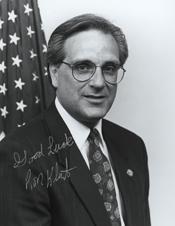
Ron Klink
Former U.S. Representative · Pennsylvania District 4 · 1993–2001 · Democratic
Ron Klink represented Pennsylvania's District 4 in the United States House of Representatives (1993–2001) for the Democratic party. The page below collects sourced biographical facts, term history, committee roles, and provenance for Klink.
Bioguide ID: K000270
Key facts
- Full name
- Ron Klink
- State
- Pennsylvania
- District
- District 4
- Party
- Democratic
- House service
- 1993–2001
- First House term
- 1993
- Status
- Left office
- Current term ends
- —
- Born
- 1951
- Bioguide ID
- K000270
- Committee assignments
- —
- Dataset version
- 1.20260605
Biographical narrative
827 words · sourced from the Wikipedia REST extract
Ron Klink is a former American politician and television broadcaster who served as a U.S. Representative for Pennsylvania's 4th congressional district from 1993 until 2001. A member of the Democratic Party, Klink is known for his moderate political stance and strong connections to labor unions. His career in public service followed a successful tenure in broadcasting, where he gained recognition as a television news weatherman and reporter. Klink's political journey included four terms in the House of Representatives and an unsuccessful bid for the U.S. Senate in 2000.
Early life and career
Ron Klink was born on September 23, 1951, in Canton, Ohio. He spent his formative years in Pennsylvania, where he graduated from Meyersdale High School in 1969. Following his education, Klink embarked on a career in broadcasting, which would later serve as a platform for his entry into politics. His initial foray into the media industry began at WTAJ-TV in Altoona, Pennsylvania, where he worked behind the scenes from 1976 to 1977. His talents soon led him to become a weatherman and fill-in sports anchor at the station.
In July 1978, Klink transitioned to KDKA-TV in Pittsburgh, where he became a well-known figure in the region. Over the course of his tenure at KDKA, which lasted until 1991, Klink established himself as a prominent television news weatherman and reporter. His visibility in the Pittsburgh area contributed to his public persona and laid the groundwork for his future political career.
In addition to his professional achievements, Klink married Linda Loree Hogan in Greensburg, Pennsylvania, on August 27, 1977. This personal milestone marked the beginning of a family life that would accompany him through his political endeavors.
House tenure
Klink's political career began in earnest when he sought the Democratic nomination for Pennsylvania's 4th congressional district in 1992. In a significant political upset, he defeated the five-term incumbent Joe Kolter in the primary election. This victory was indicative of Klink's appeal as a moderate Democrat, particularly within a district that had strong labor ties. Following his primary win, Klink was elected to the House of Representatives in November 1992, marking the start of his four terms in Congress.
During his time in the House, Klink maintained a high level of electoral support, consistently winning at least 64 percent of the vote in his re-election campaigns. His popularity within the district can be attributed to his moderate political stance, which resonated with a diverse electorate. Klink's tenure in Congress was characterized by his commitment to representing the interests of his constituents, particularly those related to labor and working-class issues.
Klink's legislative activities and positions reflected his alignment with the Democratic Party's values, while also appealing to moderate voters. His ability to navigate the political landscape and connect with constituents contributed to his sustained electoral success throughout his time in office.
Legislative focus and committees
Throughout his congressional tenure, Klink was involved in various legislative initiatives and served on multiple committees. His focus was primarily on issues that affected working families, labor rights, and economic development. Klink's background in broadcasting and public communication likely informed his approach to engaging with constituents and advocating for policies that aligned with their needs.
Klink's strong ties to labor unions were a significant aspect of his legislative focus. He worked to support policies that promoted workers' rights and aimed to enhance job opportunities within his district. His commitment to labor issues was reflective of the broader Democratic Party platform, which traditionally emphasizes the importance of supporting the working class.
In 2000, Klink made the decision to leave his House seat to run for the U.S. Senate against incumbent Republican Rick Santorum. This campaign marked a pivotal moment in Klink's political career, as he sought to expand his influence beyond the House of Representatives. Despite his previous electoral successes, Klink faced challenges in the Senate race, including a lack of recognition in eastern Pennsylvania and a crowded Democratic primary. Ultimately, he lost the election by a narrow margin.
Following his departure from Congress, Klink was mentioned as a potential candidate for his former congressional seat, which had been won by Republican Melissa Hart. However, he ultimately decided not to pursue a return to the House. In 2003, Klink was involved in a controversial incident where he reportedly offered information to then-Congressman Curt Weldon regarding an intelligence source related to Iraqi uranium purchases. This intelligence was later determined to be fabricated, marking a complex chapter in Klink's post-congressional life.
Klink's career in public service and broadcasting reflects a unique intersection of media and politics. His journey from a television weatherman to a U.S. Representative illustrates the diverse pathways individuals can take to enter public office. Klink's legacy includes his contributions to labor advocacy and his role in representing the interests of his constituents during a transformative period in American politics. Although he is no longer in office, his impact on the political landscape of Pennsylvania remains a notable aspect of his biography.
Notable legislation
Sponsored and co-sponsored legislation for Ron Klink is pending operator curation. The biographical narrative above carries the same provenance trail until per-bill rows are written.
Sources
- [1]https://en.wikipedia.org/wiki/Ron_KlinkWikipedia · retrieved 2026-06-05
Notable quotes
Sourced quotes for Ron Klink are pending operator curation. Narrative-scope provenance remains attached below.
Sources
- [1]https://en.wikipedia.org/wiki/Ron_KlinkWikipedia · retrieved 2026-06-05
Key positions
Curated policy positions for Ron Klink are pending operator review. The biographical narrative above carries the same provenance trail until per-topic positions are written.
Sources
- [1]https://en.wikipedia.org/wiki/Ron_KlinkWikipedia · retrieved 2026-06-05
Terms served
- 1993–1995U.S. House · Term 1 · Democratic
- 1995–1997U.S. House · Term 2 · Democratic
- 1997–1999U.S. House · Term 3 · Democratic
- 1999–2001U.S. House · Term 4 · Democratic
Sources & provenance
Every attributable claim above carries a per-section [N] marker that resolves to the corresponding URL below. Each entry records the upstream provider, the canonical URL, and the timestamp at which the source was retrieved by the ingest pipeline.
Key facts
- https://bioguide.congress.gov/search/bio/K000270bioguide · retrieved 2026-06-05
- https://www.govtrack.us/congress/members/400591govtrack · retrieved 2026-06-05
Biographical narrative
- https://en.wikipedia.org/wiki/Ron_Klinkwikipedia · retrieved 2026-06-05
Find your representative
Every U.S. state elects representatives by district. Browse Pennsylvania’s delegation, the full former-representative roster, or explore the role and term length.
Related on The Candidate
- Preceded by Joseph KolterEarlier holder of the Pennsylvania District 4 House seat · Democratic.Open
- Succeeded by Melissa HartLater holder of the Pennsylvania District 4 House seat · Republican.Open
- Adam SeybertFormer U.S. Representative · Pennsylvania District 1 · RepublicanOpen
- Benjamin SayFormer U.S. Representative · Pennsylvania District 1 · RepublicanOpen
- Chapman FreemanFormer U.S. Representative · Pennsylvania District 1 · RepublicanOpen
- Harry RansleyFormer U.S. Representative · Pennsylvania District 1 · RepublicanOpen