
Historical · U.S. House · Pennsylvania · District 5
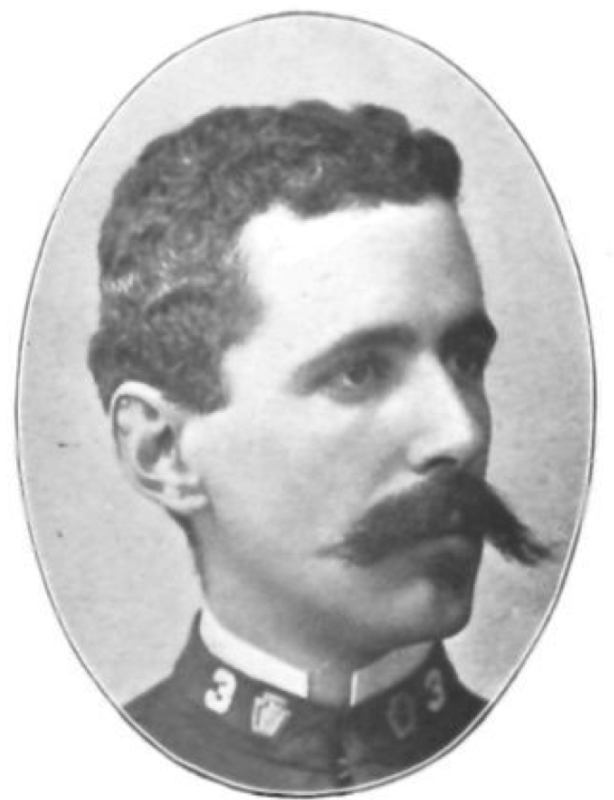
Edward Morrell
Former U.S. Representative · Pennsylvania District 5 · 1899–1907 · Republican
Edward Morrell represented Pennsylvania's District 5 in the United States House of Representatives (1899–1907) for the Republican party. The page below collects sourced biographical facts, term history, committee roles, and provenance for Morrell.
Bioguide ID: M000965
Key facts
- Full name
- Edward Morrell
- State
- Pennsylvania
- District
- District 5
- Party
- Republican
- House service
- 1899–1907
- First House term
- 1899
- Status
- Left office
- Current term ends
- —
- Born
- 1863
- Bioguide ID
- M000965
- Committee assignments
- —
- Dataset version
- 1.20260606
Biographical narrative
800 words · sourced from the Wikipedia REST extract
Edward Morrell was a Republican politician who served as a U.S. Representative for Pennsylvania's 5th congressional district. His tenure in the House of Representatives spanned from 1899 until 1907, during which he was involved in various legislative activities and held significant positions, including chairmanship of the House Committee on the Militia. Morrell's career was marked by his commitment to public service and his contributions to both local and national governance.
Early life and career
Edward Morrell was born on August 7, 1863, in Newport, Rhode Island. He was the son of Edward Morrell and Ida Alicia Powel Morrell. Growing up, he received his education at private schools before attending the University of Pennsylvania, where he graduated in 1885. His time at the university included membership in St. Anthony Hall, a literary and social fraternity. Following his undergraduate studies, Morrell pursued a legal education at the University of Pennsylvania Law School. He was admitted to the bar in 1887 and began his legal practice in Philadelphia.
In addition to his legal career, Morrell was actively engaged in local governance. He served on the select council of Philadelphia from 1891 to 1894, where he was involved in legislative matters affecting the city. His commitment to public service extended beyond politics; he was also a member of the Pennsylvania National Guard, where he attained the rank of colonel of the Third Regiment and later served as brigadier general commanding the First Brigade. This military background likely influenced his later legislative focus on military affairs.
House tenure
Morrell's political career in the U.S. House of Representatives began when he was elected as a Republican to the Fifty-sixth Congress. He filled the vacancy left by the death of Alfred C. Harmer. Following this initial election, Morrell was reelected to three additional terms, serving in the Fifty-seventh, Fifty-eighth, and Fifty-ninth Congresses. His legislative work during these terms included a focus on military matters, as evidenced by his role as chairman of the House Committee on the Militia during the Fifty-eighth and Fifty-ninth Congresses.
Throughout his time in Congress, Morrell was known for his defense of civil rights, particularly regarding the Fourteenth and Fifteenth Amendments. In 1904, he delivered a notable speech in which he defended these amendments against criticisms from Democratic opponents. His advocacy for these constitutional protections highlighted his commitment to civil rights during a period when such issues were contentious in American politics.
Despite his active participation in Congress, Morrell chose not to seek renomination in 1906, concluding his service in the House on March 3, 1907. His decision to step away from electoral politics marked the end of a significant chapter in his public service career.
Legislative focus and committees
During his tenure in the House of Representatives, Morrell's legislative focus encompassed a range of issues, with a particular emphasis on military affairs. As chairman of the House Committee on the Militia, he played a crucial role in shaping policies related to the National Guard and military preparedness. His leadership in this committee was significant, especially during a time when the United States was beginning to grapple with its role on the world stage.
Morrell's contributions extended beyond military matters. He was also involved in local infrastructure development, notably establishing the first telephone line north of the Frankford section of Philadelphia and constructing an electric-light plant in the area. These initiatives reflected his commitment to modernizing the region and improving the quality of life for its residents.
After his congressional career, Morrell continued to engage in public service. He served on the board of education of Philadelphia from 1912 to 1916, further demonstrating his dedication to the community and education. His involvement in local governance and education underscored his belief in the importance of civic responsibility and public service.
Morrell's personal life was intertwined with notable figures in American history. He married Louise Bouvier Drexel in 1889, who was the daughter of Francis Anthony Drexel and the niece of influential financier Anthony J. Drexel. This connection placed him within a prominent social network of the time. Louise's family had significant ties to various philanthropic and religious endeavors, including her half-sister, who was canonized as Saint Katharine Drexel.
In his later years, Morrell faced health challenges that led him to relocate to Colorado Springs, Colorado. He passed away on September 1, 1917, and was interred in the family crypt at Eden Hall in Torresdale, Philadelphia. His legacy continues in the form of Morrell Park, a neighborhood named in his honor, which is located near his former residence and reflects his lasting impact on the community.
Edward Morrell's life and career exemplify the journey of a public servant dedicated to both local and national issues, leaving a mark on the political landscape of his time through his legislative work and community involvement.
Notable legislation
Sponsored and co-sponsored legislation for Edward Morrell is pending operator curation. The biographical narrative above carries the same provenance trail until per-bill rows are written.
Sources
- [1]https://en.wikipedia.org/wiki/Edward_de_Veaux_MorrellWikipedia · retrieved 2026-06-06
Notable quotes
Sourced quotes for Edward Morrell are pending operator curation. Narrative-scope provenance remains attached below.
Sources
- [1]https://en.wikipedia.org/wiki/Edward_de_Veaux_MorrellWikipedia · retrieved 2026-06-06
Key positions
Curated policy positions for Edward Morrell are pending operator review. The biographical narrative above carries the same provenance trail until per-topic positions are written.
Sources
- [1]https://en.wikipedia.org/wiki/Edward_de_Veaux_MorrellWikipedia · retrieved 2026-06-06
Terms served
- 1899–1901U.S. House · Term 1 · Republican
- 1901–1903U.S. House · Term 2 · Republican
- 1903–1905U.S. House · Term 3 · Republican
- 1905–1907U.S. House · Term 4 · Republican
Sources & provenance
Every attributable claim above carries a per-section [N] marker that resolves to the corresponding URL below. Each entry records the upstream provider, the canonical URL, and the timestamp at which the source was retrieved by the ingest pipeline.
Key facts
- https://bioguide.congress.gov/search/bio/M000965bioguide · retrieved 2026-06-06
- https://www.govtrack.us/congress/members/407933govtrack · retrieved 2026-06-06
Biographical narrative
- https://en.wikipedia.org/wiki/Edward_de_Veaux_Morrellwikipedia · retrieved 2026-06-06
Find your representative
Every U.S. state elects representatives by district. Browse Pennsylvania’s delegation, the full former-representative roster, or explore the role and term length.
Related on The Candidate
- Preceded by John RobbinsEarlier holder of the Pennsylvania District 5 House seat · Democratic.Open
- Succeeded by William FoulkrodLater holder of the Pennsylvania District 5 House seat · Republican.Open
- Adam SeybertFormer U.S. Representative · Pennsylvania District 1 · RepublicanOpen
- Benjamin SayFormer U.S. Representative · Pennsylvania District 1 · RepublicanOpen
- Chapman FreemanFormer U.S. Representative · Pennsylvania District 1 · RepublicanOpen
- Harry RansleyFormer U.S. Representative · Pennsylvania District 1 · RepublicanOpen