
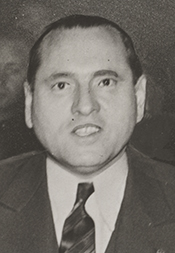
Historical · U.S. House · Pennsylvania · District 5
Fred Gartner
Former U.S. Representative · Pennsylvania District 5 · 1939–1941 · Republican
Fred Gartner represented Pennsylvania's District 5 in the United States House of Representatives (1939–1941) for the Republican party. The page below collects sourced biographical facts, term history, committee roles, and provenance for Gartner.
Bioguide ID: G000087
Key facts
- Full name
- Fred Gartner
- State
- Pennsylvania
- District
- District 5
- Party
- Republican
- House service
- 1939–1941
- First House term
- 1939
- Status
- Left office
- Current term ends
- —
- Born
- 1896
- Bioguide ID
- G000087
- Committee assignments
- —
- Dataset version
- 1.20260605
Biographical narrative
907 words · sourced from the Wikipedia REST extract
Fred Gartner was a Republican politician who served as a U.S. Representative for Pennsylvania's 5th congressional district. His tenure in the House of Representatives began in 1939 and concluded in 1941. Born in Philadelphia to German immigrant parents, Gartner's early life and career were marked by his education and service in the U.S. Naval Reserve, as well as his involvement in state politics prior to his election to Congress.
Early life and career
Fred Christian Gartner was born on March 14, 1896, in Philadelphia, Pennsylvania. He was the son of German immigrants, which likely influenced his perspectives and political affiliations throughout his life. Gartner's educational journey began in the public school system of Philadelphia, where he laid the groundwork for his future endeavors. He furthered his education at the Brown Preparatory School, a private institution that provided him with a more rigorous academic environment.
In 1918, during World War I, Gartner served as a yeoman in the United States Naval Reserve. This experience in the military not only contributed to his personal development but also instilled in him a sense of duty and service to his country. After his military service, he pursued a legal education and graduated from the law department of Temple University in Philadelphia in 1920. This legal background would later inform his work in public service and politics.
Following his graduation, Gartner began his professional career in public service. He was appointed to the Pennsylvania State Civil Service Commission in Philadelphia, where he served from 1928 to 1932. This role allowed him to engage with the civil service system and gain insights into the workings of government at the state level. His commitment to public service continued as he was elected to the Pennsylvania State House of Representatives, where he served during the years 1933 and 1934. This experience in the state legislature provided him with valuable political experience and connections that would later aid his congressional campaign.
Gartner's political affiliations and views were shaped by the socio-political climate of his time. Notably, he was identified as a Nazi sympathizer, which was a controversial aspect of his political identity. In February 1939, he met with members of the German American Bund in Washington, an organization known for its pro-Nazi sentiments. This association would later draw scrutiny and criticism, particularly as the United States moved closer to involvement in World War II.
House tenure
Fred Gartner's congressional career began when he was elected as a Republican to the 76th Congress, representing Pennsylvania's 5th congressional district. His election marked a significant step in his political journey, as he transitioned from state-level politics to the national stage. Gartner's first term in the House of Representatives commenced in 1939, a period characterized by significant political and social upheaval in the United States and around the world.
During his time in Congress, Gartner participated in the legislative process and engaged with various issues facing the nation. However, his tenure was relatively brief, as he was not successful in his bid for reelection in 1940. The political landscape was changing rapidly, and the dynamics of the Republican Party, along with the broader national sentiment, played a role in his electoral defeat. His single term in the House of Representatives was marked by the challenges of navigating a country on the brink of war and the complexities of domestic and foreign policy.
After leaving Congress, Gartner continued to be involved in the business sector. He served as the chairman of the board for the Hol-Gar Manufacturing Corporation in Pennsylvania. This position allowed him to remain active in the community and contribute to the local economy, although it marked a departure from his political career.
Legislative focus and committees
During his time in the House of Representatives, Fred Gartner's legislative focus and committee assignments are not extensively documented in the available records. However, as a member of the Republican Party during a time of significant national challenges, it can be inferred that his legislative priorities may have aligned with the broader goals of his party, which included issues related to economic recovery, national defense, and social policy.
The late 1930s were a tumultuous time for the United States, as the nation was grappling with the effects of the Great Depression and the looming threat of global conflict. Gartner's background in law and his experience in state politics likely informed his approach to legislative matters. However, the specifics of his contributions to particular bills or committees remain largely unrecorded.
Gartner's association with the German American Bund and his sympathies toward Nazi ideology may have influenced his legislative priorities and interactions with colleagues. This aspect of his political identity would have been particularly contentious during a time when the United States was increasingly aware of the dangers posed by fascism and totalitarian regimes abroad. As the country moved closer to entering World War II, Gartner's views and affiliations may have shaped his legislative actions and the reception he received from his peers.
In summary, Fred Gartner's career as a U.S. Representative was marked by his unique background, his brief tenure in Congress, and the complex political landscape of the time. His early life, military service, and involvement in state politics laid the foundation for his congressional career, while his later business endeavors reflected a shift away from public service. Despite the controversies surrounding his political affiliations, Gartner's role in the House of Representatives remains a part of Pennsylvania's political history.
Notable legislation
Sponsored and co-sponsored legislation for Fred Gartner is pending operator curation. The biographical narrative above carries the same provenance trail until per-bill rows are written.
Sources
- [1]https://en.wikipedia.org/wiki/Fred_C._GartnerWikipedia · retrieved 2026-06-05
Notable quotes
Sourced quotes for Fred Gartner are pending operator curation. Narrative-scope provenance remains attached below.
Sources
- [1]https://en.wikipedia.org/wiki/Fred_C._GartnerWikipedia · retrieved 2026-06-05
Key positions
Curated policy positions for Fred Gartner are pending operator review. The biographical narrative above carries the same provenance trail until per-topic positions are written.
Sources
- [1]https://en.wikipedia.org/wiki/Fred_C._GartnerWikipedia · retrieved 2026-06-05
Terms served
- 1939–1941U.S. House · Term 1 · Republican
Sources & provenance
Every attributable claim above carries a per-section [N] marker that resolves to the corresponding URL below. Each entry records the upstream provider, the canonical URL, and the timestamp at which the source was retrieved by the ingest pipeline.
Key facts
- https://bioguide.congress.gov/search/bio/G000087bioguide · retrieved 2026-06-05
- https://www.govtrack.us/congress/members/404459govtrack · retrieved 2026-06-05
Biographical narrative
- https://en.wikipedia.org/wiki/Fred_C._Gartnerwikipedia · retrieved 2026-06-05
Find your representative
Every U.S. state elects representatives by district. Browse Pennsylvania’s delegation, the full former-representative roster, or explore the role and term length.
Related on The Candidate
- Preceded by Frank DorseyEarlier holder of the Pennsylvania District 5 House seat · Democratic.Open
- Succeeded by Francis SmithLater holder of the Pennsylvania District 5 House seat · Democratic.Open
- Adam SeybertFormer U.S. Representative · Pennsylvania District 1 · RepublicanOpen
- Benjamin SayFormer U.S. Representative · Pennsylvania District 1 · RepublicanOpen
- Chapman FreemanFormer U.S. Representative · Pennsylvania District 1 · RepublicanOpen
- Harry RansleyFormer U.S. Representative · Pennsylvania District 1 · RepublicanOpen