
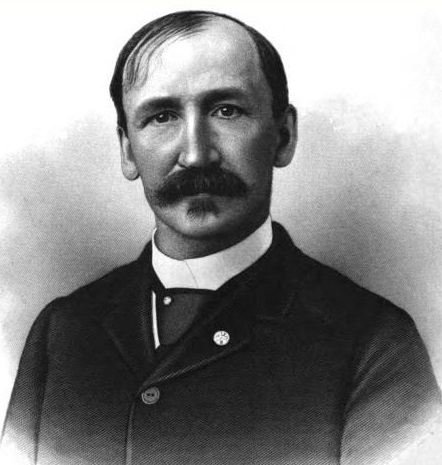
Historical · U.S. House · Pennsylvania · District 6
John Robinson
Former U.S. Representative · Pennsylvania District 6 · 1891–1897 · Republican
John Robinson represented Pennsylvania's District 6 in the United States House of Representatives (1891–1897) for the Republican party. The page below collects sourced biographical facts, term history, committee roles, and provenance for Robinson.
Bioguide ID: R000342
Key facts
- Full name
- John Robinson
- State
- Pennsylvania
- District
- District 6
- Party
- Republican
- House service
- 1891–1897
- First House term
- 1891
- Status
- Left office
- Current term ends
- —
- Born
- 1846
- Bioguide ID
- R000342
- Committee assignments
- —
- Dataset version
- 1.20260606
Biographical narrative
890 words · sourced from the Wikipedia REST extract
John Robinson was an American politician from Pennsylvania who served as a Republican member of the U.S. House of Representatives for Pennsylvania's 6th congressional district from 1891 to 1897. His political career also included service in the Pennsylvania House of Representatives and the Pennsylvania State Senate. Born in 1846, Robinson had a diverse background that included military service and a career in law and journalism before entering politics. He was involved in various civic organizations and held a significant role in the Republican Party during his lifetime.
Early life and career
John Robinson was born on May 23, 1846, in Allegheny City, Pennsylvania. He was the grandson of William Robinson, Jr., a notable figure who served as a politician, businessman, and militia general. Robinson's early education took place in private schools in Pittsburgh, after which he attended the University of Pittsburgh. He later transferred to and graduated from Amherst College.
In 1864, during the American Civil War, Robinson enlisted in the Union Army. However, due to the presence of two of his brothers already serving in the conflict, his family utilized the influence of his grandfather to secure his release from military service, despite his own desire to serve. Following this, he was appointed as a cadet at the United States Naval Academy in Annapolis, Maryland, by Congressman Thomas Williams. Robinson graduated from the Academy in 1868 and was commissioned as a Lieutenant in the Navy. His naval career included a significant voyage around the world on the USS Colorado, where he was part of a delegation that became the second American party to meet with the Emperor of Japan.
After returning to the United States in 1873, Robinson served on the USS Michigan, which operated on the Great Lakes. He later served on the USS Juniata, which was dispatched to Santiago de Cuba to demand the release of American citizens who had been detained by Spanish authorities. Robinson resigned from the Navy in 1875 and relocated to Delaware County, Pennsylvania, where he began studying law under John G. Johnson. He was admitted to the Philadelphia bar in 1876 and later to the Delaware County bar in 1878, as well as to the Supreme Court of Pennsylvania.
In addition to his legal career, Robinson was involved in journalism, serving as the editor of the Delaware County Gazette from 1881 to 1882. He also worked as a newspaper correspondent and owned the Media Ledger, further establishing his presence in the community.
House tenure
Robinson's political career began in earnest when he was elected to the Pennsylvania House of Representatives, where he served the Delaware County district from 1884 to 1886. Following this, he was elected to the Pennsylvania State Senate for the 9th district, serving from 1889 to 1892. His experience in state politics paved the way for his election to the U.S. House of Representatives.
Robinson was elected as a Republican to the Fifty-second, Fifty-third, and Fifty-fourth Congresses, serving from 1891 until 1897. During his time in Congress, he participated in various legislative activities and contributed to discussions pertinent to his constituents and the nation. However, he was unsuccessful in his bid for reelection in 1896, marking the end of his congressional tenure.
In addition to his legislative responsibilities, Robinson held leadership roles within the Republican Party. He served as president of the League of Republican Clubs of Pennsylvania from 1891 to 1897 and was a delegate to the Republican National Conventions in 1892, 1896, and 1908. His involvement in these conventions highlighted his active participation in shaping party policies and strategies.
Legislative focus and committees
During his time in the U.S. House of Representatives, Robinson's legislative focus encompassed a range of issues relevant to his constituents and the broader political landscape of the time. While specific details regarding the bills he sponsored or supported are not documented, his background in law and previous political experience likely informed his contributions to legislative discussions.
Robinson's committee assignments during his congressional tenure would have placed him in a position to influence various aspects of policy-making, although specific committees are not detailed in the available records. His legal training and experience in state politics would have provided him with valuable insights into the legislative process and the needs of his constituents.
After leaving Congress, Robinson continued to be active in public service. In 1900, he was appointed by President William McKinley as the United States Marshal for the Eastern District of Pennsylvania. He was reappointed to this position by Presidents Theodore Roosevelt in 1905 and William Howard Taft in 1912, serving in this capacity until 1913. This role further exemplified his commitment to public service and his continued influence in Pennsylvania politics.
Robinson's personal life included his marriage to Elizabeth Waddington in 1874, with whom he had seven children. Elizabeth was a granddaughter of Charles Gilpin, who served as the Mayor of Philadelphia. Robinson was also involved in various fraternal organizations, including the Independent Order of Odd Fellows and the Knights of Pythias, among others.
John Robinson passed away on January 28, 1933, in Philadelphia, Pennsylvania. His contributions to Pennsylvania politics and his service in the U.S. House of Representatives are part of his legacy, as he is interred at Allegheny Cemetery in Pittsburgh. His life reflects the multifaceted nature of public service during a transformative period in American history.
Notable legislation
Sponsored and co-sponsored legislation for John Robinson is pending operator curation. The biographical narrative above carries the same provenance trail until per-bill rows are written.
Sources
- [1]https://en.wikipedia.org/wiki/John_Buchanan_RobinsonWikipedia · retrieved 2026-06-06
Notable quotes
Sourced quotes for John Robinson are pending operator curation. Narrative-scope provenance remains attached below.
Sources
- [1]https://en.wikipedia.org/wiki/John_Buchanan_RobinsonWikipedia · retrieved 2026-06-06
Key positions
Curated policy positions for John Robinson are pending operator review. The biographical narrative above carries the same provenance trail until per-topic positions are written.
Sources
- [1]https://en.wikipedia.org/wiki/John_Buchanan_RobinsonWikipedia · retrieved 2026-06-06
Terms served
- 1891–1893U.S. House · Term 1 · Republican
- 1893–1895U.S. House · Term 2 · Republican
- 1895–1897U.S. House · Term 3 · Republican
Sources & provenance
Every attributable claim above carries a per-section [N] marker that resolves to the corresponding URL below. Each entry records the upstream provider, the canonical URL, and the timestamp at which the source was retrieved by the ingest pipeline.
Key facts
- https://bioguide.congress.gov/search/bio/R000342bioguide · retrieved 2026-06-06
- https://www.govtrack.us/congress/members/409313govtrack · retrieved 2026-06-06
Biographical narrative
- https://en.wikipedia.org/wiki/John_Buchanan_Robinsonwikipedia · retrieved 2026-06-06
Find your representative
Every U.S. state elects representatives by district. Browse Pennsylvania’s delegation, the full former-representative roster, or explore the role and term length.
Related on The Candidate
- Preceded by Smedley DarlingtonEarlier holder of the Pennsylvania District 6 House seat · Republican.Open
- Succeeded by George McCrearyLater holder of the Pennsylvania District 6 House seat · Republican.Open
- Adam SeybertFormer U.S. Representative · Pennsylvania District 1 · RepublicanOpen
- Benjamin SayFormer U.S. Representative · Pennsylvania District 1 · RepublicanOpen
- Chapman FreemanFormer U.S. Representative · Pennsylvania District 1 · RepublicanOpen
- Harry RansleyFormer U.S. Representative · Pennsylvania District 1 · RepublicanOpen