
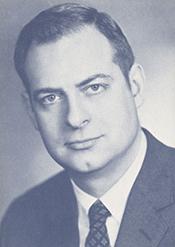
Historical · U.S. House · Pennsylvania · District 8
Edward Biester Jr.
Former U.S. Representative · Pennsylvania District 8 · 1967–1977 · Republican
Edward Biester Jr. represented Pennsylvania's District 8 in the United States House of Representatives (1967–1977) for the Republican party. The page below collects sourced biographical facts, term history, committee roles, and provenance for Jr..
Bioguide ID: B000451
Key facts
- Full name
- Edward Biester Jr.
- State
- Pennsylvania
- District
- District 8
- Party
- Republican
- House service
- 1967–1977
- First House term
- 1967
- Status
- Left office
- Current term ends
- —
- Born
- 1931
- Bioguide ID
- B000451
- Committee assignments
- —
- Dataset version
- 1.20260605
Biographical narrative
916 words · sourced from the Wikipedia REST extract
Edward G. Biester Jr. is a retired American politician and judge who served as a member of the U.S. House of Representatives for Pennsylvania's 8th congressional district from 1967 until 1977. A member of the Republican Party, Biester's political career spanned over a decade in Congress, followed by significant roles in state government and the judiciary. His contributions to public service extended beyond his congressional tenure, as he later served as Pennsylvania's Attorney General and held judicial positions in the Bucks County Court of Common Pleas.
Early life and career
Edward George Biester Jr. was born on January 5, 1931. He grew up in Pennsylvania, where he received his early education at George School, a private institution located in Newtown, Bucks County. After completing high school in 1948, Biester pursued higher education at Wesleyan University, graduating in 1952. His academic journey continued at Temple University School of Law, where he earned his law degree in 1955. This educational background laid the foundation for his future career in law and politics.
Following his graduation from law school, Biester began his professional career in the legal field. He served as an Assistant District Attorney for Bucks County from 1958 to 1964, where he gained valuable experience in the judicial system and honed his skills in legal practice. His work in the district attorney's office provided him with insights into the legal challenges faced by the community and the workings of the criminal justice system.
Biester's early involvement in local politics and law set the stage for his entry into elected office. He was elected as a Republican to the U.S. House of Representatives in 1966, marking the beginning of a significant chapter in his political career. His election to Congress came during a period of political change in the United States, as the nation grappled with various social and economic issues.
House tenure
Edward G. Biester Jr. served in the U.S. House of Representatives from January 1967 until January 1977, completing a total of five terms in office. During his time in Congress, he represented Pennsylvania's 8th congressional district, which encompasses parts of Bucks County and surrounding areas. Biester's tenure coincided with a transformative era in American politics, characterized by significant legislative developments and national debates on various issues.
As a member of the House, Biester participated in numerous legislative initiatives and discussions, contributing to the policymaking process on a range of topics. His role as a congressman allowed him to advocate for the interests of his constituents while also engaging with broader national concerns. Throughout his time in office, Biester was involved in various committees and legislative efforts that addressed pressing issues of the day.
Biester chose not to seek reelection in 1976, concluding his congressional career after a decade of service. His decision not to run again marked the end of a significant period in his life dedicated to public service at the federal level. Following his departure from Congress, he continued to be active in civic and political matters, reflecting his commitment to public service.
Legislative focus and committees
During his tenure in the U.S. House of Representatives, Edward G. Biester Jr. focused on various legislative issues that were pertinent to his constituents and the nation. While specific details about the bills he sponsored or supported are not provided, it is known that he was involved in the legislative process during a time of considerable change in American society. The late 1960s and 1970s were marked by significant events, including the civil rights movement, the Vietnam War, and various economic challenges, all of which influenced the legislative agenda.
Biester's involvement in Congress allowed him to engage with these critical issues, and he likely participated in discussions and votes that shaped policies affecting education, healthcare, and social welfare. His background as a lawyer and district attorney may have informed his perspectives on legal and criminal justice matters, enabling him to contribute meaningfully to debates surrounding these topics.
After leaving Congress, Biester continued his public service career by being elected as Pennsylvania's Attorney General from 1979 to 1980. This role further expanded his influence in state governance and allowed him to address legal issues at the state level. Following his tenure as Attorney General, he transitioned to the judiciary, serving as a judge on the Bucks County Court of Common Pleas from 1980 until 2006. His judicial career included a period as a senior judge from 2001 to 2006, during which he oversaw various cases and contributed to the administration of justice in the county.
In addition to his judicial responsibilities, Biester has been involved in various organizations and boards, including his election to the Common Cause National Governing Board in 1977. His commitment to civic engagement continued with his appointment to the Office of Military Commissions in the Department of Defense in 2003, reflecting his ongoing dedication to public service.
Biester's career has been marked by a consistent focus on law, governance, and public service, demonstrating his commitment to the principles of democracy and justice. His experiences as a congressman, attorney general, and judge have provided him with a multifaceted perspective on the legal and political landscape of Pennsylvania and the United States as a whole.
In summary, Edward G. Biester Jr. is a notable figure in Pennsylvania's political history, having served in various capacities that shaped his contributions to public service. His educational background, legal career, and legislative work in Congress reflect a lifelong commitment to the principles of justice and governance.
Notable legislation
Sponsored and co-sponsored legislation for Edward Biester Jr. is pending operator curation. The biographical narrative above carries the same provenance trail until per-bill rows are written.
Sources
- [1]https://en.wikipedia.org/wiki/Edward_G._Biester_Jr.Wikipedia · retrieved 2026-06-05
Notable quotes
Sourced quotes for Edward Biester Jr. are pending operator curation. Narrative-scope provenance remains attached below.
Sources
- [1]https://en.wikipedia.org/wiki/Edward_G._Biester_Jr.Wikipedia · retrieved 2026-06-05
Key positions
Curated policy positions for Edward Biester Jr. are pending operator review. The biographical narrative above carries the same provenance trail until per-topic positions are written.
Sources
- [1]https://en.wikipedia.org/wiki/Edward_G._Biester_Jr.Wikipedia · retrieved 2026-06-05
Terms served
- 1967–1969U.S. House · Term 1 · Republican
- 1969–1971U.S. House · Term 2 · Republican
- 1971–1973U.S. House · Term 3 · Republican
- 1973–1975U.S. House · Term 4 · Republican
- 1975–1977U.S. House · Term 5 · Republican
Sources & provenance
Every attributable claim above carries a per-section [N] marker that resolves to the corresponding URL below. Each entry records the upstream provider, the canonical URL, and the timestamp at which the source was retrieved by the ingest pipeline.
Key facts
- https://bioguide.congress.gov/search/bio/B000451bioguide · retrieved 2026-06-05
- https://www.govtrack.us/congress/members/401436govtrack · retrieved 2026-06-05
Biographical narrative
- https://en.wikipedia.org/wiki/Edward_G._Biester_Jr.wikipedia · retrieved 2026-06-05
Find your representative
Every U.S. state elects representatives by district. Browse Pennsylvania’s delegation, the full former-representative roster, or explore the role and term length.
Related on The Candidate
- Preceded by Willard CurtinEarlier holder of the Pennsylvania District 8 House seat · Republican.Open
- Succeeded by Peter KostmayerLater holder of the Pennsylvania District 8 House seat · Democratic.Open
- Adam SeybertFormer U.S. Representative · Pennsylvania District 1 · RepublicanOpen
- Benjamin SayFormer U.S. Representative · Pennsylvania District 1 · RepublicanOpen
- Chapman FreemanFormer U.S. Representative · Pennsylvania District 1 · RepublicanOpen
- Harry RansleyFormer U.S. Representative · Pennsylvania District 1 · RepublicanOpen