
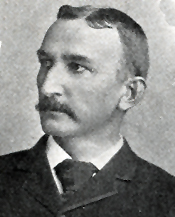
Historical · U.S. House · Pennsylvania · District 8
Irving Wanger
Former U.S. Representative · Pennsylvania District 8 · 1893–1911 · Republican
Irving Wanger represented Pennsylvania's District 8 in the United States House of Representatives (1893–1911) for the Republican party. The page below collects sourced biographical facts, term history, committee roles, and provenance for Wanger.
Bioguide ID: W000122
Key facts
- Full name
- Irving Wanger
- State
- Pennsylvania
- District
- District 8
- Party
- Republican
- House service
- 1893–1911
- First House term
- 1893
- Status
- Left office
- Current term ends
- —
- Born
- 1852
- Bioguide ID
- W000122
- Committee assignments
- —
- Dataset version
- 1.20260606
Biographical narrative
900 words · sourced from the Wikipedia REST extract
Irving Wanger was a Republican politician who served as a U.S. Representative for Pennsylvania's 8th congressional district from 1893 until 1911. His lengthy congressional career spanned nine terms, during which he held various leadership roles, including chairman of the House Committee on Expenditures in the Post Office Department. Wanger's legal background and local political involvement in Pennsylvania laid the foundation for his entry into national politics.
Early life and career
Irving Wanger was born on March 5, 1852, in North Coventry Township, Pennsylvania. He was the son of Rebecca Price and George Wanger. His early education and upbringing in Pennsylvania provided him with a strong foundation for his future endeavors. Wanger began his professional career in public service at a young age when he served as deputy prothonotary of Chester County, Pennsylvania, in 1871. This role marked the beginning of his involvement in the legal and political landscape of Pennsylvania.
In 1872, Wanger commenced the study of law in Norristown, Pennsylvania, which would become a significant aspect of his career. He continued to build his legal credentials by serving as deputy prothonotary of Montgomery County from 1873 to 1875. After being admitted to the bar in 1875, he began practicing law in Norristown, where he established a reputation as a competent attorney.
Wanger's political career began to take shape in 1878 when he was elected as the burgess of Norristown, a role that allowed him to engage more deeply with local governance. His political involvement continued to grow, and he was a delegate to the Republican National Convention in 1880, a significant event that showcased his commitment to the Republican Party. Following this, he was elected district attorney of Montgomery County in 1880 and again in 1886, further solidifying his political influence in the region. In 1889, he took on the role of chairman of the Montgomery County Republican committee, demonstrating his leadership within the party.
Despite his local successes, Wanger faced a setback in 1890 when he ran for election but was unsuccessful. However, his political aspirations did not wane, and he continued to pursue a congressional seat.
House tenure
Wanger's political career took a significant turn when he was elected as a Republican to the Fifty-third Congress in 1893. This marked the beginning of his nine consecutive terms in the U.S. House of Representatives, where he served until March 3, 1911. His tenure in Congress was characterized by a commitment to his constituents and a focus on various legislative issues relevant to his district and the nation.
Throughout his time in the House, Wanger participated in numerous legislative discussions and decisions that shaped the political landscape of the late 19th and early 20th centuries. His experience as a lawyer likely informed his approach to legislation and governance, as he navigated complex legal and political matters. Wanger's ability to connect with his constituents and advocate for their needs contributed to his sustained electoral success during his time in office.
Wanger's leadership capabilities were recognized when he was appointed chairman of the United States House Committee on Expenditures in the Post Office Department. He held this position during the Fifty-fifth through Sixty-first Congresses, where he oversaw matters related to postal expenditures and contributed to discussions on fiscal responsibility within the federal government. This role underscored his involvement in critical issues of the time, particularly those related to government spending and efficiency.
Despite his long tenure and contributions, Wanger faced challenges in the political arena. He was an unsuccessful candidate for reelection in 1910, which marked the end of his congressional career. After leaving office, he returned to Pennsylvania, where he resumed his legal practice.
Legislative focus and committees
During his time in the House of Representatives, Wanger's legislative focus encompassed a range of issues pertinent to his constituents and the broader national agenda. His role as chairman of the House Committee on Expenditures in the Post Office Department was particularly significant, as it involved oversight of the financial aspects of postal services. This position allowed him to influence policies related to government spending, a critical area of concern during his tenure.
Wanger's legal background likely provided him with a unique perspective on legislative matters, enabling him to approach issues with a detailed understanding of the law and its implications. His experience as a district attorney and a practicing lawyer may have informed his contributions to discussions on legal and regulatory frameworks, particularly those affecting his home state of Pennsylvania.
Throughout his nine terms, Wanger was involved in various legislative initiatives, although specific bills and legislative achievements are not detailed in the available records. His long service in Congress suggests that he was engaged in the evolving political landscape of the time, which included significant events such as the economic changes brought about by industrialization and the social issues arising from urbanization.
After his congressional career, Wanger continued to be active in the legal field, resuming his practice in Norristown and Media, Pennsylvania, in 1920. He remained connected to his community and continued to contribute to the legal profession until his later years.
Irving Wanger passed away on January 14, 1940, in Norristown, Pennsylvania. His contributions to Pennsylvania politics and his lengthy service in the U.S. House of Representatives reflect a dedicated career in public service. He was laid to rest in Mount Zion Cemetery in Pottstown, Pennsylvania, leaving behind a legacy of political engagement and legal expertise.
Notable legislation
Sponsored and co-sponsored legislation for Irving Wanger is pending operator curation. The biographical narrative above carries the same provenance trail until per-bill rows are written.
Sources
- [1]https://en.wikipedia.org/wiki/Irving_P._WangerWikipedia · retrieved 2026-06-06
Notable quotes
Sourced quotes for Irving Wanger are pending operator curation. Narrative-scope provenance remains attached below.
Sources
- [1]https://en.wikipedia.org/wiki/Irving_P._WangerWikipedia · retrieved 2026-06-06
Key positions
Curated policy positions for Irving Wanger are pending operator review. The biographical narrative above carries the same provenance trail until per-topic positions are written.
Sources
- [1]https://en.wikipedia.org/wiki/Irving_P._WangerWikipedia · retrieved 2026-06-06
Terms served
- 1893–1895U.S. House · Term 1 · Republican
- 1895–1897U.S. House · Term 2 · Republican
- 1897–1899U.S. House · Term 3 · Republican
- 1899–1901U.S. House · Term 4 · Republican
- 1901–1903U.S. House · Term 5 · Republican
- 1903–1905U.S. House · Term 6 · Republican
- 1905–1907U.S. House · Term 7 · Republican
- 1907–1909U.S. House · Term 8 · Republican
- 1909–1911U.S. House · Term 9 · Republican
Sources & provenance
Every attributable claim above carries a per-section [N] marker that resolves to the corresponding URL below. Each entry records the upstream provider, the canonical URL, and the timestamp at which the source was retrieved by the ingest pipeline.
Key facts
- https://bioguide.congress.gov/search/bio/W000122bioguide · retrieved 2026-06-06
- https://www.govtrack.us/congress/members/411297govtrack · retrieved 2026-06-06
Biographical narrative
- https://en.wikipedia.org/wiki/Irving_P._Wangerwikipedia · retrieved 2026-06-06
Find your representative
Every U.S. state elects representatives by district. Browse Pennsylvania’s delegation, the full former-representative roster, or explore the role and term length.
Related on The Candidate
- Preceded by Hiester ClymerEarlier holder of the Pennsylvania District 8 House seat · Democratic.Open
- Succeeded by Robert DifenderferLater holder of the Pennsylvania District 8 House seat · Democratic.Open
- Adam SeybertFormer U.S. Representative · Pennsylvania District 1 · RepublicanOpen
- Benjamin SayFormer U.S. Representative · Pennsylvania District 1 · RepublicanOpen
- Chapman FreemanFormer U.S. Representative · Pennsylvania District 1 · RepublicanOpen
- Harry RansleyFormer U.S. Representative · Pennsylvania District 1 · RepublicanOpen