
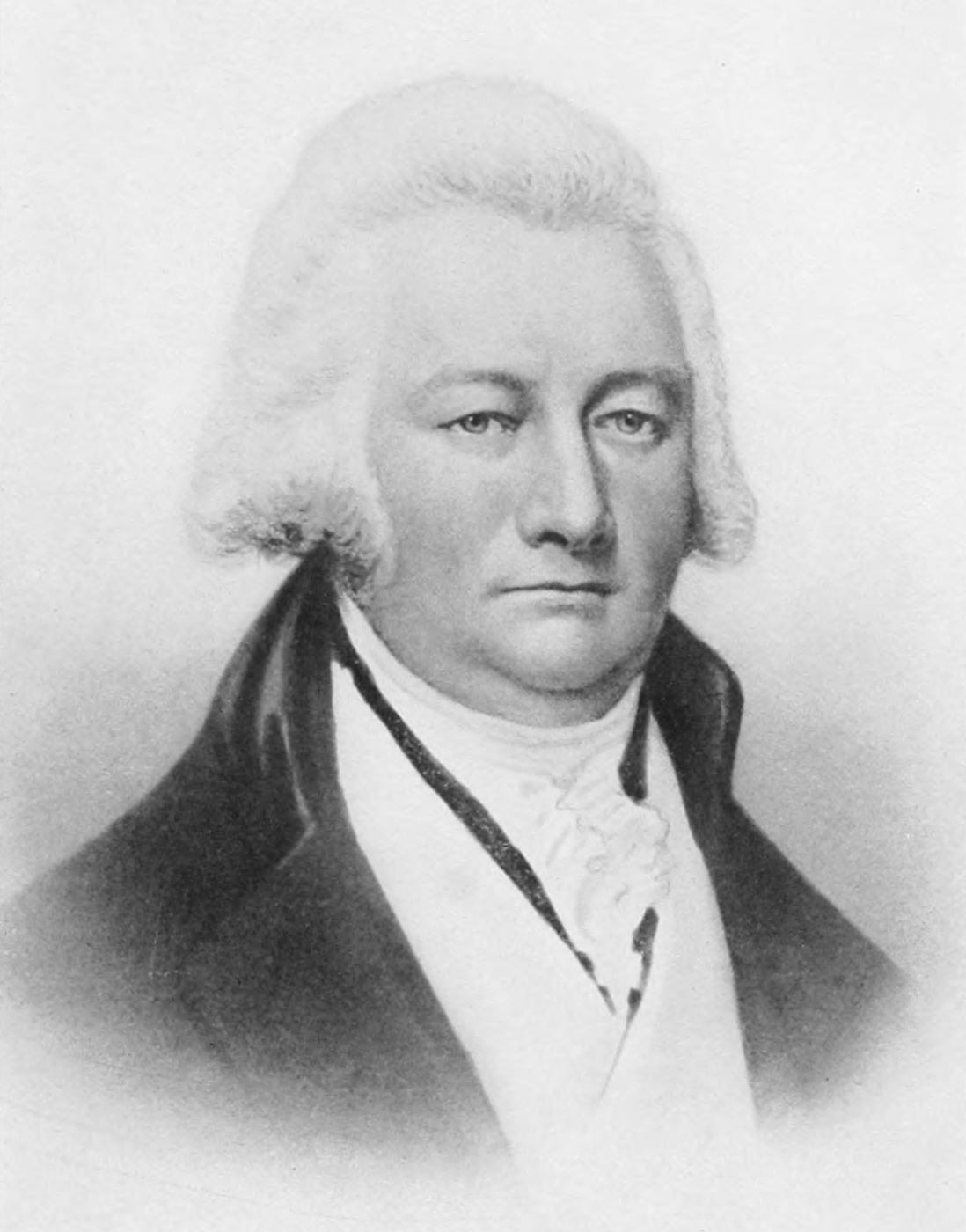
Historical · U.S. House · Pennsylvania · District 8
Thomas Hartley
Former U.S. Representative · Pennsylvania District 8 · 1789–1801 · Federalist
Thomas Hartley represented Pennsylvania's District 8 in the United States House of Representatives (1789–1801) for the Federalist party. The page below collects sourced biographical facts, term history, committee roles, and provenance for Hartley.
Bioguide ID: H000299
Key facts
- Full name
- Thomas Hartley
- State
- Pennsylvania
- District
- District 8
- Party
- Federalist
- House service
- 1789–1801
- First House term
- 1789
- Status
- Left office
- Current term ends
- —
- Born
- 1748
- Bioguide ID
- H000299
- Committee assignments
- —
- Dataset version
- 1.20260606
Biographical narrative
983 words · sourced from the Wikipedia REST extract
Thomas Hartley was an American lawyer, soldier, and politician who served as a U.S. Representative for Pennsylvania's 8th congressional district from 1789 until his death in 1800. A member of the Federalist Party, Hartley played a significant role in early American politics and military affairs during and after the American Revolutionary War. His contributions to the founding of the nation and his service in the U.S. Congress mark him as a notable figure in Pennsylvania's history.
Early life and career
Born on September 7, 1748, in Colebrookdale Township, Pennsylvania, Thomas Hartley grew up in a region that was becoming increasingly influential in the burgeoning American colonies. At the age of 18, he relocated to York, Pennsylvania, where he began his legal education under the tutelage of Samuel Johnson. By 1769, Hartley was admitted to practice law in York County and the courts of Philadelphia, establishing a legal career that would serve as a foundation for his later political endeavors.
In addition to his legal pursuits, Hartley was actively involved in military service during a tumultuous period in American history. In 1774, he was appointed as a first lieutenant in a local company of soldiers, and by the summer of 1775, he had risen to the rank of lieutenant colonel of the First Battalion of York County Associators. His military career advanced further when he was chosen to command the Seventh Pennsylvania Regiment, participating in significant military campaigns, including an expedition to Canada and a notable Indian expedition in 1778.
During the American Revolutionary War, Hartley served as second in command of the 6th Pennsylvania Regiment in the Continental Army. In January 1777, he took command of Hartley's Additional Continental Regiment, leading it through major battles of the Philadelphia campaign, such as Brandywine, Paoli, and Germantown. His leadership extended to guarding the Pennsylvania frontier and conducting military operations against hostile Indian forces. However, in October 1778, Hartley was elected to the Pennsylvania General Assembly, prompting him to resign from military service in February 1779 to focus on his legislative responsibilities.
Following his tenure in the state legislature, Hartley returned to his law practice in York. His political influence continued to grow, and he was a member of the Pennsylvania convention that ratified the federal constitution in 1787. This involvement positioned him as a key figure in the early governance of the United States.
House tenure
Thomas Hartley's congressional career began in 1789 when he was elected to represent Pennsylvania in the U.S. House of Representatives. He was a member of the first Congress, which convened under the newly ratified Constitution. Hartley served a total of six terms in the House, contributing to the establishment of legislative practices and policies during the formative years of the United States government.
Throughout his time in Congress, Hartley was known for his active participation in legislative discussions and his alignment with the Federalist Party, which advocated for a strong national government and the ratification of the Constitution. His tenure coincided with significant developments in the early republic, including debates over the structure of the federal government, the establishment of the Bill of Rights, and the nation's response to various domestic and foreign challenges.
Hartley's commitment to public service extended beyond his legislative duties. He was involved in various social and official functions, frequently attending events hosted by President George Washington and First Lady Martha Washington. His engagement with the nation's leadership reflected his status as a respected member of the political community.
Despite his contributions to the House, Hartley's life was cut short when he passed away on December 21, 1800, in York, Pennsylvania. His death occurred shortly before the conclusion of his sixth term in Congress, marking the end of a significant chapter in his public service career.
Legislative focus and committees
During his time in the U.S. House of Representatives, Thomas Hartley was involved in various legislative matters that shaped the early governance of the United States. While specific details about the bills he sponsored or the committees he served on are not extensively documented, it is known that he played a role in the broader discussions that defined the legislative agenda of the first Congress.
As a member of the Federalist Party, Hartley aligned with the party's principles, which emphasized a strong central government and the importance of a unified national policy. His participation in the House coincided with critical debates surrounding the establishment of the federal judiciary, the creation of a national bank, and the formulation of foreign policy in the wake of the Revolutionary War.
In addition to his legislative work, Hartley was recognized for his contributions to the legal profession. On February 5, 1791, he became the first Pennsylvanian to join the bar of the Supreme Court of the United States, further solidifying his influence as a legal and political figure. His involvement in the judiciary reflected his commitment to the rule of law and the principles enshrined in the Constitution.
Hartley's legacy extends beyond his legislative accomplishments. He was a founding member of the Society of the Cincinnati, an organization established to promote the ideals of the American Revolution and honor the service of its veterans. Additionally, he served as a trustee of Dickinson College, contributing to the advancement of education in Pennsylvania.
In his later years, Hartley was appointed as Major General of the Fifth Division of the Pennsylvania state militia, reflecting his continued commitment to public service and military readiness. His efforts in land prospecting and community development, including the establishment of Hartleton, Pennsylvania, demonstrate his engagement with local affairs and his vision for the region's growth.
Thomas Hartley's life and career encapsulate the complexities of early American governance and the interplay between military service, legal practice, and political leadership. His contributions to the founding of the United States and his role in shaping Pennsylvania's political landscape remain significant in the historical narrative of the nation.
Notable legislation
Sponsored and co-sponsored legislation for Thomas Hartley is pending operator curation. The biographical narrative above carries the same provenance trail until per-bill rows are written.
Sources
- [1]https://en.wikipedia.org/wiki/Thomas_HartleyWikipedia · retrieved 2026-06-06
Notable quotes
Sourced quotes for Thomas Hartley are pending operator curation. Narrative-scope provenance remains attached below.
Sources
- [1]https://en.wikipedia.org/wiki/Thomas_HartleyWikipedia · retrieved 2026-06-06
Key positions
Curated policy positions for Thomas Hartley are pending operator review. The biographical narrative above carries the same provenance trail until per-topic positions are written.
Sources
- [1]https://en.wikipedia.org/wiki/Thomas_HartleyWikipedia · retrieved 2026-06-06
Terms served
- 1789–1791U.S. House · Term 1 · Federalist
- 1791–1793U.S. House · Term 2 · Federalist
- 1793–1795U.S. House · Term 3 · Federalist
- 1795–1797U.S. House · Term 4 · Federalist
- 1797–1799U.S. House · Term 5 · Federalist
- 1799–1801U.S. House · Term 6 · Federalist
Sources & provenance
Every attributable claim above carries a per-section [N] marker that resolves to the corresponding URL below. Each entry records the upstream provider, the canonical URL, and the timestamp at which the source was retrieved by the ingest pipeline.
Key facts
- https://bioguide.congress.gov/search/bio/H000299bioguide · retrieved 2026-06-06
- https://www.govtrack.us/congress/members/405172govtrack · retrieved 2026-06-06
Biographical narrative
- https://en.wikipedia.org/wiki/Thomas_Hartleywikipedia · retrieved 2026-06-06
Find your representative
Every U.S. state elects representatives by district. Browse Pennsylvania’s delegation, the full former-representative roster, or explore the role and term length.
Related on The Candidate
- Succeeded by William PiperLater holder of the Pennsylvania District 8 House seat · Republican.Open
- Adam SeybertFormer U.S. Representative · Pennsylvania District 1 · RepublicanOpen
- Benjamin SayFormer U.S. Representative · Pennsylvania District 1 · RepublicanOpen
- Chapman FreemanFormer U.S. Representative · Pennsylvania District 1 · RepublicanOpen
- Harry RansleyFormer U.S. Representative · Pennsylvania District 1 · RepublicanOpen
- Representatives from PennsylvaniaEvery former U.S. Representative who has represented Pennsylvania.Open