
Historical · U.S. House · Pennsylvania · District 8
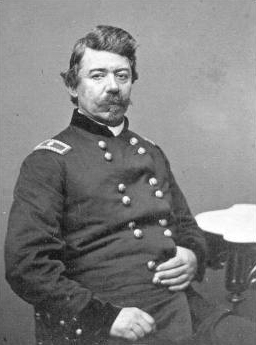
William Keim
Former U.S. Representative · Pennsylvania District 8 · 1857–1859 · Republican
William Keim represented Pennsylvania's District 8 in the United States House of Representatives (1857–1859) for the Republican party. The page below collects sourced biographical facts, term history, committee roles, and provenance for Keim.
Bioguide ID: K000051
Key facts
- Full name
- William Keim
- State
- Pennsylvania
- District
- District 8
- Party
- Republican
- House service
- 1857–1859
- First House term
- 1857
- Status
- Left office
- Current term ends
- —
- Born
- 1813
- Bioguide ID
- K000051
- Committee assignments
- —
- Dataset version
- 1.20260606
Biographical narrative
854 words · sourced from the Wikipedia REST extract
William Keim was a Republican politician and military officer who served as a U.S. Representative for Pennsylvania's 8th congressional district. His tenure in the House of Representatives began in 1857 and concluded in 1859. In addition to his political career, Keim was also a general in the Union Army during the American Civil War. His life and career were marked by significant contributions to both his local community and the nation during a tumultuous period in American history.
Early life and career
William High Keim was born on June 13, 1813, in Reading, Pennsylvania, to Mary and Benneville Keim. His father was a prominent figure in the community, serving as the president of the Farmers' Bank and holding the office of mayor of Reading. Growing up in a politically active family, Keim was likely influenced by his father's civic engagement. He received his education at Mount Airy Military School, graduating around 1829. Following his education, he entered the family business, working in his father's general hardware store in Reading.
Keim's entrepreneurial spirit led him to partner with his brother, John H. Keim, in establishing a larger retail operation, where they sold various goods for approximately three decades. His early involvement in community service began at the age of 17 when he became a sergeant in the Washington Grays, a local militia unit. His military career progressed rapidly; by 1837, he had succeeded his cousin, Daniel M. Keim, as captain of the Grays. In 1842, he attained the rank of major general of the Fifth Division of the Pennsylvania Volunteers, reflecting his leadership capabilities and commitment to military service.
In addition to his military pursuits, Keim was politically active as a member of the Whig Party. His political career included serving as the second mayor of Reading in 1848, where he likely focused on local governance and community improvement initiatives. His political affiliations shifted over time, and he eventually became a member of the Republican Party. In 1858, he was elected to the Thirty-fifth Congress to fill a vacancy created by the resignation of J. Glancy Jones, who had lost his re-election bid.
House tenure
William Keim's congressional career began in 1857 when he was elected to represent Pennsylvania's 8th congressional district in the U.S. House of Representatives. His term in office was relatively short, concluding on March 3, 1859. During his time in Congress, Keim participated in the legislative process during a period of significant national tension leading up to the Civil War. His election came at a time when the political landscape was shifting, with issues such as slavery and states' rights becoming increasingly contentious.
As a member of the House, Keim's role involved engaging in debates and discussions that shaped national policy. However, specific details regarding the legislation he supported or opposed during his tenure are not extensively documented. His service in Congress was marked by the challenges of navigating a divided nation, as the political climate was fraught with conflict and division.
After concluding his term in the House, Keim continued to serve the state of Pennsylvania as the surveyor general from 1860 until 1862. This position allowed him to contribute to the administration and oversight of land management and surveying within the state, furthering his public service career.
Legislative focus and committees
While specific details regarding Keim's legislative focus and committee assignments during his time in the House of Representatives are not provided, it is important to contextualize his role within the broader political environment of the era. As a member of the Republican Party, Keim would have aligned with the party's platform, which was emerging during the late 1850s as a response to the expansion of slavery and the desire to promote free labor and economic development.
The political landscape of the time was characterized by intense debates over issues such as the Kansas-Nebraska Act, the Dred Scott decision, and the growing sectional tensions between the North and South. As a representative from Pennsylvania, a state that played a crucial role in the Union during the Civil War, Keim's legislative priorities may have included issues related to infrastructure, economic development, and the preservation of the Union.
Following his congressional service, Keim's focus shifted toward military service as the nation entered the Civil War. His prior experience in the militia and his leadership roles positioned him well for a significant military career. Keim's anticipation of conflict led him to prepare local militia units for potential service, demonstrating his commitment to his state and country.
In summary, William Keim's life was marked by a blend of political and military service. His tenure in the U.S. House of Representatives was part of a broader commitment to public service that continued through his involvement in the Union Army. His contributions to both local governance and national defense reflect the complexities of a man navigating a rapidly changing America during a pivotal moment in its history. Keim's legacy is intertwined with the events of his time, as he served in roles that addressed both the needs of his constituents and the demands of a nation on the brink of civil war.
Notable legislation
Sponsored and co-sponsored legislation for William Keim is pending operator curation. The biographical narrative above carries the same provenance trail until per-bill rows are written.
Sources
- [1]https://en.wikipedia.org/wiki/William_H._KeimWikipedia · retrieved 2026-06-06
Notable quotes
Sourced quotes for William Keim are pending operator curation. Narrative-scope provenance remains attached below.
Sources
- [1]https://en.wikipedia.org/wiki/William_H._KeimWikipedia · retrieved 2026-06-06
Key positions
Curated policy positions for William Keim are pending operator review. The biographical narrative above carries the same provenance trail until per-topic positions are written.
Sources
- [1]https://en.wikipedia.org/wiki/William_H._KeimWikipedia · retrieved 2026-06-06
Terms served
- 1857–1859U.S. House · Term 1 · Republican
Sources & provenance
Every attributable claim above carries a per-section [N] marker that resolves to the corresponding URL below. Each entry records the upstream provider, the canonical URL, and the timestamp at which the source was retrieved by the ingest pipeline.
Key facts
- https://bioguide.congress.gov/search/bio/K000051bioguide · retrieved 2026-06-06
- https://www.govtrack.us/congress/members/406221govtrack · retrieved 2026-06-06
Biographical narrative
- https://en.wikipedia.org/wiki/William_H._Keimwikipedia · retrieved 2026-06-06
Find your representative
Every U.S. state elects representatives by district. Browse Pennsylvania’s delegation, the full former-representative roster, or explore the role and term length.
Related on The Candidate
- Preceded by Henry MuhlenbergEarlier holder of the Pennsylvania District 8 House seat · Democratic.Open
- Succeeded by Jacob McKentyLater holder of the Pennsylvania District 8 House seat · Democratic.Open
- Adam SeybertFormer U.S. Representative · Pennsylvania District 1 · RepublicanOpen
- Benjamin SayFormer U.S. Representative · Pennsylvania District 1 · RepublicanOpen
- Chapman FreemanFormer U.S. Representative · Pennsylvania District 1 · RepublicanOpen
- Harry RansleyFormer U.S. Representative · Pennsylvania District 1 · RepublicanOpen