
Historical · U.S. House · Pennsylvania · District 9
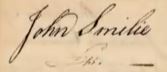
John Smilie
Former U.S. Representative · Pennsylvania District 9 · 1793–1813 · Republican
John Smilie represented Pennsylvania's District 9 in the United States House of Representatives (1793–1813) for the Republican party. The page below collects sourced biographical facts, term history, committee roles, and provenance for Smilie.
Bioguide ID: S000508
Key facts
- Full name
- John Smilie
- State
- Pennsylvania
- District
- District 9
- Party
- Republican
- House service
- 1793–1813
- First House term
- 1793
- Status
- Left office
- Current term ends
- —
- Born
- —
- Bioguide ID
- S000508
- Committee assignments
- —
- Dataset version
- 1.20260606
Biographical narrative
930 words · sourced from the Wikipedia REST extract
John Smilie was an Irish-American politician who served as a U.S. Representative for Pennsylvania's 9th congressional district. His political career spanned nearly two decades in the late 18th and early 19th centuries, during which he became known for his alignment with the Jeffersonian ideals and his vocal opposition to the slave trade. Smilie's tenure in the U.S. House of Representatives was marked by significant political developments and debates that shaped the early years of the United States.
Early life and career
John Smilie was born in 1741 in Newtownards, County Down, Ireland. He immigrated to the United States on May 24, 1762, initially settling in Lancaster County, Pennsylvania. His early life in Ireland and subsequent move to America played a crucial role in shaping his political views and aspirations. In 1780, he relocated to Fayette County, Pennsylvania, where he became actively involved in local governance and community affairs.
Smilie's political career began to take shape in the early 1790s. He was elected to the Pennsylvania state legislature, where he served in both the House and Senate. His political affiliations aligned him with the Jeffersonian faction of the Democratic-Republican Party, which was characterized by its advocacy for agrarian interests, states' rights, and a strict interpretation of the Constitution. Smilie's commitment to these principles would later influence his actions and decisions as a member of the U.S. Congress.
In addition to his political endeavors, Smilie was recognized for his intellectual contributions. In 1791, he was elected as a member of the American Philosophical Society, an organization founded by Benjamin Franklin that aimed to promote scientific and scholarly pursuits. This affiliation underscored Smilie's engagement with the intellectual currents of his time and his commitment to advancing knowledge and civic responsibility.
House tenure
John Smilie’s congressional career began when he was elected to the U.S. House of Representatives in 1793, representing Pennsylvania's 9th congressional district. He served in this capacity until 1795, after which he returned to the House in 1799 and remained a member until 1812. Over the course of his eight terms in Congress, Smilie participated in the legislative processes that defined the early years of the United States government.
During his initial term, Smilie was part of the early legislative efforts that sought to establish the framework for the new nation. His return to Congress in 1799 coincided with a period of significant political and social change, including debates over federal authority and the rights of states. As a member of the Democratic-Republican Party, Smilie often found himself at odds with the Federalist Party, which favored a more centralized government and broader federal powers.
Throughout his tenure, Smilie was involved in various legislative discussions and initiatives. His political alignment with Thomas Jefferson and the Democratic-Republicans positioned him as a key figure in the opposition to Federalist policies. He was known for advocating for the rights of ordinary citizens and promoting agrarian interests, which were central to the economic fabric of Pennsylvania and the broader United States during this period.
In 1812, Smilie was re-elected to serve in the Thirteenth Congress. However, his term was cut short by his death on December 30, 1812, in Washington, D.C. He passed away just before the new Congress convened, marking the end of a significant chapter in his political career. Smilie was buried in the Congressional Cemetery, a resting place for many notable figures in American history.
Legislative focus and committees
Throughout his congressional career, John Smilie was particularly noted for his strong stance against the slave trade. During the debates surrounding the abolition of the slave trade in the early 19th century, he emerged as a vocal opponent of the practice. Smilie argued that the importation of slaves after the year 1808 should be met with the immediate emancipation of those individuals, reflecting his commitment to human rights and moral principles. He also advocated for severe penalties for those engaged in the illegal slave trade, suggesting that smugglers should face the death penalty for their actions. Despite his passionate arguments, these provisions were not adopted into law, highlighting the complexities and challenges of enacting significant social reforms during this period.
Smilie's legislative focus extended beyond the issue of slavery. As a member of the House, he engaged in discussions related to various policies that impacted his constituents and the nation as a whole. His alignment with the Jeffersonian ideals often placed him at the forefront of debates regarding states' rights, federalism, and the role of government in the lives of citizens. His contributions to these discussions were reflective of the broader ideological battles that characterized the early years of the American republic.
In addition to his legislative efforts, Smilie's membership in the American Philosophical Society indicated his interest in the intersection of politics and intellectual discourse. This affiliation allowed him to engage with other thinkers and leaders of his time, further informing his perspectives on governance and civic responsibility. His commitment to education and knowledge was evident in his approach to policy-making, as he sought to align legislative initiatives with the principles of reason and rationality.
Overall, John Smilie's career as a U.S. Representative was marked by his dedication to the principles of democracy and his advocacy for social justice. His contributions to the early legislative framework of the United States and his outspoken opposition to the slave trade reflect a commitment to the values of equality and human dignity. His legacy is intertwined with the broader narrative of American history, particularly in the context of the evolving debates over civil rights and the role of government in safeguarding those rights.
Notable legislation
Sponsored and co-sponsored legislation for John Smilie is pending operator curation. The biographical narrative above carries the same provenance trail until per-bill rows are written.
Sources
- [1]https://en.wikipedia.org/wiki/John_SmilieWikipedia · retrieved 2026-06-06
Notable quotes
Sourced quotes for John Smilie are pending operator curation. Narrative-scope provenance remains attached below.
Sources
- [1]https://en.wikipedia.org/wiki/John_SmilieWikipedia · retrieved 2026-06-06
Key positions
Curated policy positions for John Smilie are pending operator review. The biographical narrative above carries the same provenance trail until per-topic positions are written.
Sources
- [1]https://en.wikipedia.org/wiki/John_SmilieWikipedia · retrieved 2026-06-06
Terms served
- 1793–1795U.S. House · Term 1 · Republican
- 1799–1801U.S. House · Term 2 · Republican
- 1801–1803U.S. House · Term 3 · Republican
- 1803–1805U.S. House · Term 4 · Republican
- 1805–1807U.S. House · Term 5 · Republican
- 1807–1809U.S. House · Term 6 · Republican
- 1809–1811U.S. House · Term 7 · Republican
- 1811–1813U.S. House · Term 8 · Republican
Sources & provenance
Every attributable claim above carries a per-section [N] marker that resolves to the corresponding URL below. Each entry records the upstream provider, the canonical URL, and the timestamp at which the source was retrieved by the ingest pipeline.
Key facts
- https://bioguide.congress.gov/search/bio/S000508bioguide · retrieved 2026-06-06
- https://www.govtrack.us/congress/members/409994govtrack · retrieved 2026-06-06
Biographical narrative
- https://en.wikipedia.org/wiki/John_Smiliewikipedia · retrieved 2026-06-06
Find your representative
Every U.S. state elects representatives by district. Browse Pennsylvania’s delegation, the full former-representative roster, or explore the role and term length.
Related on The Candidate
- Succeeded by Thomas BurnsideLater holder of the Pennsylvania District 9 House seat · Republican.Open
- Adam SeybertFormer U.S. Representative · Pennsylvania District 1 · RepublicanOpen
- Benjamin SayFormer U.S. Representative · Pennsylvania District 1 · RepublicanOpen
- Chapman FreemanFormer U.S. Representative · Pennsylvania District 1 · RepublicanOpen
- Harry RansleyFormer U.S. Representative · Pennsylvania District 1 · RepublicanOpen
- Republican PartyFederal candidates and office holders on the Republican line.Open