
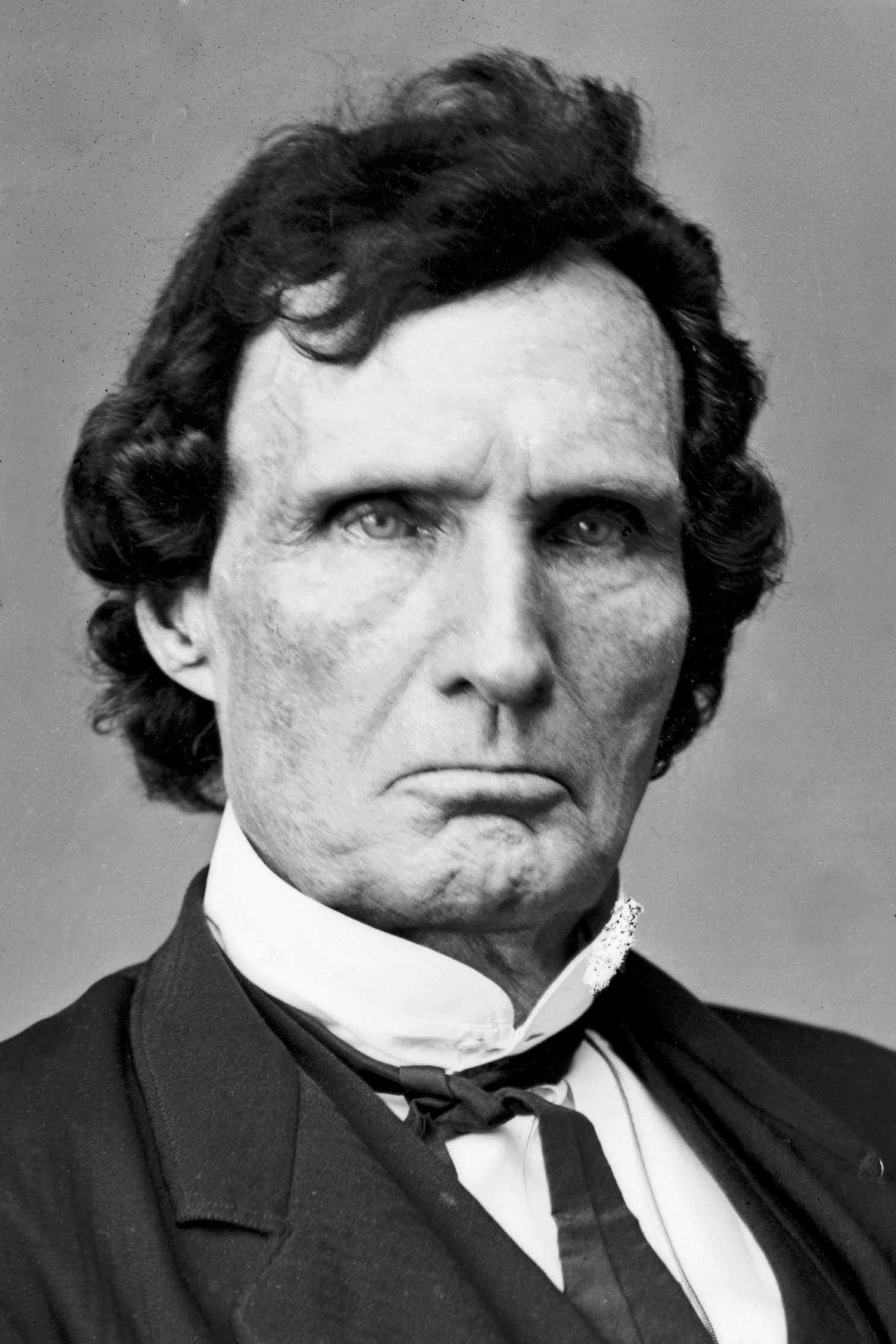
Historical · U.S. House · Pennsylvania · District 9
Thaddeus Stevens
Former U.S. Representative · Pennsylvania District 9 · 1849–1869 · Republican
Thaddeus Stevens represented Pennsylvania's District 9 in the United States House of Representatives (1849–1869) for the Republican party. The page below collects sourced biographical facts, term history, committee roles, and provenance for Stevens.
Bioguide ID: S000887
Key facts
- Full name
- Thaddeus Stevens
- State
- Pennsylvania
- District
- District 9
- Party
- Republican
- House service
- 1849–1869
- First House term
- 1849
- Status
- Left office
- Current term ends
- —
- Born
- 1792
- Bioguide ID
- S000887
- Committee assignments
- —
- Dataset version
- 1.20260606
Biographical narrative
1,042 words · sourced from the Wikipedia REST extract
Thaddeus Stevens was a prominent American politician and lawyer who served as a U.S. Representative for Pennsylvania's 9th congressional district. A member of the Republican Party, he was a leading figure among the Radical Republicans during the tumultuous period of the American Civil War and Reconstruction. Stevens was known for his staunch opposition to slavery and his advocacy for the rights of Black Americans. His tenure in Congress spanned from 1849 until his death in 1868, during which he played a significant role in shaping legislation aimed at securing civil rights and addressing the challenges of post-war America.
Early life and career
Thaddeus Stevens was born on April 4, 1792, in Danville, Vermont, into a family of modest means. He was the second of four sons born to Joshua Stevens, a farmer and cobbler, and Sarah Morrill Stevens. His early life was marked by hardship, including the physical challenges posed by a club foot, which resulted in a permanent limp. This condition subjected him to ridicule from his peers, but it also fueled his determination to pursue an education.
In 1807, seeking better opportunities for her children, Stevens' mother moved the family to Peacham, Vermont. There, Thaddeus attended the Caledonia Grammar School, where he faced bullying due to his disability but developed a strong desire to learn. After completing his studies, he enrolled at the University of Vermont. However, his education was interrupted by the War of 1812, which led him to transfer to Dartmouth College. Despite excelling academically, he was not elected to the prestigious Phi Beta Kappa society, an experience that left a lasting impression on him.
Stevens graduated from Dartmouth in 1814 and briefly returned to Peacham to teach. He began studying law under John Mattocks and later moved to York, Pennsylvania, to join the faculty of the York Academy. While in York, he continued his legal studies in the office of David Cossett. Despite facing barriers to his admission to the bar due to a local resolution aimed at excluding those who had pursued other professions, Stevens persevered and eventually became a practicing attorney.
House tenure
Stevens's political career began in earnest when he was elected to the Pennsylvania House of Representatives, where he emerged as a strong advocate for free public education. His early political involvement was influenced by his opposition to the Anti-Masonic movement, which he viewed as a threat to the republican system of government. Following financial difficulties in 1842, he relocated to Lancaster, Pennsylvania, where he joined the Whig Party. In 1848, he was elected to the U.S. House of Representatives, marking the beginning of his long congressional career.
Stevens served a total of seven terms in the House, with his first term commencing in 1849. His initial tenure was marked by his opposition to slavery, which ultimately cost him votes, leading him to decline seeking re-election in 1852. After a brief association with the Know-Nothing Party, he became a member of the newly formed Republican Party in 1858. During this period, he aligned himself with fellow radicals, including Senator Charles Sumner, to oppose the expansion of slavery and advocate for civil rights.
Throughout the Civil War, Stevens's role in Congress became increasingly significant. He was appointed chairman of the House Ways and Means Committee, where he was instrumental in guiding financial legislation to support the war effort. His focus was on defeating the Confederacy, implementing new taxes, and securing funding through borrowing. Stevens's commitment to abolishing slavery intensified as the war progressed, and he advocated for measures that would redistribute land from former slave owners to freed Black Americans, although these proposals faced opposition from more moderate Republicans.
Following the assassination of President Abraham Lincoln in April 1865, Stevens found himself at odds with the new president, Andrew Johnson, who sought a swift restoration of the Southern states without adequate protections for the rights of freedmen. This ideological divide led to a protracted struggle between Johnson and Congress, with Stevens emerging as a leading figure among the Radical Republicans. After the 1866 elections, the Radical Republicans gained control of Reconstruction efforts, further escalating tensions with the Johnson administration.
Stevens's final significant political battle was the impeachment of President Johnson. He served as a House manager during the impeachment trial, although the Senate ultimately acquitted Johnson. Stevens's tenure in Congress concluded with his death on August 11, 1868, shortly before the end of his last term.
Legislative focus and committees
Throughout his congressional career, Thaddeus Stevens was a vocal advocate for civil rights and social justice, particularly in the context of Reconstruction. His legislative focus was heavily influenced by his commitment to abolishing slavery and ensuring equal rights for Black Americans. As chairman of the House Ways and Means Committee during the Civil War, he played a crucial role in shaping financial policies that supported the Union war effort. His efforts included advocating for new taxation measures and borrowing to finance military operations.
Stevens's vision for post-war America extended beyond the mere abolition of slavery; he sought to empower freedmen by redistributing land confiscated from former slave owners. This radical approach aimed to provide economic opportunities for Black Americans and integrate them into the Southern economy. However, his proposals faced significant pushback from moderate Republicans and were ultimately not enacted into law.
In addition to his focus on civil rights, Stevens was also involved in various legislative initiatives related to education and public welfare. He believed in the importance of free public education and worked to promote access to schooling for all children, regardless of their background. His commitment to education reflected his own experiences growing up in poverty and his understanding of its transformative potential.
Stevens's leadership during the tumultuous Reconstruction era positioned him as a key figure in the struggle for civil rights and social justice in the United States. His legacy is complex, with historians' views evolving over time. Initially perceived as a radical driven by animosity toward the South, more recent interpretations recognize his dedication to equality and his significant contributions to the advancement of civil rights for African Americans. His impact on American politics and society continues to be studied and debated, reflecting the ongoing relevance of his ideals in contemporary discussions about race and justice.
Notable legislation
Sponsored and co-sponsored legislation for Thaddeus Stevens is pending operator curation. The biographical narrative above carries the same provenance trail until per-bill rows are written.
Sources
- [1]https://en.wikipedia.org/wiki/Thaddeus_StevensWikipedia · retrieved 2026-06-06
Notable quotes
Sourced quotes for Thaddeus Stevens are pending operator curation. Narrative-scope provenance remains attached below.
Sources
- [1]https://en.wikipedia.org/wiki/Thaddeus_StevensWikipedia · retrieved 2026-06-06
Key positions
Curated policy positions for Thaddeus Stevens are pending operator review. The biographical narrative above carries the same provenance trail until per-topic positions are written.
Sources
- [1]https://en.wikipedia.org/wiki/Thaddeus_StevensWikipedia · retrieved 2026-06-06
Terms served
- 1849–1851U.S. House · Term 1 · Whig
- 1851–1853U.S. House · Term 2 · Whig
- 1859–1861U.S. House · Term 3 · Republican
- 1861–1863U.S. House · Term 4 · Republican
- 1863–1865U.S. House · Term 5 · Republican
- 1865–1867U.S. House · Term 6 · Republican
- 1867–1869U.S. House · Term 7 · Republican
Sources & provenance
Every attributable claim above carries a per-section [N] marker that resolves to the corresponding URL below. Each entry records the upstream provider, the canonical URL, and the timestamp at which the source was retrieved by the ingest pipeline.
Key facts
- https://bioguide.congress.gov/search/bio/S000887bioguide · retrieved 2026-06-06
- https://www.govtrack.us/congress/members/410349govtrack · retrieved 2026-06-06
Biographical narrative
- https://en.wikipedia.org/wiki/Thaddeus_Stevenswikipedia · retrieved 2026-06-06
Find your representative
Every U.S. state elects representatives by district. Browse Pennsylvania’s delegation, the full former-representative roster, or explore the role and term length.
Related on The Candidate
- Preceded by John RitterEarlier holder of the Pennsylvania District 9 House seat · Democratic.Open
- Succeeded by Abraham SmithLater holder of the Pennsylvania District 9 House seat · Republican.Open
- Adam SeybertFormer U.S. Representative · Pennsylvania District 1 · RepublicanOpen
- Benjamin SayFormer U.S. Representative · Pennsylvania District 1 · RepublicanOpen
- Chapman FreemanFormer U.S. Representative · Pennsylvania District 1 · RepublicanOpen
- Harry RansleyFormer U.S. Representative · Pennsylvania District 1 · RepublicanOpen