
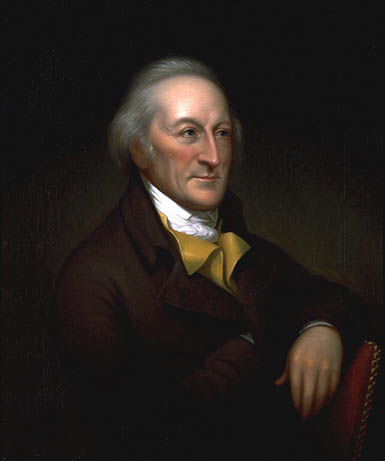
Historical · U.S. House · Pennsylvania · At-Large
George Clymer
Former U.S. Representative · Pennsylvania At-Large · 1789–1791
George Clymer represented Pennsylvania's At-Large in the United States House of Representatives (1789–1791). The page below collects sourced biographical facts, term history, committee roles, and provenance for Clymer.
Bioguide ID: C000538
Key facts
- Full name
- George Clymer
- State
- Pennsylvania
- District
- At-Large
- Party
- —
- House service
- 1789–1791
- First House term
- 1789
- Status
- Left office
- Current term ends
- —
- Born
- 1739
- Bioguide ID
- C000538
- Committee assignments
- —
- Dataset version
- 1.20260606
Biographical narrative
1,012 words · sourced from the Wikipedia REST extract
George Clymer was an American politician and Founding Father, serving as a U.S. Representative for Pennsylvania in the late 18th century. He was notable for being one of the few individuals who signed both the Declaration of Independence and the U.S. Constitution. Clymer was an early advocate for the abolition of slavery and played a significant role in the early political landscape of the United States, participating in the Continental Congress and the Constitutional Convention. His tenure in the House of Representatives marked a pivotal period in the formation of the new nation.
Early life and career
George Clymer was born on March 16, 1739, in Philadelphia, Pennsylvania, during the colonial period. He faced significant challenges early in life, as he was orphaned at the age of one. Following this tragic event, Clymer was raised by his maternal aunt and uncle, Hannah and William Coleman, who prepared him for a career in commerce. His upbringing in Philadelphia, a center of revolutionary thought and action, likely influenced his later political engagement.
Clymer entered into matrimony with Elizabeth Meredith on March 22, 1765. The couple had nine children, although four of them did not survive infancy. Among their surviving children was Henry, who later married Mary Willing, a prominent socialite in Philadelphia. Tragically, their son John Meredith was killed during the Whiskey Rebellion at the young age of 18. Clymer's family life was marked by both joy and sorrow, reflecting the broader challenges of the time.
Clymer's political career began in earnest as he became involved in the early resistance against British rule, particularly in response to the Tea Act and the Stamp Act. He was a leader in the demonstrations that took place in Philadelphia, showcasing his commitment to the revolutionary cause. In 1759, he became a member of the American Philosophical Society, which was instrumental in fostering intellectual discourse in the colonies. His political involvement deepened when he joined the Philadelphia Committee of Safety in 1773, a group that coordinated local responses to British policies.
In 1776, Clymer was elected to the Continental Congress, where he served until 1780. During his time in Congress, he shared the responsibilities of treasurer with Michael Hillegas and participated in various committees. His dedication to the revolutionary effort was evident when he remained in Philadelphia to assist in the governance of the city while Congress fled in the face of British threats. Clymer's business acumen also played a role in his life; he engaged in trade during and after the war, which contributed to his financial stability.
Following his resignation from Congress in 1777, Clymer continued his public service by being elected to the Pennsylvania Legislature in 1780. He was re-elected in 1784 and represented Pennsylvania at the Constitutional Convention in 1787, where he contributed to the foundational framework of the United States government. His political career was marked by a commitment to civic duty and the principles of democracy.
House tenure
Clymer was elected to the first U.S. Congress in 1789, representing Pennsylvania's at-large district. His tenure in the House of Representatives was brief, lasting until March 3, 1791. During this time, he was involved in the early legislative processes that shaped the new nation. The first Congress faced numerous challenges, including establishing the federal government and addressing the economic issues that arose after the Revolutionary War.
As a member of the House, Clymer participated in discussions that would lay the groundwork for future legislation. His experience in the Continental Congress and the Pennsylvania Legislature informed his contributions to the debates and decisions made during this formative period. Although specific legislative achievements during his time in the House are not detailed, Clymer's involvement in the early years of the U.S. government was significant in shaping the political landscape.
After his congressional term ended, Clymer continued to engage in public service and community affairs. He held various leadership positions, including serving as the first president of The Philadelphia Bank and the Pennsylvania Academy of the Fine Arts. His commitment to civic engagement extended to agriculture, where he served as vice-president of the Philadelphia Agricultural Society. Clymer's influence in Pennsylvania extended beyond his legislative role, as he contributed to the economic and cultural development of the region.
Legislative focus and committees
Clymer's legislative focus during his time in the House of Representatives and earlier in the Continental Congress reflected the complex issues facing the young nation. He was particularly concerned with the question of slavery and the slave trade, which was a contentious topic among the framers of the Constitution. Clymer was a member of the Pennsylvania delegation that sought to address the issue of slavery during the Constitutional Convention. Although he was a minor slave owner himself, he advocated for measures to regulate the importation of slaves, showing an early commitment to abolitionist principles.
His involvement in the drafting of the Slave Trade Compromise highlighted the challenges of balancing the interests of northern and southern states. Clymer supported an export tax as a means to indirectly tax slavery, which was met with resistance from southern states. This compromise was a critical aspect of the Constitution, reflecting the deep divisions within the country regarding the institution of slavery.
In addition to his work on slavery, Clymer was involved in various committees that addressed economic and governmental issues. His experience as a businessman and treasurer of the Continental Congress provided him with insights into fiscal matters, which were crucial for the newly formed government. Clymer's contributions to the early legislative framework of the United States were significant, as he helped shape policies that would influence the nation's development.
Clymer's legacy extends beyond his political career; he is remembered as a Founding Father who played a role in the establishment of the United States. His contributions to the early government and his advocacy for the abolition of slavery reflect the complexities of his character and the era in which he lived. Clymer passed away on January 23, 1813, and was buried in Trenton, New Jersey, leaving behind a legacy intertwined with the founding of the nation.
Notable legislation
Sponsored and co-sponsored legislation for George Clymer is pending operator curation. The biographical narrative above carries the same provenance trail until per-bill rows are written.
Sources
- [1]https://en.wikipedia.org/wiki/George_ClymerWikipedia · retrieved 2026-06-06
Notable quotes
Sourced quotes for George Clymer are pending operator curation. Narrative-scope provenance remains attached below.
Sources
- [1]https://en.wikipedia.org/wiki/George_ClymerWikipedia · retrieved 2026-06-06
Key positions
Curated policy positions for George Clymer are pending operator review. The biographical narrative above carries the same provenance trail until per-topic positions are written.
Sources
- [1]https://en.wikipedia.org/wiki/George_ClymerWikipedia · retrieved 2026-06-06
Terms served
- 1789–1791U.S. House · Term 1
Sources & provenance
Every attributable claim above carries a per-section [N] marker that resolves to the corresponding URL below. Each entry records the upstream provider, the canonical URL, and the timestamp at which the source was retrieved by the ingest pipeline.
Key facts
- https://bioguide.congress.gov/search/bio/C000538bioguide · retrieved 2026-06-06
- https://www.govtrack.us/congress/members/402671govtrack · retrieved 2026-06-06
Biographical narrative
- https://en.wikipedia.org/wiki/George_Clymerwikipedia · retrieved 2026-06-06
Find your representative
Every U.S. state elects representatives by district. Browse Pennsylvania’s delegation, the full former-representative roster, or explore the role and term length.
Related on The Candidate
- Succeeded by James ArmstrongLater holder of the Pennsylvania At-Large House seat.Open
- Adam SeybertFormer U.S. Representative · Pennsylvania District 1 · RepublicanOpen
- Benjamin SayFormer U.S. Representative · Pennsylvania District 1 · RepublicanOpen
- Chapman FreemanFormer U.S. Representative · Pennsylvania District 1 · RepublicanOpen
- Harry RansleyFormer U.S. Representative · Pennsylvania District 1 · RepublicanOpen
- Representatives from PennsylvaniaEvery former U.S. Representative who has represented Pennsylvania.Open