
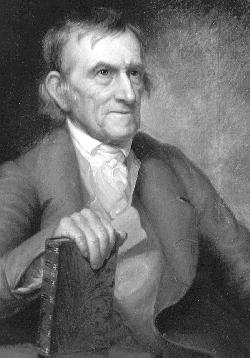
Historical · U.S. House · Pennsylvania · At-Large
Henry Wynkoop
Former U.S. Representative · Pennsylvania At-Large · 1789–1791
Henry Wynkoop represented Pennsylvania's At-Large in the United States House of Representatives (1789–1791). The page below collects sourced biographical facts, term history, committee roles, and provenance for Wynkoop.
Bioguide ID: W000783
Key facts
- Full name
- Henry Wynkoop
- State
- Pennsylvania
- District
- At-Large
- Party
- —
- House service
- 1789–1791
- First House term
- 1789
- Status
- Left office
- Current term ends
- —
- Born
- 1737
- Bioguide ID
- W000783
- Committee assignments
- —
- Dataset version
- 1.20260606
Biographical narrative
888 words · sourced from the Wikipedia REST extract
Henry Wynkoop was an American politician who served as a U.S. Representative for Pennsylvania during the First United States Congress from 1789 to 1791. Born on March 2, 1737, in Northampton Township, Pennsylvania, Wynkoop was involved in both local governance and national politics, contributing to the early formation of the United States government. His career spanned various roles, including serving as a justice of the Court of Common Pleas and later as an associate judge in Bucks County. Wynkoop's life also intersected with the complex issues of slavery, as he inherited a farm that practiced chattel slavery from his father. He passed away on March 25, 1816, leaving a legacy that reflects the societal norms and political landscape of his time.
Early life and career
Henry Wynkoop was born into a family that operated a 153-acre farm in Northampton Township, which was part of the Province of Pennsylvania. His father was involved in the practice of chattel slavery, which significantly influenced Wynkoop's upbringing and later life. After the death of his father in 1759, Wynkoop inherited both the farm and the enslaved individuals who had been part of his father's estate. This inheritance shaped his economic standing and social status within the community.
Wynkoop's early education included a brief period at Princeton University, although he did not complete his studies. Instead, he chose to engage in local politics, which would set the stage for his future political career. His involvement in governance began with his appointment as a justice of the Court of Common Pleas and the orphan's court in Kingston, Pennsylvania, where he served from 1780 until 1789. This role allowed him to gain valuable experience in the legal and political systems of the time.
Throughout his life, Wynkoop was married three times and fathered eight children. His first marriage was to Susannah Wanshaer in 1761, who passed away in 1776. He then married Maria Cummings in 1777, but she also died in 1781. His final marriage was to Sarah Newkirk, who survived him until 1813. These personal relationships, along with his role as a landowner and slaveholder, were integral to his identity and social standing in Pennsylvania.
House tenure
Wynkoop's political career reached a significant milestone when he was elected as a U.S. Representative for Pennsylvania's at-large district during the First United States Congress. His term began in 1789, coinciding with the establishment of the new federal government under the Constitution. Wynkoop's election came at a time when the nation was still in its formative years, and he was part of a legislative body tasked with addressing the challenges of a newly independent country.
During his time in Congress, Wynkoop participated in the early legislative processes that would shape the future of the United States. His tenure lasted until March 3, 1791, marking a brief but notable period in the history of the House of Representatives. While specific details about his legislative contributions and voting record are not documented, his role as a member of the First Congress placed him among the early architects of American governance.
After concluding his term in the House, Wynkoop continued his public service by being appointed as an associate judge in Bucks County. This position allowed him to remain active in the legal and political affairs of Pennsylvania until his death. His involvement in both local and national politics reflects the interconnected nature of governance during the early years of the United States.
Legislative focus and committees
While specific details regarding Wynkoop's legislative focus and committee assignments during his time in Congress are not available, it can be inferred that, as a member of the First United States Congress, he would have been involved in discussions and decisions that were crucial to the establishment of federal laws and policies. The First Congress was responsible for addressing a wide range of issues, including the formation of the executive departments, the establishment of the federal judiciary, and the creation of a financial system.
Given Wynkoop's background as a landowner and his experience in local governance, it is likely that he had an interest in agricultural and economic issues that would have impacted his constituents in Pennsylvania. The early Congress also dealt with matters related to the rights of individuals, including issues surrounding slavery, which would have been particularly relevant to Wynkoop's own experiences as a slaveholder.
In his later years, Wynkoop demonstrated a shift in perspective regarding slavery. He created a will that stipulated the manumission of the individuals he had enslaved, indicating a recognition of the moral complexities surrounding the institution of slavery. This act of freeing those he had enslaved occurred upon his death on March 25, 1816, in Bucks County, Pennsylvania. Some of the individuals who were freed chose to remain with the Wynkoop family, highlighting the nuanced relationships that existed between enslaved individuals and their owners.
Wynkoop's life and career encapsulate the complexities of American history during the late 18th and early 19th centuries. His contributions to the early legislative framework of the United States, combined with his personal experiences as a landowner and slaveholder, reflect the broader societal dynamics of the time. Following his death, Wynkoop was interred in the graveyard of the Low Dutch Reformed Church in Richboro, Pennsylvania, marking the end of a life that spanned a significant period in American history.
Notable legislation
Sponsored and co-sponsored legislation for Henry Wynkoop is pending operator curation. The biographical narrative above carries the same provenance trail until per-bill rows are written.
Sources
- [1]https://en.wikipedia.org/wiki/Henry_WynkoopWikipedia · retrieved 2026-06-06
Notable quotes
Sourced quotes for Henry Wynkoop are pending operator curation. Narrative-scope provenance remains attached below.
Sources
- [1]https://en.wikipedia.org/wiki/Henry_WynkoopWikipedia · retrieved 2026-06-06
Key positions
Curated policy positions for Henry Wynkoop are pending operator review. The biographical narrative above carries the same provenance trail until per-topic positions are written.
Sources
- [1]https://en.wikipedia.org/wiki/Henry_WynkoopWikipedia · retrieved 2026-06-06
Terms served
- 1789–1791U.S. House · Term 1
Sources & provenance
Every attributable claim above carries a per-section [N] marker that resolves to the corresponding URL below. Each entry records the upstream provider, the canonical URL, and the timestamp at which the source was retrieved by the ingest pipeline.
Key facts
- https://bioguide.congress.gov/search/bio/W000783bioguide · retrieved 2026-06-06
- https://www.govtrack.us/congress/members/411931govtrack · retrieved 2026-06-06
Biographical narrative
- https://en.wikipedia.org/wiki/Henry_Wynkoopwikipedia · retrieved 2026-06-06
Find your representative
Every U.S. state elects representatives by district. Browse Pennsylvania’s delegation, the full former-representative roster, or explore the role and term length.
Related on The Candidate
- Succeeded by James ArmstrongLater holder of the Pennsylvania At-Large House seat.Open
- Adam SeybertFormer U.S. Representative · Pennsylvania District 1 · RepublicanOpen
- Benjamin SayFormer U.S. Representative · Pennsylvania District 1 · RepublicanOpen
- Chapman FreemanFormer U.S. Representative · Pennsylvania District 1 · RepublicanOpen
- Harry RansleyFormer U.S. Representative · Pennsylvania District 1 · RepublicanOpen
- Representatives from PennsylvaniaEvery former U.S. Representative who has represented Pennsylvania.Open