
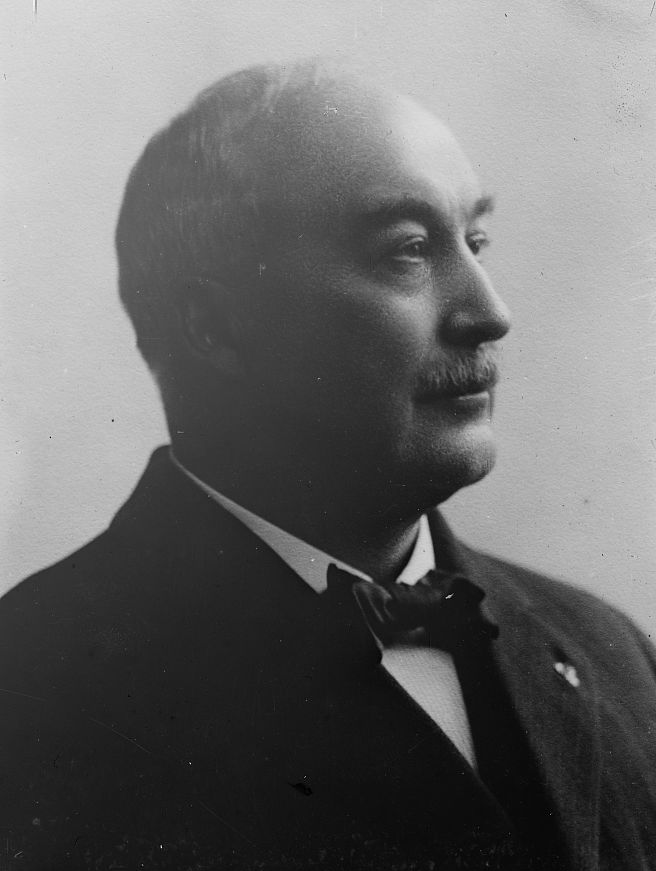
Historical · U.S. House · Pennsylvania · At-Large
Mahlon Garland
Former U.S. Representative · Pennsylvania At-Large · 1915–1921 · Republican
Mahlon Garland represented Pennsylvania's At-Large in the United States House of Representatives (1915–1921) for the Republican party. The page below collects sourced biographical facts, term history, committee roles, and provenance for Garland.
Bioguide ID: G000068
Key facts
- Full name
- Mahlon Garland
- State
- Pennsylvania
- District
- At-Large
- Party
- Republican
- House service
- 1915–1921
- First House term
- 1915
- Status
- Left office
- Current term ends
- —
- Born
- 1856
- Bioguide ID
- G000068
- Committee assignments
- —
- Dataset version
- 1.20260606
Biographical narrative
954 words · sourced from the Wikipedia REST extract
Mahlon Garland was an American labor leader and politician who served as a Republican member of the U.S. House of Representatives for Pennsylvania's at-large district from 1915 until his death in 1920. His career in public service spanned various roles, including significant positions within labor organizations and local government, culminating in his election to Congress, where he focused on issues related to mining and labor.
Early life and career
Mahlon Garland was born on May 4, 1856, in Pittsburgh, Pennsylvania. His family later relocated to Alexandria, Pennsylvania, where he spent his formative years. Garland learned the trade of puddling and heating, which was integral to the iron and steel industries that were prominent in Pennsylvania during that era. His early involvement in labor issues began when he joined the Amalgamated Association of Iron, Steel and Tin Workers, a significant labor union representing workers in these industries. His dedication to labor rights and workers' conditions led him to ascend to the position of president of the organization, where he advocated for the interests of workers in a rapidly industrializing America.
Garland's political career began at the local level when he served on the select council of Pittsburgh in 1886 and 1887. His experience in local governance provided him with insights into the challenges faced by urban communities, particularly those related to labor and industry. In 1898, he was appointed by President William McKinley as the United States Collector of Customs in Pittsburgh, a position that was then referred to as the surveyor of customs. This role allowed him to gain further experience in federal government operations and public service.
Garland was reappointed to the customs position by subsequent presidents, including Theodore Roosevelt in 1902 and 1906, and William Taft in 1910. He held this office until March 3, 1915, when he transitioned into a new phase of his career by entering the U.S. House of Representatives. His background in labor leadership and local governance positioned him well for a role in Congress, where he would continue to advocate for workers' rights and related issues.
House tenure
Mahlon Garland was elected to the U.S. House of Representatives as a member of the Republican Party, beginning his first term in the Sixty-fourth Congress in 1915. He was subsequently reelected to serve in the Sixty-fifth and Sixty-sixth Congresses, demonstrating his ability to connect with constituents and address their concerns effectively. Throughout his time in Congress, Garland was known for his commitment to labor issues, particularly those affecting the mining industry, which was a significant sector in Pennsylvania.
During the Sixty-sixth Congress, Garland held the position of Chairman of the United States House Committee on Mines and Mining. In this capacity, he played a crucial role in shaping legislation related to mining practices, safety regulations, and the welfare of miners. His leadership on this committee underscored his dedication to improving conditions for workers in one of the most dangerous industries of the time.
Garland's tenure in Congress was marked by his focus on issues that directly impacted the lives of working-class Americans. He was known for advocating policies that aimed to enhance labor rights and improve working conditions, reflecting his background as a labor leader. His ability to navigate the complexities of federal legislation and his commitment to his constituents contributed to his reputation as a dedicated public servant.
Despite his successful political career, Garland's life was cut short when he passed away on November 19, 1920, in Washington, D.C. He had been reelected to the Sixty-seventh Congress, but he did not live to see the new session begin. His death marked the end of a significant chapter in Pennsylvania's political history, particularly in relation to labor representation in Congress.
Legislative focus and committees
Throughout his time in the U.S. House of Representatives, Mahlon Garland focused primarily on issues related to labor, particularly in the mining sector. His experience as a labor leader informed his legislative priorities, and he worked diligently to advocate for the rights and welfare of workers. As Chairman of the House Committee on Mines and Mining during the Sixty-sixth Congress, Garland was in a pivotal position to influence legislation that affected miners and the broader labor community.
Garland's role on the committee allowed him to address critical issues such as mine safety, labor conditions, and the economic challenges faced by workers in the mining industry. His efforts were aimed at ensuring that the voices of miners were heard in Congress, and he sought to implement policies that would improve their working environments and overall quality of life.
In addition to his focus on mining, Garland's broader legislative agenda included support for labor rights and initiatives that aimed to enhance the welfare of working-class Americans. His background in labor organizations and local government provided him with a unique perspective on the challenges faced by workers, allowing him to advocate effectively for policies that aligned with their needs.
Garland's commitment to labor issues was reflective of the broader labor movement in the early 20th century, a period characterized by significant social and economic changes in the United States. His work in Congress contributed to the ongoing dialogue about workers' rights and the role of government in regulating labor practices.
Mahlon Garland's legacy as a labor leader and U.S. Representative is marked by his dedication to advocating for the rights of workers and addressing the challenges they faced during a transformative period in American history. His contributions to labor legislation and his leadership on the House Committee on Mines and Mining underscore the importance of representation for working-class Americans in the federal government. Garland is interred at Woodlawn Cemetery in Pittsburgh, Pennsylvania, where he is remembered for his service and commitment to the labor movement.
Notable legislation
Sponsored and co-sponsored legislation for Mahlon Garland is pending operator curation. The biographical narrative above carries the same provenance trail until per-bill rows are written.
Sources
- [1]https://en.wikipedia.org/wiki/Mahlon_M._GarlandWikipedia · retrieved 2026-06-06
Notable quotes
Sourced quotes for Mahlon Garland are pending operator curation. Narrative-scope provenance remains attached below.
Sources
- [1]https://en.wikipedia.org/wiki/Mahlon_M._GarlandWikipedia · retrieved 2026-06-06
Key positions
Curated policy positions for Mahlon Garland are pending operator review. The biographical narrative above carries the same provenance trail until per-topic positions are written.
Sources
- [1]https://en.wikipedia.org/wiki/Mahlon_M._GarlandWikipedia · retrieved 2026-06-06
Terms served
- 1915–1917U.S. House · Term 1 · Republican
- 1917–1919U.S. House · Term 2 · Republican
- 1919–1921U.S. House · Term 3 · Republican
Sources & provenance
Every attributable claim above carries a per-section [N] marker that resolves to the corresponding URL below. Each entry records the upstream provider, the canonical URL, and the timestamp at which the source was retrieved by the ingest pipeline.
Key facts
- https://bioguide.congress.gov/search/bio/G000068bioguide · retrieved 2026-06-06
- https://www.govtrack.us/congress/members/404441govtrack · retrieved 2026-06-06
Biographical narrative
- https://en.wikipedia.org/wiki/Mahlon_M._Garlandwikipedia · retrieved 2026-06-06
Find your representative
Every U.S. state elects representatives by district. Browse Pennsylvania’s delegation, the full former-representative roster, or explore the role and term length.
Related on The Candidate
- Preceded by Arthur RupleyEarlier holder of the Pennsylvania At-Large House seat · Republican.Open
- Succeeded by James HazlettLater holder of the Pennsylvania At-Large House seat · Republican.Open
- Adam SeybertFormer U.S. Representative · Pennsylvania District 1 · RepublicanOpen
- Benjamin SayFormer U.S. Representative · Pennsylvania District 1 · RepublicanOpen
- Chapman FreemanFormer U.S. Representative · Pennsylvania District 1 · RepublicanOpen
- Harry RansleyFormer U.S. Representative · Pennsylvania District 1 · RepublicanOpen