
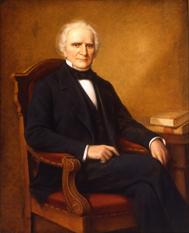
Historical · U.S. House · Pennsylvania · At-Large
Samuel Ingham
Former U.S. Representative · Pennsylvania At-Large · 1813–1831 · Jackson
Samuel Ingham represented Pennsylvania's At-Large in the United States House of Representatives (1813–1831) for the Jackson party. The page below collects sourced biographical facts, term history, committee roles, and provenance for Ingham.
Bioguide ID: I000022
Key facts
- Full name
- Samuel Ingham
- State
- Pennsylvania
- District
- At-Large
- Party
- Jackson
- House service
- 1813–1831
- First House term
- 1813
- Status
- Left office
- Current term ends
- —
- Born
- 1779
- Bioguide ID
- I000022
- Committee assignments
- —
- Dataset version
- 1.20260606
Biographical narrative
989 words · sourced from the Wikipedia REST extract
Samuel Ingham was a prominent American politician in the early 19th century, serving as a U.S. Representative from Pennsylvania and later as Secretary of the Treasury under President Andrew Jackson. His political career spanned several decades, during which he was involved in significant legislative activities and faced notable challenges, particularly in relation to the banking system of the time. Ingham's contributions to American politics were marked by his alignment with the Jacksonian principles and his involvement in various committees during his tenure in the House of Representatives.
Early life and career
Samuel Delucenna Ingham was born on September 16, 1779, in Solebury Township, Pennsylvania. He was the son of Dr. Jonathan Ingham, a well-known physician from Philadelphia, and Ann Welding. Ingham pursued classical studies in his early education and later became an apprentice to a paper maker near Pennypack Creek, which is located not far from Philadelphia. This apprenticeship laid the foundation for his future career in manufacturing.
After completing his apprenticeship, Ingham took on the role of manager at a paper mill in Bloomfield, New Jersey. It was during this time that he married Rebecca Dodd in 1800, with whom he would have five children. In the same year, Ingham returned to Pennsylvania and established a paper mill on his mother's farm, which became his primary source of income for several years. His early career in manufacturing was characterized by his entrepreneurial spirit and commitment to his family.
Ingham's political career began in earnest when he was elected to the Pennsylvania House of Representatives, serving from 1806 to 1808. Following his tenure in the state legislature, he was appointed as Justice of the Peace by the Governor of Pennsylvania, further solidifying his involvement in public service. His growing political influence eventually led him to the national stage, where he was elected to the United States House of Representatives.
House tenure
Samuel Ingham's congressional career commenced in 1813, representing Pennsylvania's at-large district. Over the course of his eight terms in the House, he became known for his ability to secure victories against his Federalist opponents, particularly in his first two elections. Ingham faced no opposition in the 1816 election, reflecting his strong support within his constituency. However, he resigned from Congress in 1818 due to his wife's declining health, which marked a temporary pause in his political career.
After leaving Congress, Ingham was appointed as the Prothonotary (Chief Clerk, Notary, and Registrar) of the Court of Common Pleas of Bucks County, Pennsylvania. This role allowed him to remain engaged in public service while attending to family matters. Following the death of his first wife, Rebecca, in 1819, Ingham continued to navigate his personal and professional life.
Ingham returned to Congress in 1822, where he served until 1829. During his time in the House, he held significant leadership positions, including chairing the United States House Committee on Pensions and Revolutionary War Claims during the 13th Congress. He also chaired the House Committee on the Post Office and Post Roads during the 14th, 15th, 19th, and 20th Congresses, and led the House Committee on Expenditures in the Post Office Department during the 15th Congress. His involvement in these committees showcased his commitment to addressing the needs of his constituents and the nation.
Legislative focus and committees
Throughout his tenure in the House of Representatives, Samuel Ingham was primarily focused on issues related to pensions, postal services, and the broader economic landscape of the United States. His leadership roles in various committees allowed him to influence legislation that would shape the nation's policies in these areas. Ingham's chairmanship of the House Committee on Pensions and Revolutionary War Claims highlighted his dedication to veterans and their families, ensuring that their contributions to the nation were recognized and compensated.
Ingham's involvement with the postal system was particularly significant during a time when communication and transportation were rapidly evolving. As chair of the House Committee on the Post Office and Post Roads, he played a crucial role in overseeing the development and efficiency of postal services, which were vital for connecting communities and facilitating commerce across the growing nation.
In addition to his legislative work, Ingham's political career intersected with major national issues, particularly the banking system. His later appointment as Secretary of the Treasury under President Andrew Jackson placed him at the center of the contentious debates surrounding the Second Bank of the United States. Ingham's tenure as Treasury Secretary was marked by his attempts to mediate between Jackson's opposition to the Bank and the interests of its president, Nicholas Biddle. This period was characterized by significant tension and conflict, ultimately leading to Ingham's resignation in 1831 due to unrelated personal disputes within the Cabinet.
Ingham's contributions to American politics extended beyond his legislative and executive roles. He was a member of the Columbian Institute for the Promotion of Arts and Sciences during the 1820s, an organization that included notable figures such as Andrew Jackson and John Quincy Adams. Ingham's engagement with this institute reflected his commitment to the advancement of knowledge and the promotion of arts and sciences in the United States.
After his resignation as Secretary of the Treasury, Ingham returned to the manufacturing sector, focusing on paper production and the development of anthracite coal fields. He played a role in the organization of the Beaver Meadow Railroad Company and the Hazleton Coal Company, contributing to the economic development of the region. Ingham also worked to promote essential infrastructure projects, such as canals, which were crucial for transportation and trade.
Samuel Ingham passed away on June 5, 1860, in Trenton, New Jersey, at the age of 80. His legacy includes not only his contributions to the political landscape of early America but also the impact he had on the economic development of Pennsylvania and beyond. Ingham County, Michigan, is named in his honor, reflecting the lasting recognition of his service and influence during a formative period in American history.
Notable legislation
Sponsored and co-sponsored legislation for Samuel Ingham is pending operator curation. The biographical narrative above carries the same provenance trail until per-bill rows are written.
Sources
- [1]https://en.wikipedia.org/wiki/Samuel_D._InghamWikipedia · retrieved 2026-06-06
Notable quotes
Sourced quotes for Samuel Ingham are pending operator curation. Narrative-scope provenance remains attached below.
Sources
- [1]https://en.wikipedia.org/wiki/Samuel_D._InghamWikipedia · retrieved 2026-06-06
Key positions
Curated policy positions for Samuel Ingham are pending operator review. The biographical narrative above carries the same provenance trail until per-topic positions are written.
Sources
- [1]https://en.wikipedia.org/wiki/Samuel_D._InghamWikipedia · retrieved 2026-06-06
Terms served
- 1813–1815U.S. House · Term 1 · Republican
- 1815–1817U.S. House · Term 2 · Republican
- 1817–1819U.S. House · Term 3 · Republican
- 1821–1823U.S. House · Term 4 · Republican
- 1823–1825U.S. House · Term 5 · Jackson Republican
- 1825–1827U.S. House · Term 6 · Jackson
- 1827–1829U.S. House · Term 7 · Jackson
- 1829–1831U.S. House · Term 8 · Jackson
Sources & provenance
Every attributable claim above carries a per-section [N] marker that resolves to the corresponding URL below. Each entry records the upstream provider, the canonical URL, and the timestamp at which the source was retrieved by the ingest pipeline.
Key facts
- https://bioguide.congress.gov/search/bio/I000022bioguide · retrieved 2026-06-06
- https://www.govtrack.us/congress/members/405884govtrack · retrieved 2026-06-06
Biographical narrative
- https://en.wikipedia.org/wiki/Samuel_D._Inghamwikipedia · retrieved 2026-06-06
Find your representative
Every U.S. state elects representatives by district. Browse Pennsylvania’s delegation, the full former-representative roster, or explore the role and term length.
Related on The Candidate
- Preceded by John HannaEarlier holder of the Pennsylvania At-Large House seat · Republican.Open
- Succeeded by Galusha GrowLater holder of the Pennsylvania At-Large House seat · Republican.Open
- Adam SeybertFormer U.S. Representative · Pennsylvania District 1 · RepublicanOpen
- Benjamin SayFormer U.S. Representative · Pennsylvania District 1 · RepublicanOpen
- Chapman FreemanFormer U.S. Representative · Pennsylvania District 1 · RepublicanOpen
- Harry RansleyFormer U.S. Representative · Pennsylvania District 1 · RepublicanOpen