
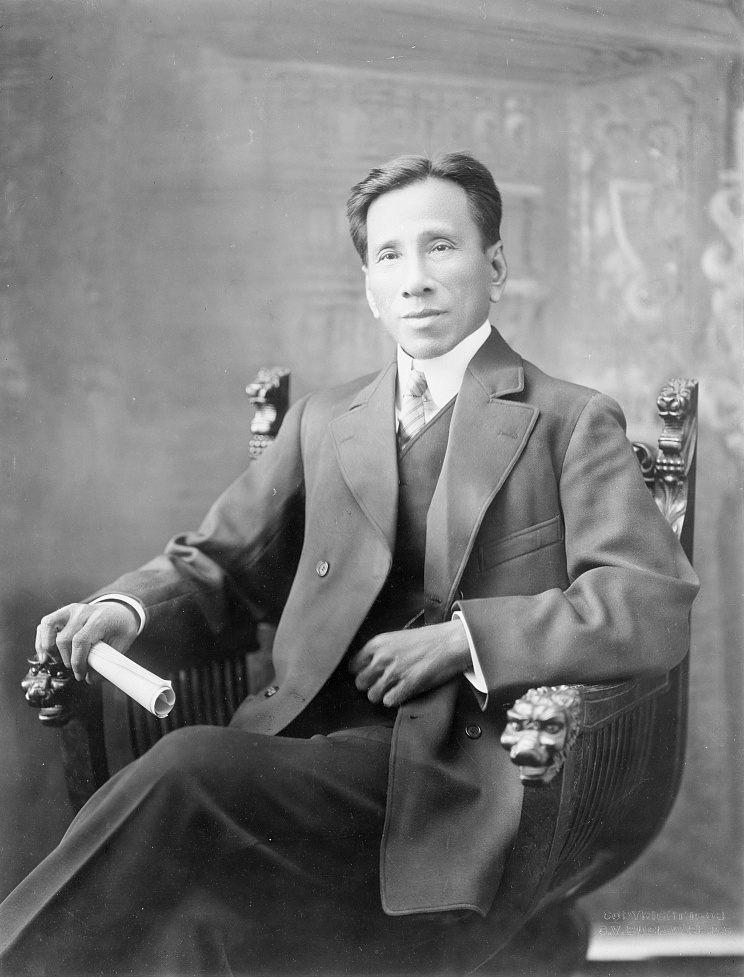
Historical · U.S. House · PI · At-Large
Pablo Ocampo
Former U.S. Representative · PI At-Large · 1907–1911
Pablo Ocampo represented PI's At-Large in the United States House of Representatives (1907–1911). The page below collects sourced biographical facts, term history, committee roles, and provenance for Ocampo.
Bioguide ID: O000020
Key facts
- Full name
- Pablo Ocampo
- State
- PI
- District
- At-Large
- Party
- —
- House service
- 1907–1911
- First House term
- 1907
- Status
- Left office
- Current term ends
- —
- Born
- 1853
- Bioguide ID
- O000020
- Committee assignments
- —
- Dataset version
- 1.20260606
Biographical narrative
944 words · sourced from the Wikipedia REST extract
Pablo Ocampo was a Filipino lawyer and politician who served as a U.S. Representative for the Philippine Islands, holding the position of Resident Commissioner from 1907 until 1911. He played a significant role in the transition of the Philippines from a Spanish colony to an American Commonwealth and was an active participant in the early legislative processes of the Philippines. Ocampo's career was marked by his involvement in various political movements, his contributions to the Malolos Congress, and his advocacy for Philippine independence.
Early life and career
Pablo Ocampo was born on January 25, 1853, in Quiapo, Manila, during the Spanish colonial period. He was the son of Andres Ocampo, who served as a gobernadorcillo, a local government official, and Macaria de Leon-Ocampo. Ocampo pursued his education at the Colegio de San Juan de Letran for his secondary studies before enrolling at the University of Santo Tomas, where he studied law. He completed his law degree in March 1882 and began practicing law in Manila shortly thereafter.
Ocampo married Juana Zamora-Ocampo on September 5, 1885. The couple had twelve children, six of whom survived to adulthood. Among their children were Concepcion O. Santiago, who was married to Francisco Santiago, a notable figure in Philippine music, and Jesus Ocampo, whose son, Pablo "Pabling" V. Ocampo III, later served in the Philippine Congress. Ocampo's family was involved in various significant activities, including the restoration of cultural landmarks and participation in public service.
In 1888, Ocampo began his public service career as a court reporter in Manila. His legal career progressed when he was promoted to public prosecutor in the court of first instance in Tondo, Manila, and later served as a public defender. He also held the position of secretary of the Colegio de Abogados, the Bar Association of the Philippines. Although he was not initially an active supporter of the Philippine Revolution, he became a member of the Malolos Congress, which was the first legislative assembly of the Philippines. Ocampo represented the Province of Bontoc and was elected to the committee responsible for drafting the constitution of the First Philippine Republic.
During the Philippine–American War, Ocampo was involved in efforts to negotiate peace and was appointed by Emilio Aguinaldo as the sole representative of the Revolutionary government in Manila. He also served as the head of the intelligence office during this tumultuous period. His political activities included editing La Patria, a nationalist newspaper, which ultimately led to his deportation by American authorities to Guam in 1901. He spent nearly two years in exile before returning to the Philippines after receiving amnesty in 1902.
House tenure
Ocampo's political career took a significant turn when he was elected as the first Resident Commissioner of the Philippines to the United States Congress on November 22, 1907. This position was established to represent the interests of the Philippine Islands in the U.S. legislative process. Ocampo won the election against several other candidates, including Rafael del Pan and Justo Lukban. He traveled to Washington, D.C., with fellow Resident Commissioner Benito Legarda, marking a historic moment as they became the first Filipinos to hold this position in the U.S. Congress.
During his tenure, which lasted until March 3, 1911, Ocampo was an advocate for the rights and interests of the Filipino people. He initially supported the idea of independence for the Philippines, arguing that it was essential for the development of the nation and its governance. Ocampo's perspective shifted over time, and he became more aligned with the dominant political party in the Philippines, which favored immediate independence. His advocacy included opposing the Payne–Aldrich Tariff Act, which he believed was detrimental to the Philippine economy by allowing unrestricted entry of American goods while imposing restrictions on Philippine exports to the United States.
Ocampo's role as Resident Commissioner allowed him to engage directly with U.S. lawmakers and articulate the needs and aspirations of the Filipino people. He was part of an American delegation that attended the 15th Inter-Parliamentary Union Conference, further enhancing his visibility and influence in international legislative matters.
Legislative focus and committees
Throughout his congressional tenure, Ocampo focused on issues that directly impacted the Philippines and its people. His advocacy for Philippine independence was a central theme of his legislative efforts. He believed that granting independence would empower Filipinos to take charge of their governance and improve the nation's economic conditions. Ocampo's position as Resident Commissioner provided him with a platform to voice these concerns to American lawmakers and to advocate for policies that would benefit the Philippines.
In addition to his focus on independence, Ocampo was concerned about the economic implications of U.S. trade policies, particularly the Payne–Aldrich Tariff Act. He argued that the unrestricted importation of American products into the Philippines would undermine local industries and hinder economic growth. His legislative activities were characterized by a commitment to protecting the interests of Filipino farmers and producers, particularly in sectors like sugar and tobacco, which faced significant challenges due to import restrictions.
Ocampo's involvement in the Malolos Congress and his subsequent role in the U.S. Congress reflected his dedication to the political development of the Philippines. His experiences as a lawyer, educator, and public servant informed his legislative priorities and shaped his approach to governance. After serving two terms in the U.S. House of Representatives, Ocampo's political career transitioned, but his contributions to Philippine nationalism and governance left a lasting impact on the nation's history.
Pablo Ocampo passed away on February 5, 1925, leaving behind a legacy as a key figure in the early political landscape of the Philippines and as a proponent of Filipino rights and independence during a pivotal era in the nation's history.
Notable legislation
Sponsored and co-sponsored legislation for Pablo Ocampo is pending operator curation. The biographical narrative above carries the same provenance trail until per-bill rows are written.
Sources
- [1]https://en.wikipedia.org/wiki/Pablo_OcampoWikipedia · retrieved 2026-06-06
Notable quotes
Sourced quotes for Pablo Ocampo are pending operator curation. Narrative-scope provenance remains attached below.
Sources
- [1]https://en.wikipedia.org/wiki/Pablo_OcampoWikipedia · retrieved 2026-06-06
Key positions
Curated policy positions for Pablo Ocampo are pending operator review. The biographical narrative above carries the same provenance trail until per-topic positions are written.
Sources
- [1]https://en.wikipedia.org/wiki/Pablo_OcampoWikipedia · retrieved 2026-06-06
Terms served
- 1907–1909U.S. House · Term 1
- 1909–1911U.S. House · Term 2
Sources & provenance
Every attributable claim above carries a per-section [N] marker that resolves to the corresponding URL below. Each entry records the upstream provider, the canonical URL, and the timestamp at which the source was retrieved by the ingest pipeline.
Key facts
- https://bioguide.congress.gov/search/bio/O000020bioguide · retrieved 2026-06-06
- https://www.govtrack.us/congress/members/408318govtrack · retrieved 2026-06-06
Biographical narrative
- https://en.wikipedia.org/wiki/Pablo_Ocampowikipedia · retrieved 2026-06-06
Find your representative
Every U.S. state elects representatives by district. Browse PI’s delegation, the full former-representative roster, or explore the role and term length.
Related on The Candidate
- Succeeded by Manuel EarnshawLater holder of the PI At-Large House seat.Open
- Benito Legarda Y TuasonFormer U.S. Representative · PI At-LargeOpen
- Camilo OsiasFormer U.S. Representative · PI At-LargeOpen
- Carlos RomuloFormer U.S. Representative · PI At-LargeOpen
- Francisco DelgadoFormer U.S. Representative · PI At-LargeOpen
- Representatives from PIEvery former U.S. Representative who has represented PI.Open