
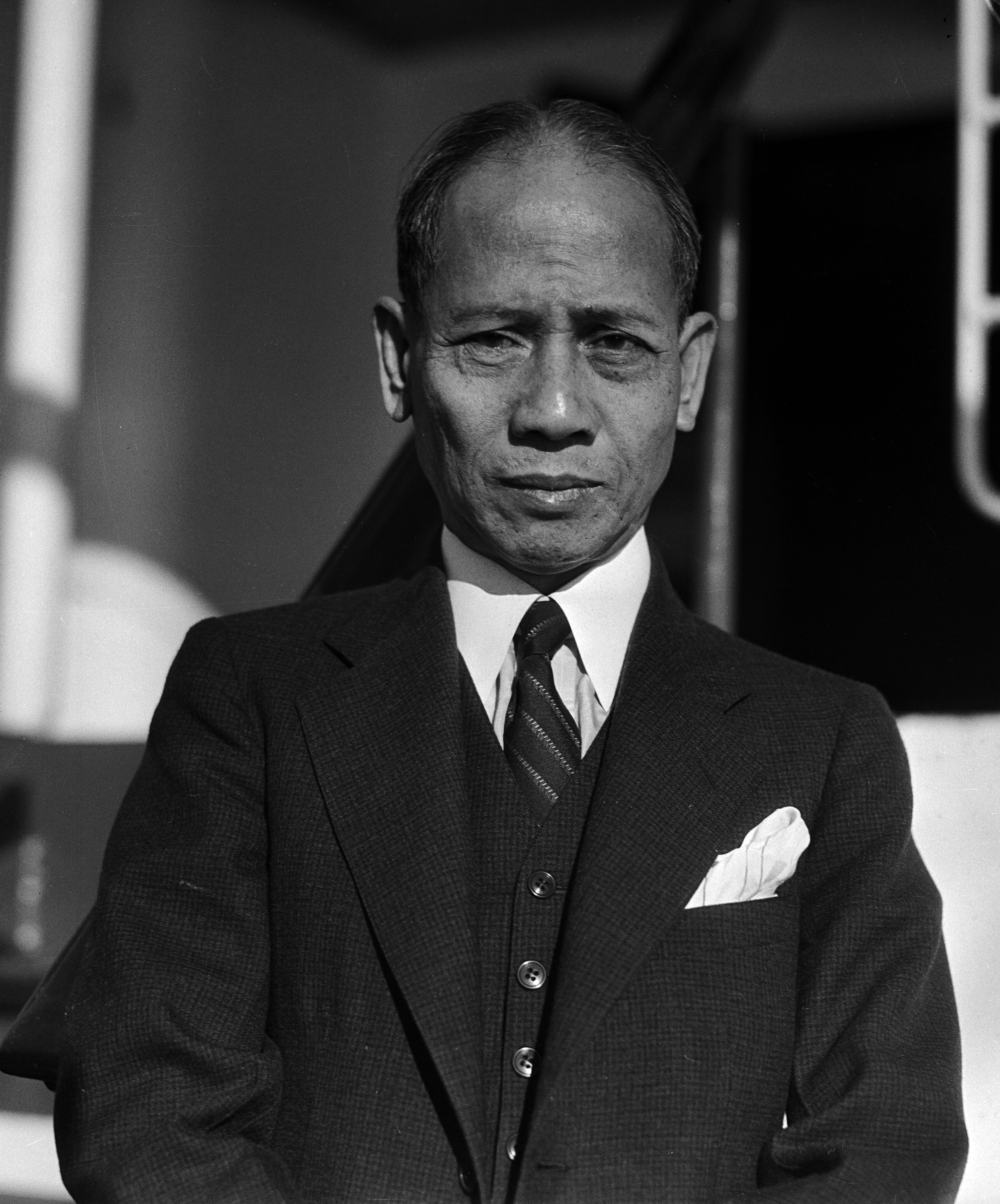
Historical · U.S. House · PI · At-Large
Pedro Guevara
Former U.S. Representative · PI At-Large · 1923–1937
Pedro Guevara represented PI's At-Large in the United States House of Representatives (1923–1937). The page below collects sourced biographical facts, term history, committee roles, and provenance for Guevara.
Bioguide ID: G000518
Key facts
- Full name
- Pedro Guevara
- State
- PI
- District
- At-Large
- Party
- —
- House service
- 1923–1937
- First House term
- 1923
- Status
- Left office
- Current term ends
- —
- Born
- 1879
- Bioguide ID
- G000518
- Committee assignments
- —
- Dataset version
- 1.20260605
Biographical narrative
943 words · sourced from the Wikipedia REST extract
Pedro Guevara was a prominent figure in the political landscape of the Philippines during the early 20th century. He served as a U.S. Representative for the at-large district of the Philippines, a position he held for a total of seven terms from 1923 until 1936. Guevara was also a soldier, lawyer, and writer, playing a significant role in both the Philippine Revolution and the establishment of the Commonwealth of the Philippines. His contributions to Philippine politics and law have left a lasting legacy.
Early life and career
Pedro Guevara was born on February 23, 1879, in Santa Cruz, La Laguna, which is now part of the province of Laguna in the Philippines. He was the son of Miguel Guevara and María Valenzuela. His early education took place at the Ateneo Municipal de Manila, a prestigious institution known for its rigorous academic standards. Guevara graduated from the Colegio de San Juan de Letran in Manila in 1896, where he likely developed a foundation in the liberal arts and law that would serve him throughout his career.
Guevara's involvement in the Philippine Revolution began when he joined the Filipino forces fighting against Spanish colonial rule. He played a role in promoting the peace agreement known as the Biak na Bato in 1897. His military service continued during the Spanish-American War and the subsequent Philippine-American War, where he attained the rank of lieutenant colonel. Throughout these conflicts, he served as an aide and private secretary to General Juan Cailles, further solidifying his commitment to the cause of Philippine independence.
After his military service, Guevara transitioned into journalism, writing for Spanish-language newspapers such as Soberania Nacional and Vidas Filipinas. His foray into politics began in 1907 when he was elected as a municipal councilor for San Felipe Neri, which is now part of Mandaluyong City in Metro Manila. He pursued legal studies at La Jurisprudencia and eventually became a practicing lawyer. His political career continued to flourish as he served in the Philippine House of Representatives from the 2nd district of La Laguna from 1909 to 1912. Following this, he was elected to the Philippine Senate, representing the 4th senatorial district from 1916 until 1923.
Guevara's political acumen was recognized when he was appointed chair of the Philippine delegation to the Far Eastern Bar Conference held in Beijing, China, in 1921. This experience likely enhanced his understanding of international law and diplomacy, which would be beneficial in his later role as a resident commissioner in the United States Congress.
House tenure
In 1923, Guevara made a significant career shift by resigning from his Senate seat to serve as a Nationalist resident commissioner to the United States Congress. His tenure in the U.S. House of Representatives lasted from March 4, 1923, until February 14, 1936. During this time, he was an advocate for the interests of the Philippines, particularly in relation to its political status under American rule.
Guevara's most notable legislative effort was his work on the Tydings–McDuffie Act, which aimed to establish the Commonwealth of the Philippines and set a timeline for the country's eventual independence. This act was a critical step in the Philippines' journey towards self-governance and was a reflection of the growing sentiment for independence among Filipinos. Guevara's role in this legislative process underscored his commitment to the aspirations of his fellow countrymen.
Throughout his congressional career, Guevara served four consecutive three-year terms, during which he worked to represent the interests of the Filipino people in the U.S. Congress. His position as a resident commissioner allowed him to engage directly with American lawmakers and advocate for policies that would benefit the Philippines. Guevara's tenure in the House was marked by his dedication to the cause of Philippine independence and his efforts to navigate the complexities of U.S.-Philippine relations.
In 1934, Guevara participated as a delegate from Laguna in the Constitutional Convention that framed the 1935 Philippine Constitution. This involvement highlighted his ongoing commitment to shaping the future of the Philippines as it transitioned towards greater autonomy. His congressional term ended on February 14, 1936, when a successor was selected in accordance with the newly established Commonwealth of the Philippines.
Legislative focus and committees
During his time in the U.S. House of Representatives, Guevara focused on issues pertinent to the Philippines, particularly those related to governance, legal frameworks, and the quest for independence. His advocacy for the Tydings–McDuffie Act was a central aspect of his legislative agenda, reflecting his belief in the importance of self-determination for the Filipino people.
Guevara's experience as a lawyer and politician in the Philippines informed his approach to legislation in the United States. He utilized his legal background to navigate the complexities of American law and policy, ensuring that the interests of the Philippines were represented effectively. His work in the House involved collaboration with other lawmakers and stakeholders, as he sought to build coalitions that would support the goals of the Philippine independence movement.
In addition to his legislative efforts, Guevara's participation in the Constitutional Convention of 1934 demonstrated his commitment to the establishment of a democratic framework for the Philippines. This convention was a pivotal moment in Philippine history, as it laid the groundwork for the country's governance structure under the Commonwealth.
After concluding his congressional service, Guevara returned to his law practice, continuing to contribute to the legal profession in the Philippines. He passed away on January 19, 1938, in Manila, leaving behind a legacy as a soldier, lawyer, and legislator who played a significant role in the Philippines' journey towards independence. His remains were initially interred at the Manila North Cemetery before being transferred to Loyola Memorial Park in Marikina in 1993.
Notable legislation
Sponsored and co-sponsored legislation for Pedro Guevara is pending operator curation. The biographical narrative above carries the same provenance trail until per-bill rows are written.
Sources
- [1]https://en.wikipedia.org/wiki/Pedro_GuevaraWikipedia · retrieved 2026-06-05
Notable quotes
Sourced quotes for Pedro Guevara are pending operator curation. Narrative-scope provenance remains attached below.
Sources
- [1]https://en.wikipedia.org/wiki/Pedro_GuevaraWikipedia · retrieved 2026-06-05
Key positions
Curated policy positions for Pedro Guevara are pending operator review. The biographical narrative above carries the same provenance trail until per-topic positions are written.
Sources
- [1]https://en.wikipedia.org/wiki/Pedro_GuevaraWikipedia · retrieved 2026-06-05
Terms served
- 1923–1925U.S. House · Term 1
- 1925–1927U.S. House · Term 2
- 1927–1929U.S. House · Term 3
- 1929–1931U.S. House · Term 4
- 1931–1933U.S. House · Term 5
- 1933–1935U.S. House · Term 6
- 1935–1937U.S. House · Term 7
Sources & provenance
Every attributable claim above carries a per-section [N] marker that resolves to the corresponding URL below. Each entry records the upstream provider, the canonical URL, and the timestamp at which the source was retrieved by the ingest pipeline.
Key facts
- https://bioguide.congress.gov/search/bio/G000518bioguide · retrieved 2026-06-05
- https://www.govtrack.us/congress/members/404863govtrack · retrieved 2026-06-05
Biographical narrative
- https://en.wikipedia.org/wiki/Pedro_Guevarawikipedia · retrieved 2026-06-05
Find your representative
Every U.S. state elects representatives by district. Browse PI’s delegation, the full former-representative roster, or explore the role and term length.
Related on The Candidate
- Preceded by Jaime De VeyraEarlier holder of the PI At-Large House seat.Open
- Succeeded by Joaquin ElizaldeLater holder of the PI At-Large House seat.Open
- Benito Legarda Y TuasonFormer U.S. Representative · PI At-LargeOpen
- Camilo OsiasFormer U.S. Representative · PI At-LargeOpen
- Carlos RomuloFormer U.S. Representative · PI At-LargeOpen
- Francisco DelgadoFormer U.S. Representative · PI At-LargeOpen