
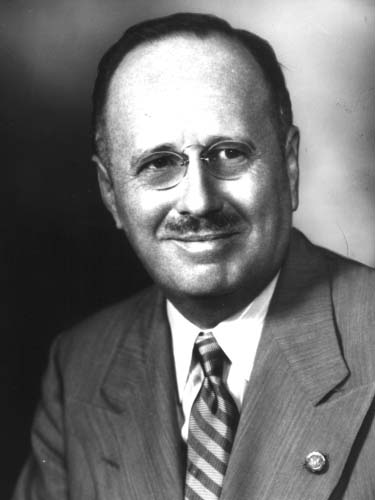
Historical · U.S. House · Puerto Rico · At-Large
Antonio Fernós-Isern
Former U.S. Representative · Puerto Rico At-Large · 1945–1965 · Popular Democrat
Antonio Fernós-Isern represented Puerto Rico's At-Large in the United States House of Representatives (1945–1965) for the Popular Democrat party. The page below collects sourced biographical facts, term history, committee roles, and provenance for Fernós-Isern.
Bioguide ID: F000087
Key facts
- Full name
- Antonio Fernós-Isern
- State
- Puerto Rico
- District
- At-Large
- Party
- Popular Democrat
- House service
- 1945–1965
- First House term
- 1945
- Status
- Left office
- Current term ends
- —
- Born
- 1895
- Bioguide ID
- F000087
- Committee assignments
- —
- Dataset version
- 1.20260605
Biographical narrative
908 words · sourced from the Wikipedia REST extract
Antonio Fernós-Isern was a prominent Puerto Rican physician and politician who served as a U.S. Representative for Puerto Rico's at-large congressional district. A member of the Popular Democratic Party, he was notable for being the first Puerto Rican cardiologist and for his extensive tenure as a Resident Commissioner in the United States Congress. His political career spanned nearly two decades, during which he played a significant role in advocating for Puerto Rican self-governance and health policy.
Early life and career
Antonio Fernós-Isern was born on May 10, 1895, in San Lorenzo, Puerto Rico. He received his early education in Caguas, Puerto Rico, before his family relocated to Bloomsburg, Pennsylvania, where he completed his high school education at the Pennsylvania State Normal School. Following high school, Fernós-Isern pursued a career in medicine, completing his pre-medical training and subsequently enrolling at the College of Physicians and Surgeons at the University of Maryland, College Park. He earned his medical degree in May 1915.
After obtaining his degree, Fernós-Isern returned to Puerto Rico, where he began his medical practice in Caguas. His initial years in medicine were marked by a commitment to public health, as he held various administrative roles within Puerto Rico's health services from 1918 to 1933. His career in health administration included positions such as the Director for the City of San Juan, Under-Secretary of Health, and Director of Health for the city. He eventually became the Secretary of Health from 1930 to 1933, during which he was instrumental in shaping health policies on the island.
In 1933, Fernós-Isern resigned from his position as health commissioner and moved to New York City to further his medical education. He completed his residency in cardiology at Columbia University, making him the first Puerto Rican to specialize in this field. Upon returning to Puerto Rico, he took on an academic role as a professor at the Public School of Tropical Medicine, where he contributed to the education of future health professionals.
House tenure
Fernós-Isern's political career began in earnest in the late 1930s when he collaborated with Luis Muñoz Marín to help establish the Popular Democratic Party (Partido Popular Democrático) in Puerto Rico. His involvement in politics deepened during World War II, as he served as the Director of Civil Defense for the San Juan Metropolitan Area in 1941. In 1942, he returned to lead the Department of Health and the Administration of Public Housing, while also overseeing the War Effort Office for Puerto Rico.
In 1946, following the appointment of Jesús T. Piñero as the first Puerto Rican governor, Fernós-Isern was appointed as the Resident Commissioner to the U.S. Congress. This appointment was supported unanimously by the Puerto Rican legislature. He served in this role for a total of nineteen years, being re-elected multiple times. His tenure in Congress began in 1945 and concluded on January 3, 1965.
As Resident Commissioner, Fernós-Isern was a key figure in advocating for the rights of Puerto Ricans, particularly in their quest for self-governance. His efforts were instrumental in the passage of significant legislation, including the Crawford Project in 1947, which allowed Puerto Ricans to elect their governor. This was a pivotal moment in Puerto Rican history, as it marked a step towards greater autonomy for the island.
Fernós-Isern's influence continued with the approval of Public Law 600 by the United States Senate on June 8, 1950. This law permitted Puerto Rico to establish its own constitutional local autonomous government. He played a crucial role in this process, serving as the president of the Constitutional Convention that drafted the Constitution of the Commonwealth of Puerto Rico.
Legislative focus and committees
Throughout his congressional career, Fernós-Isern focused on various issues that were critical to Puerto Rico's development and welfare. His background in medicine and public health informed his legislative priorities, particularly in areas related to health care and social services. He advocated for improved health care access and resources for the people of Puerto Rico, leveraging his expertise as a physician to guide his policy initiatives.
In addition to health care, Fernós-Isern's legislative agenda included economic development and infrastructure improvements for Puerto Rico. He recognized the importance of economic stability for the island's residents and worked to secure federal support for various projects aimed at enhancing the quality of life in Puerto Rico.
Fernós-Isern's long tenure in Congress allowed him to build relationships with key political figures and influence policy decisions that affected Puerto Rico. His role as Resident Commissioner was unique, as it provided him with a platform to represent Puerto Rican interests directly to the federal government, advocating for the island's needs and aspirations.
After deciding not to seek re-election in 1964, Fernós-Isern returned to Puerto Rico, where he continued to engage in public service. He was elected to the Puerto Rican Senate, serving from 1965 to 1969. Following his retirement from politics, he returned to academia as a Resident Scholar at the University of Puerto Rico, where he authored significant works on Puerto Rican political philosophy and governance.
Antonio Fernós-Isern passed away on January 19, 1974, in San Juan, Puerto Rico. His contributions to both medicine and politics have left a lasting legacy, recognized by various honors, including a bust at the Capitol in San Juan. His collected papers are preserved at the Fernós Isern room at the Inter American University Law School in Hato Rey, serving as a resource for future generations interested in Puerto Rican history and governance.
Notable legislation
Sponsored and co-sponsored legislation for Antonio Fernós-Isern is pending operator curation. The biographical narrative above carries the same provenance trail until per-bill rows are written.
Sources
- [1]https://en.wikipedia.org/wiki/Antonio_Fern%C3%B3s_IsernWikipedia · retrieved 2026-06-05
Notable quotes
Sourced quotes for Antonio Fernós-Isern are pending operator curation. Narrative-scope provenance remains attached below.
Sources
- [1]https://en.wikipedia.org/wiki/Antonio_Fern%C3%B3s_IsernWikipedia · retrieved 2026-06-05
Key positions
Curated policy positions for Antonio Fernós-Isern are pending operator review. The biographical narrative above carries the same provenance trail until per-topic positions are written.
Sources
- [1]https://en.wikipedia.org/wiki/Antonio_Fern%C3%B3s_IsernWikipedia · retrieved 2026-06-05
Terms served
- 1945–1947U.S. House · Term 1 · Popular Democrat
- 1947–1949U.S. House · Term 2 · Popular Democrat
- 1949–1951U.S. House · Term 3 · Popular Democrat
- 1951–1953U.S. House · Term 4 · Popular Democrat
- 1953–1955U.S. House · Term 5 · Popular Democrat
- 1955–1957U.S. House · Term 6 · Popular Democrat
- 1957–1959U.S. House · Term 7 · Popular Democrat
- 1959–1961U.S. House · Term 8 · Popular Democrat
- 1961–1963U.S. House · Term 9 · Popular Democrat
- 1963–1965U.S. House · Term 10 · Popular Democrat
Sources & provenance
Every attributable claim above carries a per-section [N] marker that resolves to the corresponding URL below. Each entry records the upstream provider, the canonical URL, and the timestamp at which the source was retrieved by the ingest pipeline.
Key facts
- https://bioguide.congress.gov/search/bio/F000087bioguide · retrieved 2026-06-05
- https://www.govtrack.us/congress/members/404045govtrack · retrieved 2026-06-05
Biographical narrative
- https://en.wikipedia.org/wiki/Antonio_Fern%C3%B3s_Isernwikipedia · retrieved 2026-06-05
Find your representative
Every U.S. state elects representatives by district. Browse Puerto Rico’s delegation, the full former-representative roster, or explore the role and term length.
Related on The Candidate
- Preceded by Bolívar PagánEarlier holder of the Puerto Rico At-Large House seat · Coalitionist.Open
- Succeeded by Santiago Polanco-AbreuLater holder of the Puerto Rico At-Large House seat · Popular Democrat.Open
- Aníbal Acevedo-ViláFormer U.S. Representative · Puerto Rico At-Large · Popular DemocratOpen
- Antonio ColoradoFormer U.S. Representative · Puerto Rico At-Large · DemocraticOpen
- Baltasar Corrada-del RíoFormer U.S. Representative · Puerto Rico At-Large · New ProgressiveOpen
- Representatives from Puerto RicoEvery former U.S. Representative who has represented Puerto Rico.Open