
Historical · U.S. House · Puerto Rico · At-Large
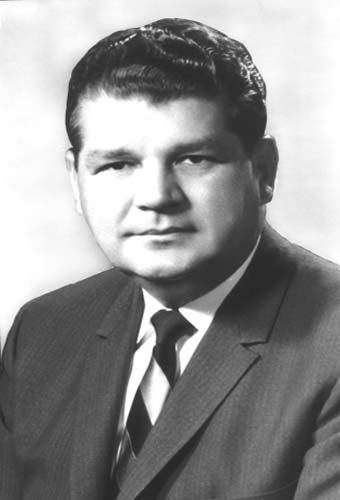
Santiago Polanco-Abreu
Former U.S. Representative · Puerto Rico At-Large · 1965–1969 · Popular Democrat
Santiago Polanco-Abreu represented Puerto Rico's At-Large in the United States House of Representatives (1965–1969) for the Popular Democrat party. The page below collects sourced biographical facts, term history, committee roles, and provenance for Polanco-Abreu.
Bioguide ID: P000405
Key facts
- Full name
- Santiago Polanco-Abreu
- State
- Puerto Rico
- District
- At-Large
- Party
- Popular Democrat
- House service
- 1965–1969
- First House term
- 1965
- Status
- Left office
- Current term ends
- —
- Born
- 1920
- Bioguide ID
- P000405
- Committee assignments
- —
- Dataset version
- 1.20260605
Biographical narrative
937 words · sourced from the Wikipedia REST extract
Santiago Polanco-Abreu was an American politician who served as a U.S. Representative for Puerto Rico, representing the at-large district as a member of the Popular Democratic Party. His congressional career spanned from 1965 until 1969, during which he was involved in various legislative activities. Prior to his tenure in the U.S. House of Representatives, he had a significant political career in Puerto Rico, including serving in the Commonwealth's House of Representatives and as a member of the Constitutional Convention.
Early life and career
Santiago Polanco-Abreu was born on October 30, 1920, in Bayamón, Puerto Rico. He received his early education in Isabela, Puerto Rico, where he attended both elementary and high schools. Following his secondary education, Polanco-Abreu pursued higher education at the University of Puerto Rico, where he earned a Bachelor of Arts degree in 1941 and a Bachelor of Laws degree in 1943. During his time at the university, he was a member of the Phi Sigma Alpha fraternity, which is known for fostering leadership and civic engagement among its members.
After completing his legal education, Polanco-Abreu was admitted to the bar in 1943, allowing him to practice law in Isabela and later in San Juan. His legal career began with a position as a legal adviser to the Tax Court of Puerto Rico from 1943 to 1944. In addition to his legal practice, he was actively involved in professional organizations, including the American Bar Association and the Puerto Rico Bar Association. His commitment to civic engagement extended beyond law, as he was one of the founders of the Institute for Democratic Studies in San José, Costa Rica, which aimed to promote democratic principles and governance in the region.
Polanco-Abreu's political career began in earnest when he was elected to the House of Representatives of Puerto Rico, where he served from 1949 until 1964. His tenure in the Puerto Rican legislature included significant contributions to the development of the island's political landscape. He was also a member of the Constitutional Convention of Puerto Rico from 1951 to 1952, which was a pivotal moment in shaping the island's governance and legal framework. In recognition of his leadership abilities, he was appointed as the Speaker of the House from 1963 to 1964, a role that underscored his influence within the Puerto Rican political system.
House tenure
Santiago Polanco-Abreu's congressional career began when he was elected as a Resident Commissioner of Puerto Rico to the United States Congress on November 3, 1964. He represented the Popular Democratic Party and served in this capacity until January 3, 1969. As a Resident Commissioner, Polanco-Abreu had the unique responsibility of representing Puerto Rico's interests at the federal level, a role that involved advocating for the needs and concerns of the island's residents.
During his time in Congress, Polanco-Abreu participated in various discussions and legislative efforts that addressed issues pertinent to Puerto Rico. The position of Resident Commissioner is distinct in that it allows for representation in the U.S. House of Representatives without the full voting rights afforded to other members. This meant that while Polanco-Abreu could participate in debates and committee work, he could not vote on the final passage of legislation. Despite this limitation, he worked to ensure that Puerto Rico's voice was heard in national matters.
Polanco-Abreu's tenure in Congress coincided with a period of significant social and political change in the United States, including the civil rights movement and various reforms aimed at addressing economic disparities. His role as a Resident Commissioner placed him at the intersection of local and national politics, where he sought to advocate for policies that would benefit Puerto Rico and its residents.
In the 1968 election, Polanco-Abreu sought reelection but was unsuccessful. Following his departure from Congress, he returned to his legal practice, continuing his work in the field of law in Puerto Rico.
Legislative focus and committees
Throughout his time in the U.S. House of Representatives, Santiago Polanco-Abreu focused on issues that were relevant to Puerto Rico and its residents. His legislative efforts were informed by his extensive background in law and his experience in Puerto Rican politics. While specific details of his legislative initiatives are not documented, it is known that he was involved in discussions surrounding economic development, social welfare, and the political status of Puerto Rico.
As a member of the Popular Democratic Party, Polanco-Abreu's legislative priorities likely aligned with the party's platform, which traditionally emphasizes the importance of maintaining a strong relationship with the United States while advocating for the rights and needs of Puerto Ricans. His experience as a former Speaker of the House in Puerto Rico may have also influenced his approach to legislative leadership and collaboration with other members of Congress.
In addition to his legislative work, Polanco-Abreu's role on various committees would have allowed him to engage with a range of issues affecting Puerto Rico. Committees in Congress play a crucial role in shaping legislation, and members often use their positions to advocate for their constituents' interests. While specific committee assignments during his tenure are not detailed, it is common for representatives to serve on committees that align with their areas of expertise and the needs of their districts.
After leaving Congress, Polanco-Abreu continued to be active in the legal field until his death on January 18, 1988, in San Juan, Puerto Rico. His contributions to Puerto Rican politics and law have left a lasting impact on the island's governance and its relationship with the United States. He was interred at the Isabela Municipal Cemetery in Isabela, Puerto Rico, where he is remembered for his service to the community and the nation.
Notable legislation
Sponsored and co-sponsored legislation for Santiago Polanco-Abreu is pending operator curation. The biographical narrative above carries the same provenance trail until per-bill rows are written.
Sources
- [1]https://en.wikipedia.org/wiki/Santiago_Polanco-AbreuWikipedia · retrieved 2026-06-05
Notable quotes
Sourced quotes for Santiago Polanco-Abreu are pending operator curation. Narrative-scope provenance remains attached below.
Sources
- [1]https://en.wikipedia.org/wiki/Santiago_Polanco-AbreuWikipedia · retrieved 2026-06-05
Key positions
Curated policy positions for Santiago Polanco-Abreu are pending operator review. The biographical narrative above carries the same provenance trail until per-topic positions are written.
Sources
- [1]https://en.wikipedia.org/wiki/Santiago_Polanco-AbreuWikipedia · retrieved 2026-06-05
Terms served
- 1965–1967U.S. House · Term 1 · Popular Democrat
- 1967–1969U.S. House · Term 2 · Popular Democrat
Sources & provenance
Every attributable claim above carries a per-section [N] marker that resolves to the corresponding URL below. Each entry records the upstream provider, the canonical URL, and the timestamp at which the source was retrieved by the ingest pipeline.
Key facts
- https://bioguide.congress.gov/search/bio/P000405bioguide · retrieved 2026-06-05
- https://www.govtrack.us/congress/members/408798govtrack · retrieved 2026-06-05
Biographical narrative
- https://en.wikipedia.org/wiki/Santiago_Polanco-Abreuwikipedia · retrieved 2026-06-05
Find your representative
Every U.S. state elects representatives by district. Browse Puerto Rico’s delegation, the full former-representative roster, or explore the role and term length.
Related on The Candidate
- Preceded by Antonio Fernós-IsernEarlier holder of the Puerto Rico At-Large House seat · Popular Democrat.Open
- Succeeded by Jorge Córdova DíazLater holder of the Puerto Rico At-Large House seat · New Progressive.Open
- Aníbal Acevedo-ViláFormer U.S. Representative · Puerto Rico At-Large · Popular DemocratOpen
- Antonio ColoradoFormer U.S. Representative · Puerto Rico At-Large · DemocraticOpen
- Baltasar Corrada-del RíoFormer U.S. Representative · Puerto Rico At-Large · New ProgressiveOpen
- Representatives from Puerto RicoEvery former U.S. Representative who has represented Puerto Rico.Open