
Historical · U.S. House · Puerto Rico · At-Large
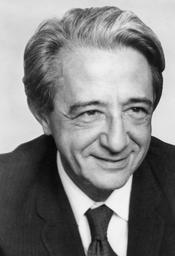
Jaime Benítez
Former U.S. Representative · Puerto Rico At-Large · 1973–1977 · Popular Democrat
Jaime Benítez represented Puerto Rico's At-Large in the United States House of Representatives (1973–1977) for the Popular Democrat party. The page below collects sourced biographical facts, term history, committee roles, and provenance for Benítez.
Bioguide ID: B000362
Key facts
- Full name
- Jaime Benítez
- State
- Puerto Rico
- District
- At-Large
- Party
- Popular Democrat
- House service
- 1973–1977
- First House term
- 1973
- Status
- Left office
- Current term ends
- —
- Born
- 1908
- Bioguide ID
- B000362
- Committee assignments
- —
- Dataset version
- 1.20260605
Biographical narrative
1,082 words · sourced from the Wikipedia REST extract
Jamie Benitez was a Puerto Rican politician, educator, and author who served as a U.S. Representative for Puerto Rico from 1973 to 1977. A member of the Popular Democratic Party, he was notable for his dual roles as an academic leader and a political figure. He was the first president of the University of Puerto Rico and played a significant role in shaping educational policies and governance in Puerto Rico. His congressional tenure was marked by a focus on education, labor issues, and the political status of Puerto Rico.
Early life and career
Jamie Benitez was born on October 29, 1908, in Vieques, Puerto Rico, to parents Luis Benítez and Candida Rexach. His early life was marked by personal tragedy; he lost his mother at the age of seven, followed by the death of his father a year later. Consequently, he and his siblings were raised by an older sister who lived in San Juan. Benitez attended local public schools before leaving Puerto Rico in 1926 to pursue higher education in the United States. He enrolled at Georgetown University in Washington, D.C., where he earned a Bachelor of Laws (LL.B.) degree in 1930 and a Master of Laws (LL.M.) in 1931. After passing the District of Columbia bar examination in the same year, he returned to Puerto Rico to begin his professional career.
Benitez's career in education commenced in 1931 at the University of Puerto Rico, where he dedicated over four decades to academia. He began as an associate professor of social and political sciences and later became the chancellor of the university's main campus in Río Piedras, a position he held from 1942 to 1966. His tenure as chancellor was characterized by significant growth in student enrollment, which expanded from approximately five thousand to forty thousand during his leadership. He was instrumental in attracting distinguished scholars and artists to the university, including notable figures who fled Spain during its civil war.
In 1966, Benitez became the first president of the University of Puerto Rico, serving until 1971. His leadership was marked by a commitment to educational excellence and the promotion of cultural and intellectual growth within the institution. He authored numerous articles, essays, and books focusing on the university system and its future, contributing to the discourse surrounding education in Puerto Rico. His involvement extended beyond academia; he participated in various national and international organizations, including the United States National Commission for UNESCO and the Constitutional Convention of Puerto Rico, where he played a crucial role in drafting the Bill of Rights for the island's constitution.
Benitez's political affiliations included a close association with Luis Muñoz Marín, Puerto Rico's first elected governor. Their collaboration was significant in the establishment of Puerto Rico's constitution, which recognized both social and economic rights. However, their relationship became strained in 1957 due to political disagreements, although they later reconciled. Benitez's tenure at the university was also marked by political pressures, leading to his eventual transition from chancellor to president.
House tenure
In 1972, Jamie Benitez was elected as the Resident Commissioner of Puerto Rico, a position that allowed him to represent the interests of Puerto Rico in the U.S. Congress. His first term in the House of Representatives began in 1973, and he served until January 3, 1977. During his time in Congress, Benitez was assigned to the Committee on Education and Labor, reflecting his longstanding commitment to educational issues and labor conditions in Puerto Rico.
Throughout his congressional tenure, Benitez was an advocate for the educational needs of Puerto Rico. He introduced legislation aimed at extending the Higher Education Act of 1965 to benefit Puerto Rican institutions. His focus on education was complemented by his interest in labor and social issues, which were critical to the well-being of Puerto Rican residents. He also sponsored legislation that sought to enhance the political status of U.S. territories, including measures that would allow American Samoa to elect its own governor and lieutenant governor.
Benitez was a proponent of maintaining Puerto Rico's current political status, which he believed was preferable to both statehood and independence. He actively worked on legislation intended to strengthen Puerto Rico's relationship with the United States, although some of his initiatives, such as a specific bill aimed at enhancing this relationship, did not progress beyond committee discussions.
Despite his efforts and contributions, Benitez faced challenges in securing reelection. After his two terms in Congress, he was unsuccessful in his bid for a third term, leading to his departure from the House in early 1977. His congressional career was characterized by a commitment to advocating for the needs and rights of Puerto Rico and its citizens.
Legislative focus and committees
During his time in the U.S. House of Representatives, Jamie Benitez's legislative focus was primarily centered on education, labor, and the political status of Puerto Rico. His assignment to the Committee on Education and Labor allowed him to leverage his extensive background in academia and his passion for educational reform to influence policy decisions that would benefit Puerto Rican students and institutions.
Benitez's advocacy for education included efforts to extend federal educational programs to Puerto Rico, which he believed would enhance the quality of education on the island. His legislative initiatives were informed by his experiences as an educator and administrator, and he sought to address the unique challenges faced by Puerto Rican educational institutions.
In addition to education, Benitez's legislative agenda included a broader focus on labor issues, reflecting his concern for the social and economic conditions of Puerto Ricans. He recognized the importance of labor rights and sought to promote policies that would improve working conditions and opportunities for the island's workforce.
Benitez's commitment to Puerto Rico's political status was another significant aspect of his congressional work. He believed that the current status of Puerto Rico was the most beneficial arrangement for its residents and worked to advocate for policies that would strengthen the island's relationship with the United States. His efforts included sponsoring legislation aimed at enhancing the political autonomy of U.S. territories, demonstrating his dedication to the rights and representation of Puerto Ricans.
Following his departure from Congress, Benitez returned to Puerto Rico, where he continued to engage in educational endeavors. He taught at the Inter-American University of Puerto Rico and later at the American College in Bayamón, contributing to the academic landscape of the island until his retirement. His legacy as an educator, author, and politician remains significant in the context of Puerto Rican history and governance.
Notable legislation
Sponsored and co-sponsored legislation for Jaime Benítez is pending operator curation. The biographical narrative above carries the same provenance trail until per-bill rows are written.
Sources
- [1]https://en.wikipedia.org/wiki/Jaime_Ben%C3%ADtez_RexachWikipedia · retrieved 2026-06-05
Notable quotes
Sourced quotes for Jaime Benítez are pending operator curation. Narrative-scope provenance remains attached below.
Sources
- [1]https://en.wikipedia.org/wiki/Jaime_Ben%C3%ADtez_RexachWikipedia · retrieved 2026-06-05
Key positions
Curated policy positions for Jaime Benítez are pending operator review. The biographical narrative above carries the same provenance trail until per-topic positions are written.
Sources
- [1]https://en.wikipedia.org/wiki/Jaime_Ben%C3%ADtez_RexachWikipedia · retrieved 2026-06-05
Terms served
- 1973–1975U.S. House · Term 1 · Popular Democrat
- 1975–1977U.S. House · Term 2 · Popular Democrat
Sources & provenance
Every attributable claim above carries a per-section [N] marker that resolves to the corresponding URL below. Each entry records the upstream provider, the canonical URL, and the timestamp at which the source was retrieved by the ingest pipeline.
Key facts
- https://bioguide.congress.gov/search/bio/B000362bioguide · retrieved 2026-06-05
- https://www.govtrack.us/congress/members/401354govtrack · retrieved 2026-06-05
Biographical narrative
- https://en.wikipedia.org/wiki/Jaime_Ben%C3%ADtez_Rexachwikipedia · retrieved 2026-06-05
Find your representative
Every U.S. state elects representatives by district. Browse Puerto Rico’s delegation, the full former-representative roster, or explore the role and term length.
Related on The Candidate
- Preceded by Jorge Córdova DíazEarlier holder of the Puerto Rico At-Large House seat · New Progressive.Open
- Succeeded by Baltasar Corrada-del RíoLater holder of the Puerto Rico At-Large House seat · New Progressive.Open
- Aníbal Acevedo-ViláFormer U.S. Representative · Puerto Rico At-Large · Popular DemocratOpen
- Antonio ColoradoFormer U.S. Representative · Puerto Rico At-Large · DemocraticOpen
- Antonio Fernós-IsernFormer U.S. Representative · Puerto Rico At-Large · Popular DemocratOpen
- Representatives from Puerto RicoEvery former U.S. Representative who has represented Puerto Rico.Open