
Historical · U.S. House · Puerto Rico · At-Large
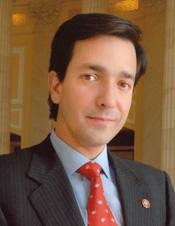
Luis Fortuño
Former U.S. Representative · Puerto Rico At-Large · 2005–2009 · Republican
Luis Fortuño represented Puerto Rico's At-Large in the United States House of Representatives (2005–2009) for the Republican party. The page below collects sourced biographical facts, term history, committee roles, and provenance for Fortuño.
Bioguide ID: F000452
Key facts
- Full name
- Luis Fortuño
- State
- Puerto Rico
- District
- At-Large
- Party
- Republican
- House service
- 2005–2009
- First House term
- 2005
- Status
- Left office
- Current term ends
- —
- Born
- 1960
- Bioguide ID
- F000452
- Committee assignments
- —
- Dataset version
- 1.20260605
Biographical narrative
967 words · sourced from the Wikipedia REST extract
Luis G. Fortuno is a Puerto Rican politician and former U.S. Representative who served as the resident commissioner of Puerto Rico from 2005 to 2009. A member of the Republican Party, Fortuno's political career includes significant roles in both local and federal government, including his tenure as governor of Puerto Rico from 2009 to 2013. He is recognized for his involvement in various economic and legislative initiatives during his time in office, as well as for his leadership within the New Progressive Party.
Early life and career
Luis Guillermo Fortuño Burset was born on October 31, 1960, in San Juan, Puerto Rico. He is the eldest of four brothers, born to Luis Fortuño Moscoso, a dentist, and Shirley Burset. Fortuno's heritage includes paternal Spanish descent, specifically Catalan and Galician roots, as well as Corsican lineage from his maternal great-grandfather.
Fortuno attended Colegio Marista (Marist School) in Guaynabo, where he completed his secondary education in 1978. He then pursued higher education at Georgetown University, graduating with a Bachelor of Science degree in diplomacy from the Edmund A. Walsh School of Foreign Service. Following this, he earned his Juris Doctor degree from the University of Virginia School of Law in 1985. During his time in law school, Fortuno gained practical experience as an intern at the Puerto Rico Federal Affairs Administration in Washington, D.C.
While at Georgetown, Fortuno co-founded the Puerto Rico Statehood Students Association (PRSSA) and served as its president from 1980 to 1981. His leadership in this organization was notable during the 1980 gubernatorial election recount, where he played a role in generating absentee ballots that contributed to the reelection of incumbent Governor Carlos Romero Barceló.
Fortuno's public service career began in 1993 when he was appointed as the executive director of the Puerto Rico Tourism Company at the start of Governor Pedro Rosselló's administration. He also held the position of president of the Puerto Rico Hotel Development Corporation. In 1994, he became the first secretary of the Puerto Rico Department of Economic Development and Commerce, where he was responsible for implementing significant reforms to the territory's tax, labor, corporate, and commercial codes. His contributions to public service were recognized through various awards, including being named the 1996 Man of the Year by Caribbean Business and receiving accolades from multiple organizations for his public service.
After resigning from his cabinet positions following Rosselló's reelection in 1996, Fortuno returned to private law practice, becoming a partner at the San Juan law firm of Correa, Collazo, Herrero, Jiménez & Fortuño, where he specialized in corporate finance and real estate law. He also held a position as a partner at McConnell Valdés LLC prior to this. In 2001, he was elected as the Republican National Committeeman for Puerto Rico, a role he continues to hold.
House tenure
In 2004, Fortuno sought the New Progressive Party's nomination for the position of resident commissioner of Puerto Rico. He won the party's primary election with a significant majority, receiving over 61% of the votes. His campaign gained traction within the Republican Party, bolstered by endorsements from prominent party figures, including Ed Gillespie, then-head of the Republican National Committee.
In the general election held in November 2004, Fortuno narrowly defeated his main opponent, Roberto Prats of the Popular Democratic Party, securing approximately 48.5% of the votes. This election marked a historic moment as it was the first time that the governor of Puerto Rico and the resident commissioner were from opposing political parties. Fortuno served as resident commissioner under Governor Aníbal Acevedo Vilá, who was a member of the PDP.
During his tenure in the U.S. House of Representatives from 2005 to 2009, Fortuno was involved in various legislative activities and served in several leadership roles. He was the Chair of the Congressional Hispanic Conference and a member of the newly established United States House Natural Resources Subcommittee on Insular Affairs. Additionally, he co-chaired the Friends of Spain Caucus, reflecting his engagement with issues pertinent to both Puerto Rico and broader international relations.
Fortuno's time in Congress was characterized by his focus on issues affecting Puerto Rico, including economic development and the territory's political status. He worked to advocate for the interests of Puerto Rico at the federal level, navigating the complexities of representing an unincorporated territory within the U.S. political system.
Legislative focus and committees
Throughout his congressional career, Fortuno concentrated on a range of legislative issues, particularly those that directly impacted Puerto Rico's economy and governance. His role as a member of the House Natural Resources Subcommittee on Insular Affairs was particularly significant, as it allowed him to address matters related to the unique status of Puerto Rico as a territory of the United States.
Fortuno's leadership as Chair of the Congressional Hispanic Conference enabled him to advocate for the interests of Hispanic Americans, emphasizing the importance of representation and support for issues affecting these communities. His co-chairmanship of the Friends of Spain Caucus also demonstrated his commitment to fostering relations between the United States and Spain, as well as promoting cultural and economic ties.
In addition to his legislative roles, Fortuno's background in economic development informed his approach to policy-making. His previous experience as secretary of the Puerto Rico Department of Economic Development and Commerce provided him with insights into the challenges and opportunities facing Puerto Rico's economy. He sought to leverage his expertise to advocate for policies that would stimulate growth and improve the quality of life for residents of the territory.
Fortuno's congressional tenure concluded on January 3, 2009, after which he transitioned to the role of governor of Puerto Rico, a position he held until 2013. His time in the House of Representatives laid the groundwork for his subsequent leadership in Puerto Rico, where he continued to address economic and political issues facing the territory.
Notable legislation
Sponsored and co-sponsored legislation for Luis Fortuño is pending operator curation. The biographical narrative above carries the same provenance trail until per-bill rows are written.
Sources
- [1]https://en.wikipedia.org/wiki/Luis_Fortu%C3%B1oWikipedia · retrieved 2026-06-05
Notable quotes
Sourced quotes for Luis Fortuño are pending operator curation. Narrative-scope provenance remains attached below.
Sources
- [1]https://en.wikipedia.org/wiki/Luis_Fortu%C3%B1oWikipedia · retrieved 2026-06-05
Key positions
Curated policy positions for Luis Fortuño are pending operator review. The biographical narrative above carries the same provenance trail until per-topic positions are written.
Sources
- [1]https://en.wikipedia.org/wiki/Luis_Fortu%C3%B1oWikipedia · retrieved 2026-06-05
Terms served
- 2005–2007U.S. House · Term 1 · Republican
- 2007–2009U.S. House · Term 2 · Republican
Sources & provenance
Every attributable claim above carries a per-section [N] marker that resolves to the corresponding URL below. Each entry records the upstream provider, the canonical URL, and the timestamp at which the source was retrieved by the ingest pipeline.
Key facts
- https://bioguide.congress.gov/search/bio/F000452bioguide · retrieved 2026-06-05
- http://www.house.gov/fortunohouse.gov · retrieved 2026-06-05
Biographical narrative
- https://en.wikipedia.org/wiki/Luis_Fortu%C3%B1owikipedia · retrieved 2026-06-05
Find your representative
Every U.S. state elects representatives by district. Browse Puerto Rico’s delegation, the full former-representative roster, or explore the role and term length.
Related on The Candidate
- Preceded by Aníbal Acevedo-ViláEarlier holder of the Puerto Rico At-Large House seat · Popular Democrat.Open
- Succeeded by Pedro PierluisiLater holder of the Puerto Rico At-Large House seat · Democratic.Open
- Antonio ColoradoFormer U.S. Representative · Puerto Rico At-Large · DemocraticOpen
- Antonio Fernós-IsernFormer U.S. Representative · Puerto Rico At-Large · Popular DemocratOpen
- Baltasar Corrada-del RíoFormer U.S. Representative · Puerto Rico At-Large · New ProgressiveOpen
- Republican PartyFederal candidates and office holders on the Republican line.Open