
Historical · U.S. House · Rhode Island · District 2
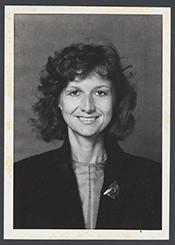
Claudine Schneider
Former U.S. Representative · Rhode Island District 2 · 1981–1991 · Republican
Claudine Schneider represented Rhode Island's District 2 in the United States House of Representatives (1981–1991) for the Republican party. The page below collects sourced biographical facts, term history, committee roles, and provenance for Schneider.
Bioguide ID: S000136
Key facts
- Full name
- Claudine Schneider
- State
- Rhode Island
- District
- District 2
- Party
- Republican
- House service
- 1981–1991
- First House term
- 1981
- Status
- Left office
- Current term ends
- —
- Born
- 1947
- Bioguide ID
- S000136
- Committee assignments
- —
- Dataset version
- 1.20260605
Biographical narrative
1,083 words · sourced from the Wikipedia REST extract
Claudine Schneider is a former American politician who served as a Republican U.S. Representative for Rhode Island's 2nd congressional district from 1981 to 1991. She is notable for being the first and, to date, only woman elected to Congress from Rhode Island. Throughout her five terms in office, Schneider focused on environmental issues, clean energy policies, and international cooperation on climate change. After her congressional career, she continued her involvement in public service and the energy sector.
Early life and career
Claudine Schneider was born Claudine Cmarada on March 25, 1947, in Clairton, Pennsylvania. She has Slovak ancestry on her father's side and attended parochial schools during her formative years. Schneider pursued higher education at several institutions, including the University of Barcelona in Spain and Rosemont College in Pennsylvania. She earned her Bachelor of Arts degree from Windham College in Vermont in 1969 and later attended the University of Rhode Island, where she participated in a program focused on community planning.
In 1972, Schneider married Eric Schneider, and the couple later divorced in 1985. Her early career included significant involvement in environmental advocacy and public policy. In 1973, she founded the Rhode Island Committee on Energy, which focused on energy conservation and sustainable practices. The following year, she was appointed as the executive director of the Conservation Law Foundation, a prominent environmental advocacy organization. By 1978, she had taken on the role of Federal coordinator for the Rhode Island Coastal Zone Management Program, where she worked on policies related to coastal resource management.
Schneider also contributed to public discourse through media, serving as a producer and host of a public affairs television program in Providence from 1978 to 1979. Her early career laid a strong foundation for her subsequent political endeavors, emphasizing her commitment to environmental issues and community engagement.
House tenure
Claudine Schneider was elected to the U.S. House of Representatives as a Republican in 1980, beginning her first term on January 3, 1981. She was re-elected to four additional terms, serving until January 3, 1991. During her time in Congress, Schneider became known for her bipartisan approach and her ability to forge coalitions on various legislative initiatives. Her tenure was marked by a focus on environmental protection, energy efficiency, and climate change.
One of Schneider's significant legislative efforts was the introduction of the Global Warming Prevention Act in 1989. This comprehensive bill aimed to reduce atmospheric carbon dioxide levels by 20% from 1988 levels by the year 2000. Although the bill did not pass in its entirety, it garnered bipartisan support and led to the incorporation of key provisions into federal energy policies. Notably, the legislation contributed to the establishment of the Energy Star program, which set energy efficiency standards for appliances.
As a freshman member of Congress, Schneider played a critical role in opposing the Clinch River Breeder Reactor project, which she described as a costly initiative driven by corporate interests. Her efforts helped unite a diverse coalition of conservative groups and environmental organizations against the project, showcasing her ability to bridge ideological divides.
In 1984, Schneider introduced legislation to halt fishing for striped bass along the U.S. Atlantic coast, addressing concerns about dwindling fish populations. This initiative ultimately contributed to the passage of the Atlantic Striped Bass Conservation Act of 1984, highlighting her commitment to sustainable fisheries management.
Throughout her congressional career, Schneider was a staunch advocate for environmental protection and hazardous waste reduction. In 1985, she introduced the "waste-end" tax, which aimed to incentivize the reduction of hazardous waste production. This measure received endorsement from the White House and was included in the House version of the Superfund Bill.
Schneider also served as the prime Republican sponsor of the Ocean Dumping Ban Act of 1988, which sought to prohibit the dumping of sewage sludge and industrial waste into the ocean after 1991. Her legislative initiatives reflected a broader commitment to environmental stewardship and public health.
In addition to her environmental work, Schneider co-founded the Congressional Competitiveness Caucus in 1987, which aimed to address issues related to economic competitiveness and innovation. The caucus hosted discussions featuring corporate leaders and policymakers, fostering dialogue on important economic issues.
One of Schneider's notable achievements was organizing a series of televised debates between U.S. Congress members and the Soviet parliament in 1986. This initiative, known as "CongressBridge," aimed to facilitate communication between the two superpowers during a time of heightened tensions. The forums aired on ABC in 1987 as "Capital to Capital," and Schneider received an Emmy Award for her role in producing these groundbreaking programs.
In 1988, she sponsored legislation that required U.S. cooperation with foreign nations on biodiversity and environmental protection, which was signed into law by President Ronald Reagan. This legislation underscored her commitment to international collaboration on environmental issues.
Legislative focus and committees
During her time in the House, Schneider served on various committees that aligned with her legislative priorities. Her focus on environmental issues and energy efficiency was evident in her participation in committees related to energy, commerce, and natural resources. Schneider's ability to navigate complex legislative landscapes allowed her to advocate effectively for policies aimed at addressing climate change and promoting sustainable practices.
Schneider's legislative achievements were characterized by a commitment to bipartisan cooperation and a willingness to engage with diverse stakeholders. Her work on environmental legislation, particularly in the areas of clean energy and conservation, positioned her as a leader in these critical policy areas.
After her tenure in Congress, Schneider sought to further her influence in public service and the energy sector. She did not run for re-election in 1990 but instead pursued a campaign for the U.S. Senate, where she faced long-time incumbent Senator Claiborne Pell. Although she was not successful in this bid, her continued engagement in public policy and advocacy demonstrated her dedication to the issues she championed during her congressional career.
Following her departure from Congress, Schneider joined the faculty at the John F. Kennedy School of Government at Harvard University, where she contributed to the education of future leaders in public policy. In 1992, she co-founded Energia Global, a company focused on international energy efficiency and renewable energy development. This venture included a joint project in Costa Rica, contributing to the country's efforts to achieve near carbon neutrality.
Claudine Schneider's career reflects a commitment to public service, environmental advocacy, and bipartisan collaboration. Her legacy as a trailblazer for women in politics and her contributions to environmental legislation continue to resonate in discussions about sustainability and climate policy.
Notable legislation
Sponsored and co-sponsored legislation for Claudine Schneider is pending operator curation. The biographical narrative above carries the same provenance trail until per-bill rows are written.
Sources
- [1]https://en.wikipedia.org/wiki/Claudine_SchneiderWikipedia · retrieved 2026-06-05
Notable quotes
Sourced quotes for Claudine Schneider are pending operator curation. Narrative-scope provenance remains attached below.
Sources
- [1]https://en.wikipedia.org/wiki/Claudine_SchneiderWikipedia · retrieved 2026-06-05
Key positions
Curated policy positions for Claudine Schneider are pending operator review. The biographical narrative above carries the same provenance trail until per-topic positions are written.
Sources
- [1]https://en.wikipedia.org/wiki/Claudine_SchneiderWikipedia · retrieved 2026-06-05
Terms served
- 1981–1983U.S. House · Term 1 · Republican
- 1983–1985U.S. House · Term 2 · Republican
- 1985–1987U.S. House · Term 3 · Republican
- 1987–1989U.S. House · Term 4 · Republican
- 1989–1991U.S. House · Term 5 · Republican
Sources & provenance
Every attributable claim above carries a per-section [N] marker that resolves to the corresponding URL below. Each entry records the upstream provider, the canonical URL, and the timestamp at which the source was retrieved by the ingest pipeline.
Key facts
- https://bioguide.congress.gov/search/bio/S000136bioguide · retrieved 2026-06-05
- https://www.govtrack.us/congress/members/409644govtrack · retrieved 2026-06-05
Biographical narrative
- https://en.wikipedia.org/wiki/Claudine_Schneiderwikipedia · retrieved 2026-06-05
Find your representative
Every U.S. state elects representatives by district. Browse Rhode Island’s delegation, the full former-representative roster, or explore the role and term length.
Related on The Candidate
- Preceded by Edward BeardEarlier holder of the Rhode Island District 2 House seat · Democratic.Open
- Succeeded by Robert WeygandLater holder of the Rhode Island District 2 House seat · Democratic.Open
- Aime ForandFormer U.S. Representative · Rhode Island District 1 · DemocraticOpen
- Benjamin EamesFormer U.S. Representative · Rhode Island District 1 · RepublicanOpen
- Charles RiskFormer U.S. Representative · Rhode Island District 1 · RepublicanOpen
- Christopher RobinsonFormer U.S. Representative · Rhode Island District 1 · RepublicanOpen