
Historical · U.S. House · Rhode Island · District 2
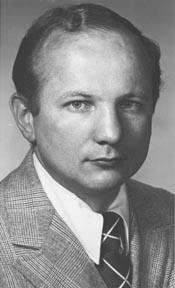
Edward Beard
Former U.S. Representative · Rhode Island District 2 · 1975–1981 · Democratic
Edward Beard represented Rhode Island's District 2 in the United States House of Representatives (1975–1981) for the Democratic party. The page below collects sourced biographical facts, term history, committee roles, and provenance for Beard.
Bioguide ID: B000279
Key facts
- Full name
- Edward Beard
- State
- Rhode Island
- District
- District 2
- Party
- Democratic
- House service
- 1975–1981
- First House term
- 1975
- Status
- Left office
- Current term ends
- —
- Born
- 1940
- Bioguide ID
- B000279
- Committee assignments
- —
- Dataset version
- 1.20260605
Biographical narrative
915 words · sourced from the Wikipedia REST extract
Edward Beard was an American politician who served as a U.S. Representative for Rhode Island's 2nd congressional district from 1975 until 1981. A member of the Democratic Party, Beard's political career began in the Rhode Island House of Representatives, where he served from 1973 to 1975. He is noted for his electoral victories against incumbents and his tenure in Congress, which included participation in various committees and involvement in significant legislative matters. Beard's career was marked by both accomplishments and controversies, particularly regarding his financial practices during his time in office.
Early life and career
Edward Peter Beard was born on January 20, 1940, in Providence, Rhode Island. He was the son of Thomas J. Beard and Anna L. Fitzpatrick. Tragically, Beard faced significant personal loss at a young age; his father passed away when Beard was just 11 years old, and he also lost a sister in a drowning accident. These early experiences influenced his life choices and responsibilities. Beard attended Assumption Elementary School and later Hope High School. However, he left school prematurely to support his family financially, which led him to work various jobs, including as a painter.
Beard's commitment to education did not wane, as he later completed the General Educational Development (GED) while serving in the Rhode Island Army National Guard from 1960 to 1966. His early work experience included a two-year stint as a boxer and employment as a painter at the Rhode Island School of Design, as well as general house painting. By 1973, he had earned approximately $6,000 from his painting work and was an active member of Painters' Union Local 195, which is affiliated with the AFL-CIO. Beard married Marsha, and together they had two children, establishing a family life alongside his burgeoning political career.
House tenure
Beard's political journey began in earnest when he won a seat in the Rhode Island House of Representatives, defeating incumbent Leonard W. Forrest Jr. in the 1972 Democratic primary. He served in the state legislature from 1973 until 1975, during which time he built a foundation for his future political ambitions. In 1974, Beard decided to run for a seat in the United States House of Representatives, competing for the Democratic nomination in Rhode Island's 2nd congressional district. Despite being significantly outspent in the campaign, Beard managed to defeat the incumbent U.S. Representative Robert Tiernan, a victory attributed to various factors, including Tiernan's political missteps.
Following his election to the House, Beard faced a challenging political landscape. In 1976, he sought reelection but did not receive the endorsement of the Democratic State Committee, a first for a Rhode Island congressman. Nevertheless, he won the Democratic primary and subsequently defeated the Republican nominee in the general election. Beard's political fortunes continued to fluctuate; he won reelection in 1978, again defeating Claudine Schneider, but faced a setback in 1980 when he lost to her in the general election after winning the Democratic primary.
During his time in the House, Beard's tenure was characterized by active participation in various committees, including those focused on education, labor, aging, and veterans' affairs. He was involved in the founding of the Blue Collar Caucus in 1977, which aimed to represent the interests of blue-collar workers, although this group was dissolved in 1979. Beard's political actions were not without controversy, as he was one of the congressmembers who called for the resignation of Bert Lance, the director of the Office of Management and Budget, in response to issues surrounding Lance's banking and financial dealings.
Legislative focus and committees
Throughout his congressional career, Beard was engaged in a range of legislative issues, reflecting his background and the interests of his constituents. His committee assignments allowed him to influence policies related to education, labor, and veterans' affairs, which were significant areas of concern for many of his constituents in Rhode Island. Beard's involvement in these committees provided him with a platform to advocate for the needs of blue-collar workers and address issues pertinent to the aging population and veterans.
Beard's financial practices during his time in Congress drew scrutiny and criticism. He faced allegations regarding his handling of campaign funds, including accusations of failing to report fundraiser revenue and using campaign contributions for personal expenses. These controversies culminated in claims of accepting bribes, which marred his reputation and raised questions about his integrity as a public servant. Despite these challenges, Beard continued to engage in political activities, including endorsing candidates during presidential primaries and attempting to influence the Democratic Party's direction.
In addition to his legislative responsibilities, Beard's political activities extended beyond Rhode Island. He participated in national discussions, such as endorsing Frank Church during the 1976 Democratic presidential primaries and supporting a draft effort for Ted Kennedy's candidacy in the 1980 presidential election. Beard's commitment to his party and his constituents was evident in his willingness to run as a favorite son for Kennedy in Rhode Island's presidential primary, demonstrating his active involvement in the political landscape.
Edward Beard's congressional career came to an end when he lost his bid for reelection in 1980. His tenure in the U.S. House of Representatives was marked by a mix of electoral successes and challenges, reflecting the complexities of political life in the late 20th century. After leaving office, Beard's contributions to Rhode Island politics and his experiences in the House remained a part of his legacy. He passed away on January 11, 2021, leaving behind a history of public service that included both achievements and controversies.
Notable legislation
Sponsored and co-sponsored legislation for Edward Beard is pending operator curation. The biographical narrative above carries the same provenance trail until per-bill rows are written.
Sources
- [1]https://en.wikipedia.org/wiki/Edward_BeardWikipedia · retrieved 2026-06-05
Notable quotes
Sourced quotes for Edward Beard are pending operator curation. Narrative-scope provenance remains attached below.
Sources
- [1]https://en.wikipedia.org/wiki/Edward_BeardWikipedia · retrieved 2026-06-05
Key positions
Curated policy positions for Edward Beard are pending operator review. The biographical narrative above carries the same provenance trail until per-topic positions are written.
Sources
- [1]https://en.wikipedia.org/wiki/Edward_BeardWikipedia · retrieved 2026-06-05
Terms served
- 1975–1977U.S. House · Term 1 · Democratic
- 1977–1979U.S. House · Term 2 · Democratic
- 1979–1981U.S. House · Term 3 · Democratic
Sources & provenance
Every attributable claim above carries a per-section [N] marker that resolves to the corresponding URL below. Each entry records the upstream provider, the canonical URL, and the timestamp at which the source was retrieved by the ingest pipeline.
Key facts
- https://bioguide.congress.gov/search/bio/B000279bioguide · retrieved 2026-06-05
- https://www.govtrack.us/congress/members/401273govtrack · retrieved 2026-06-05
Biographical narrative
- https://en.wikipedia.org/wiki/Edward_Beardwikipedia · retrieved 2026-06-05
Find your representative
Every U.S. state elects representatives by district. Browse Rhode Island’s delegation, the full former-representative roster, or explore the role and term length.
Related on The Candidate
- Preceded by Robert TiernanEarlier holder of the Rhode Island District 2 House seat · Democratic.Open
- Succeeded by Claudine SchneiderLater holder of the Rhode Island District 2 House seat · Republican.Open
- Aime ForandFormer U.S. Representative · Rhode Island District 1 · DemocraticOpen
- Benjamin EamesFormer U.S. Representative · Rhode Island District 1 · RepublicanOpen
- Charles RiskFormer U.S. Representative · Rhode Island District 1 · RepublicanOpen
- Christopher RobinsonFormer U.S. Representative · Rhode Island District 1 · RepublicanOpen