
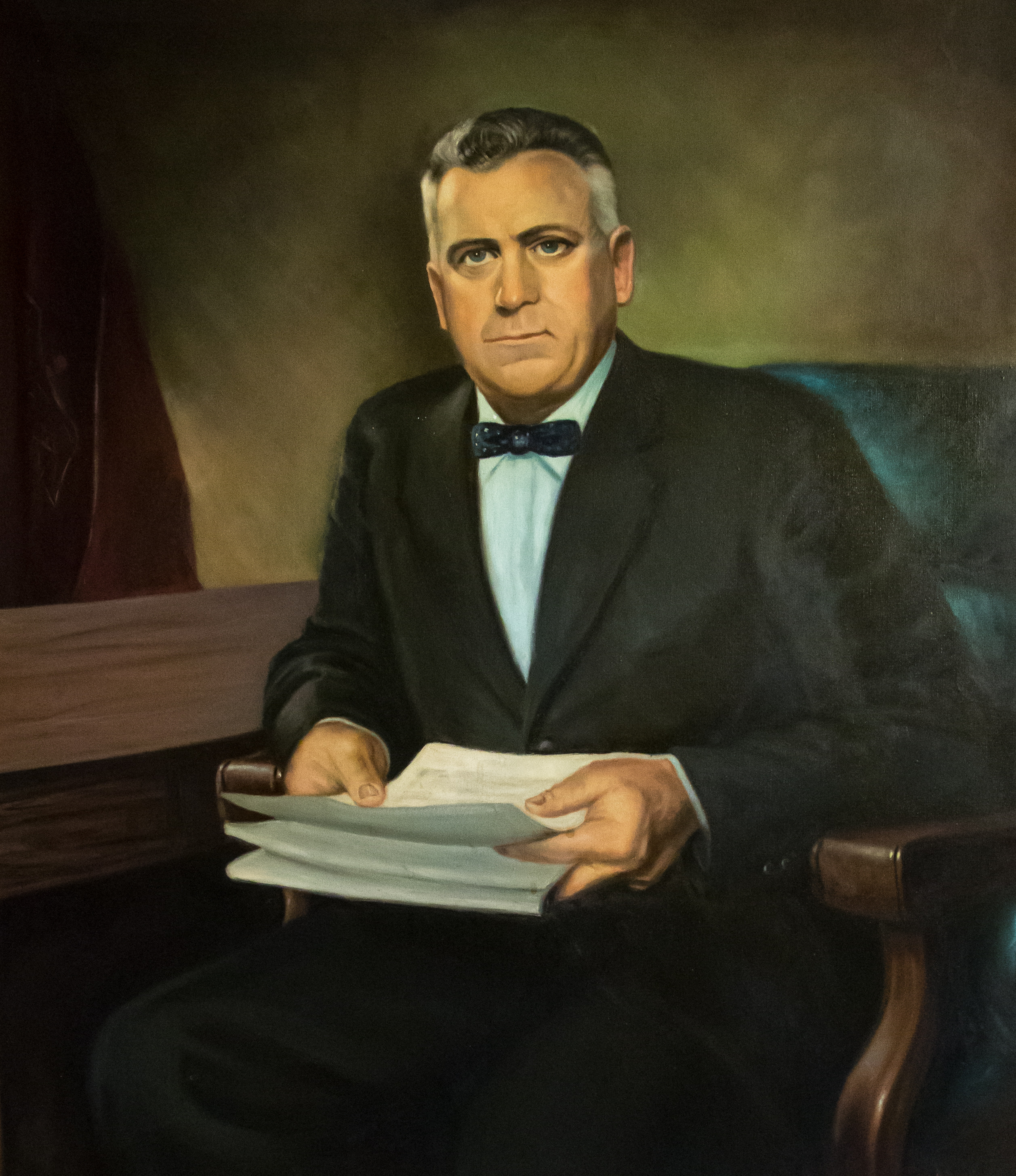
Historical · U.S. House · Rhode Island · District 2
John Fogarty
Former U.S. Representative · Rhode Island District 2 · 1941–1969 · Democratic
John Fogarty represented Rhode Island's District 2 in the United States House of Representatives (1941–1969) for the Democratic party. The page below collects sourced biographical facts, term history, committee roles, and provenance for Fogarty.
Bioguide ID: F000233
Key facts
- Full name
- John Fogarty
- State
- Rhode Island
- District
- District 2
- Party
- Democratic
- House service
- 1941–1969
- First House term
- 1941
- Status
- Left office
- Current term ends
- —
- Born
- 1913
- Bioguide ID
- F000233
- Committee assignments
- —
- Dataset version
- 1.20260605
Biographical narrative
935 words · sourced from the Wikipedia REST extract
John Fogarty was a prominent U.S. Representative from Rhode Island, serving the state's 2nd congressional district as a member of the Democratic Party. His congressional career spanned 26 years, beginning in 1941 and concluding with his death in 1967. Throughout his tenure, Fogarty was recognized for his significant contributions to health legislation and education, earning a reputation as a champion for better health and welfare programs in the United States.
Early life and career
John Edward Fogarty was born on March 23, 1913, in Providence, Rhode Island. He received his early education at La Salle Academy before attending Providence College. After completing his education, Fogarty settled in Harmony, Rhode Island, where he began his professional career as a bricklayer. His work in the construction industry led him to become actively involved in labor relations, and he eventually served as president of Rhode Island's Bricklayers Union Number 1. This early involvement in labor issues likely shaped his later political career and focus on workers' rights and health.
Fogarty's political career began in earnest when he successfully ran for a seat in the United States House of Representatives in 1940. His election marked the beginning of a long and impactful tenure in Congress, where he would represent the interests of his constituents and advocate for various legislative initiatives.
House tenure
Fogarty was sworn into office on January 3, 1941, and he served continuously until his death on January 10, 1967. His time in the House of Representatives was marked by a commitment to public service and a focus on health and education issues. During World War II, he took a brief leave from Congress to serve in the Pacific Theater as a member of the Naval Affairs Committee, working with a Seabee battalion from December 1944 to February 1945. This experience likely influenced his views on national service and the importance of supporting veterans and military families.
In January 1947, Fogarty was appointed to the House Appropriations Committee, where he would have a lasting impact on federal funding for health and education. He served on the subcommittee responsible for the Departments of Labor, Health, Education, and Welfare for an extended period, becoming the longest-serving member in that capacity. His leadership on the subcommittee allowed him to advocate effectively for increased funding for medical research and health initiatives, significantly influencing national health policy.
Fogarty's dedication to health issues earned him recognition as a leading voice in Congress for medical research. He was often referred to as the "Champion of Better Health for the Nation," a title that reflected his commitment to improving health outcomes for Americans. Under his stewardship, appropriations for the National Institutes of Health saw a dramatic increase, growing from $3.5 million in 1946 to $1.5 billion by fiscal year 1967. This substantial growth in funding facilitated advancements in medical research and public health initiatives.
Legislative focus and committees
Throughout his congressional career, Fogarty was instrumental in sponsoring and supporting a wide range of legislation aimed at improving health care, education, and social services. One of his notable achievements was his collaboration with Senator J. Lister Hill to establish the Library Services Act in 1956, which aimed to enhance library services across the country. This initiative was inspired by the work of Rhode Island's state librarian, Elizabeth Myer, and demonstrated Fogarty's commitment to expanding access to educational resources.
Fogarty also played a key role in the development of the "Health for Peace" bill, which sought to promote international health research and training. This legislation was part of a broader effort to improve health outcomes for Americans by fostering collaboration and knowledge sharing on a global scale. He was responsible for securing funding for the construction of the National Institute of Dental Research and was a strong advocate for programs supporting individuals with intellectual disabilities.
In addition to his work on health-related legislation, Fogarty sponsored numerous bills that addressed various social issues. He was a proponent of the Older Americans Act of 1965, which aimed to improve services for senior citizens, and he played a significant role in establishing the U.S. Administration on Aging within the Department of Health, Education, and Welfare. His legislative efforts also included the creation of the National Technical Institute for the Deaf and initiatives aimed at controlling drug abuse and improving community mental health services.
Fogarty's commitment to education was reflected in his support for legislation that provided resources for the blind and deaf, as well as his advocacy for improved health education in schools. He introduced several bills aimed at enhancing health screenings for older Americans and increasing Social Security benefits, demonstrating his dedication to the welfare of vulnerable populations.
Fogarty's contributions to public service were recognized through various awards and honors. He received distinguished service citations from numerous national health organizations, educational associations, and veterans' groups. His expertise in health policy led to his appointment as a Congressional Advisor to the U.S. Delegation to the World Health Assembly on multiple occasions. Additionally, he was honored by the Italian government for his contributions, receiving the title "Commedatore al Merito della Repubblica Italiana."
Fogarty's life and career were cut short when he passed away from a heart attack shortly before he was to be sworn in for his fourteenth term in Congress. He was buried in St. Ann's Cemetery in Cranston, Rhode Island. He is survived by his wife, Luise Rohland, and their daughter, Mary Fogarty McAndrew, along with several grandchildren and great-grandchildren. His legacy continues to be felt in the fields of health and education, where his efforts helped shape policies that benefited countless individuals across the nation.
Notable legislation
Sponsored and co-sponsored legislation for John Fogarty is pending operator curation. The biographical narrative above carries the same provenance trail until per-bill rows are written.
Sources
- [1]https://en.wikipedia.org/wiki/John_E._FogartyWikipedia · retrieved 2026-06-05
Notable quotes
Sourced quotes for John Fogarty are pending operator curation. Narrative-scope provenance remains attached below.
Sources
- [1]https://en.wikipedia.org/wiki/John_E._FogartyWikipedia · retrieved 2026-06-05
Key positions
Curated policy positions for John Fogarty are pending operator review. The biographical narrative above carries the same provenance trail until per-topic positions are written.
Sources
- [1]https://en.wikipedia.org/wiki/John_E._FogartyWikipedia · retrieved 2026-06-05
Terms served
- 1941–1943U.S. House · Term 1 · Democratic
- 1943–1945U.S. House · Term 2 · Democratic
- 1945–1947U.S. House · Term 3 · Democratic
- 1947–1949U.S. House · Term 4 · Democratic
- 1949–1951U.S. House · Term 5 · Democratic
- 1951–1953U.S. House · Term 6 · Democratic
- 1953–1955U.S. House · Term 7 · Democratic
- 1955–1957U.S. House · Term 8 · Democratic
- 1957–1959U.S. House · Term 9 · Democratic
- 1959–1961U.S. House · Term 10 · Democratic
- 1961–1963U.S. House · Term 11 · Democratic
- 1963–1965U.S. House · Term 12 · Democratic
- 1965–1967U.S. House · Term 13 · Democratic
- 1967–1969U.S. House · Term 14 · Democratic
Sources & provenance
Every attributable claim above carries a per-section [N] marker that resolves to the corresponding URL below. Each entry records the upstream provider, the canonical URL, and the timestamp at which the source was retrieved by the ingest pipeline.
Key facts
- https://bioguide.congress.gov/search/bio/F000233bioguide · retrieved 2026-06-05
- https://www.govtrack.us/congress/members/404188govtrack · retrieved 2026-06-05
Biographical narrative
- https://en.wikipedia.org/wiki/John_E._Fogartywikipedia · retrieved 2026-06-05
Find your representative
Every U.S. state elects representatives by district. Browse Rhode Island’s delegation, the full former-representative roster, or explore the role and term length.
Related on The Candidate
- Preceded by Harry SandagerEarlier holder of the Rhode Island District 2 House seat · Republican.Open
- Succeeded by Edward BeardLater holder of the Rhode Island District 2 House seat · Democratic.Open
- Aime ForandFormer U.S. Representative · Rhode Island District 1 · DemocraticOpen
- Benjamin EamesFormer U.S. Representative · Rhode Island District 1 · RepublicanOpen
- Charles RiskFormer U.S. Representative · Rhode Island District 1 · RepublicanOpen
- Christopher RobinsonFormer U.S. Representative · Rhode Island District 1 · RepublicanOpen