
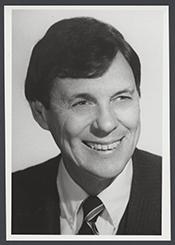
Historical · U.S. House · South Carolina · District 1
Arthur Ravenel Jr.
Former U.S. Representative · South Carolina District 1 · 1987–1995 · Republican
Arthur Ravenel Jr. represented South Carolina's District 1 in the United States House of Representatives (1987–1995) for the Republican party. The page below collects sourced biographical facts, term history, committee roles, and provenance for Jr..
Bioguide ID: R000072
Key facts
- Full name
- Arthur Ravenel Jr.
- State
- South Carolina
- District
- District 1
- Party
- Republican
- House service
- 1987–1995
- First House term
- 1987
- Status
- Left office
- Current term ends
- —
- Born
- 1927
- Bioguide ID
- R000072
- Committee assignments
- —
- Dataset version
- 1.20260605
Biographical narrative
815 words · sourced from the Wikipedia REST extract
Arthur Ravenel Jr. was an American businessman and politician who served as a Republican U.S. Representative for South Carolina's 1st congressional district from 1987 until 1995. His political career spanned several decades, during which he held various elected positions, including a term in the South Carolina Senate. Ravenel was known for his focus on constituent services during his time in Congress and was involved in several notable projects, including the funding for a major bridge in Charleston that bears his name.
Early life and career
Arthur Ravenel Jr. was born on March 29, 1927, in Charleston, South Carolina, to Arthur Ravenel Sr. and Mary Allen Boykin. His early life was marked by the significant historical context of World War II. In the final years of the conflict, he enlisted in the United States Marine Corps, serving from 1945 to 1946. Following his military service, Ravenel pursued higher education and earned a Bachelor of Science degree from the College of Charleston in 1950. After completing his education, he entered the business world as a realtor and general contractor, establishing a foundation for his future endeavors in both business and politics.
Ravenel's political career began at a young age when he was elected to the South Carolina House of Representatives as a Democrat at the age of 25. He served in this capacity from 1953 to 1959. However, in 1960, he switched his political affiliation to the Republican Party, a move that would shape his future political trajectory. Throughout the 1960s and 1970s, Ravenel sought various political offices, including multiple attempts to secure a seat in the South Carolina State Senate and a bid for the U.S. House of Representatives in a special election in 1971. Despite these efforts, he faced several electoral defeats, including a run for mayor of Charleston in the same year.
House tenure
Ravenel's political fortunes changed in the 1980s when he was elected to the South Carolina Senate in 1980, serving until 1986. His tenure in the state Senate positioned him for a successful run for the U.S. House of Representatives, where he was elected to represent South Carolina's 1st congressional district in 1986. This district, which encompasses Charleston and surrounding areas, became open when the incumbent, Tommy Hartnett, opted to run for lieutenant governor.
Ravenel's congressional career began in 1987 and lasted for four terms, concluding in 1995. During his time in the House, he was known for his focus on constituent services rather than for sponsoring a significant amount of legislation. His approach to governance emphasized direct engagement with the needs of his constituents, which contributed to his electoral success. Ravenel was reelected three additional times with relative ease, facing little serious opposition during his campaigns.
In 1994, Ravenel chose not to seek reelection to Congress, instead opting to run for governor of South Carolina. He finished second in the Republican primary to David Beasley, a state representative who was considered more conservative. Beasley subsequently won the general election.
Legislative focus and committees
Throughout his time in Congress, Ravenel's legislative focus was primarily on serving the needs of his constituents rather than on introducing or sponsoring a high volume of legislation. His commitment to constituent services was a hallmark of his tenure, as he prioritized addressing local issues and concerns. This approach resonated with voters in his district, contributing to his electoral success.
Ravenel's most notable legislative achievement was his advocacy for funding a new bridge between Charleston and Mount Pleasant. The existing bridges, the John P. Grace Memorial Bridge and the Silas N. Pearman Bridge, were nearing the end of their useful lives and had been criticized for safety concerns. His efforts in securing funding for the new bridge led to the structure being named the Arthur Ravenel Jr. Bridge, a decision that sparked some controversy. Critics argued that the bridge should not be named after a living individual, while supporters recognized Ravenel's role in facilitating the project.
After his congressional career, Ravenel returned to state politics, being elected to the South Carolina Senate in 1996, where he served until 2005. He later made a comeback in 2006, winning a seat on the Charleston County school board at the age of 79. His political legacy continued through his family, as his son, Thomas Ravenel, was elected state treasurer in the same election.
Ravenel's career was not without controversy. He faced criticism for comments he made regarding race and the NAACP, as well as for his association with certain groups. Despite these controversies, he remained a prominent figure in South Carolina politics until his passing.
Arthur Ravenel Jr. passed away on January 16, 2023, at the age of 95 in Charleston, South Carolina. He was laid to rest at the cemetery of Huguenot Church in Charleston, leaving behind a complex legacy marked by both his contributions to public service and the controversies that accompanied his political career.
Notable legislation
Sponsored and co-sponsored legislation for Arthur Ravenel Jr. is pending operator curation. The biographical narrative above carries the same provenance trail until per-bill rows are written.
Sources
- [1]https://en.wikipedia.org/wiki/Arthur_Ravenel_Jr.Wikipedia · retrieved 2026-06-05
Notable quotes
Sourced quotes for Arthur Ravenel Jr. are pending operator curation. Narrative-scope provenance remains attached below.
Sources
- [1]https://en.wikipedia.org/wiki/Arthur_Ravenel_Jr.Wikipedia · retrieved 2026-06-05
Key positions
Curated policy positions for Arthur Ravenel Jr. are pending operator review. The biographical narrative above carries the same provenance trail until per-topic positions are written.
Sources
- [1]https://en.wikipedia.org/wiki/Arthur_Ravenel_Jr.Wikipedia · retrieved 2026-06-05
Terms served
- 1987–1989U.S. House · Term 1 · Republican
- 1989–1991U.S. House · Term 2 · Republican
- 1991–1993U.S. House · Term 3 · Republican
- 1993–1995U.S. House · Term 4 · Republican
Sources & provenance
Every attributable claim above carries a per-section [N] marker that resolves to the corresponding URL below. Each entry records the upstream provider, the canonical URL, and the timestamp at which the source was retrieved by the ingest pipeline.
Key facts
- https://bioguide.congress.gov/search/bio/R000072bioguide · retrieved 2026-06-05
- https://www.govtrack.us/congress/members/409052govtrack · retrieved 2026-06-05
Biographical narrative
- https://en.wikipedia.org/wiki/Arthur_Ravenel_Jr.wikipedia · retrieved 2026-06-05
Find your representative
Every U.S. state elects representatives by district. Browse South Carolina’s delegation, the full former-representative roster, or explore the role and term length.
Related on The Candidate
- Preceded by Thomas HartnettEarlier holder of the South Carolina District 1 House seat · Republican.Open
- Succeeded by Mark SanfordLater holder of the South Carolina District 1 House seat · Republican.Open
- Benjamin WhittemoreFormer U.S. Representative · South Carolina District 1 · RepublicanOpen
- Clara McMillanFormer U.S. Representative · South Carolina District 1 · DemocraticOpen
- Daniel WallaceFormer U.S. Representative · South Carolina District 1 · DemocraticOpen
- George MurrayFormer U.S. Representative · South Carolina District 1 · RepublicanOpen