
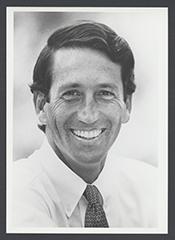
Historical · U.S. House · South Carolina · District 1
Mark Sanford
Former U.S. Representative · South Carolina District 1 · 1995–2019 · Republican
Mark Sanford represented South Carolina's District 1 in the United States House of Representatives (1995–2019) for the Republican party. The page below collects sourced biographical facts, term history, committee roles, and provenance for Sanford.
Bioguide ID: S000051
Key facts
- Full name
- Mark Sanford
- State
- South Carolina
- District
- District 1
- Party
- Republican
- House service
- 1995–2019
- First House term
- 1995
- Status
- Left office
- Current term ends
- —
- Born
- 1960
- Bioguide ID
- S000051
- Committee assignments
- —
- Dataset version
- 1.20260605
Biographical narrative
882 words · sourced from the Wikipedia REST extract
Marshall Clement "Mark" Sanford Jr. is an American politician and author who served as a U.S. Representative for South Carolina's 1st congressional district from 1995 to 2001 and again from 2013 to 2019. A member of the Republican Party, Sanford also held the office of the 115th governor of South Carolina from 2003 to 2011. His political career has been marked by a commitment to fiscal conservatism, as well as notable personal controversies that have shaped public perception of his tenure in office.
Early life and career
Mark Sanford was born on May 28, 1960, in Fort Lauderdale, Florida, to Marshall Clement Sanford, a cardiothoracic surgeon, and Margaret Elise "Peggy" Pitz. Growing up in a relatively affluent family, Sanford experienced a unique upbringing that included sleeping in the same room with his family to conserve electricity. This early experience may have contributed to his later focus on fiscal responsibility in politics. Before his senior year of high school, Sanford's family relocated to Coosaw Plantation, a 3,000-acre estate near Beaufort, South Carolina.
Sanford's early achievements included attaining the rank of Eagle Scout in the Boy Scouts of America, which reflects his commitment to community service and leadership from a young age. He pursued higher education at Furman University, where he earned a Bachelor of Arts degree in business in 1983. He later obtained a Master of Business Administration degree from the Darden Graduate School of Business Administration at the University of Virginia in 1988.
In 1992, Sanford founded Norton and Sanford Real Estate Investment, a company focused on leasing and brokerage services. His business background provided him with insights into economic issues that would later inform his political career. In November 1989, he married Jenny Sullivan, and the couple had four sons together.
House tenure
Sanford's political career began in earnest when he entered the Republican primary for South Carolina's 1st congressional district in 1994. The seat became available after four-term incumbent Arthur Ravenel opted not to seek re-election. Despite being a newcomer to politics, Sanford finished second in a crowded primary field, ultimately defeating Van Hipp Jr. in a runoff. He then won the general election against Democratic state representative Robert A. Barber Jr. with a significant margin, securing 66.3% of the vote.
During his first term in Congress from 1995 to 2001, Sanford was recognized for his strong fiscal conservatism. He was acknowledged by the Cato Institute as the most fiscally conservative member of Congress and received accolades from organizations such as Citizens Against Government Waste and the National Taxpayers Union for his efforts to reduce government spending and the national deficit. His voting record reflected a commitment to these principles, as he often opposed legislation that received broad bipartisan support, including a bill aimed at preserving sites associated with the Underground Railroad. Notably, he also voted against a defense appropriations bill that included funding for Charleston's harbor, demonstrating his willingness to prioritize fiscal responsibility over local interests.
Sanford's tenure in the House was characterized by his self-identification as a "citizen-legislator," which influenced his decision not to seek re-election in 2000. He adhered to a personal commitment to serve only three terms in the House, a promise that shaped his approach to public service.
During his time in Congress, Sanford served on several committees, including the Committee on International Relations, the Committee on Government Reform, the Committee on Science, and the Joint Economic Committee. These roles allowed him to engage with a variety of national and international issues, further developing his legislative expertise.
Legislative focus and committees
Throughout his congressional career, Sanford's legislative focus was primarily on fiscal conservatism and government accountability. His commitment to reducing government spending and the national deficit was a hallmark of his time in office, earning him a lifetime rating of 92 from the American Conservative Union. His approach often led him to take positions that diverged from the majority, as he consistently voted against pork barrel projects, even when they would have benefited his own district.
Sanford's committee assignments provided him with a platform to influence policy on a range of issues. As a member of the Committee on International Relations, he engaged with foreign policy matters, while his role on the Committee on Government Reform allowed him to address issues related to government efficiency and accountability. His participation in the Committee on Science underscored his interest in technological and scientific advancements, and his work on the Joint Economic Committee reflected his focus on economic policy.
After leaving Congress in 2001, Sanford transitioned to the role of governor of South Carolina, serving from 2003 to 2011. He returned to Congress in 2013, winning a special election to reclaim his former seat. His second tenure lasted until 2019, when he lost a Republican primary for re-election. Following his congressional career, Sanford announced his candidacy for the Republican nomination in the 2020 presidential election but withdrew from the race later that year.
In March 2026, Sanford filed to run for the U.S. House of Representatives again for South Carolina's 1st congressional district but subsequently withdrew from the race to focus on addressing national debt issues. Throughout his political journey, Sanford has remained a figure of interest due to his fiscal policies and personal controversies, which have shaped his legacy in South Carolina and beyond.
Notable legislation
Sponsored and co-sponsored legislation for Mark Sanford is pending operator curation. The biographical narrative above carries the same provenance trail until per-bill rows are written.
Sources
- [1]https://en.wikipedia.org/wiki/Mark_SanfordWikipedia · retrieved 2026-06-05
Notable quotes
Sourced quotes for Mark Sanford are pending operator curation. Narrative-scope provenance remains attached below.
Sources
- [1]https://en.wikipedia.org/wiki/Mark_SanfordWikipedia · retrieved 2026-06-05
Key positions
Curated policy positions for Mark Sanford are pending operator review. The biographical narrative above carries the same provenance trail until per-topic positions are written.
Sources
- [1]https://en.wikipedia.org/wiki/Mark_SanfordWikipedia · retrieved 2026-06-05
Terms served
- 1995–1997U.S. House · Term 1 · Republican
- 1997–1999U.S. House · Term 2 · Republican
- 1999–2001U.S. House · Term 3 · Republican
- 2013–2015U.S. House · Term 4 · Republican
- 2015–2017U.S. House · Term 5 · Republican
- 2017–2019U.S. House · Term 6 · Republican
Sources & provenance
Every attributable claim above carries a per-section [N] marker that resolves to the corresponding URL below. Each entry records the upstream provider, the canonical URL, and the timestamp at which the source was retrieved by the ingest pipeline.
Key facts
- https://bioguide.congress.gov/search/bio/S000051bioguide · retrieved 2026-06-05
- https://sanford.house.govhouse.gov · retrieved 2026-06-05
Biographical narrative
- https://en.wikipedia.org/wiki/Mark_Sanfordwikipedia · retrieved 2026-06-05
Find your representative
Every U.S. state elects representatives by district. Browse South Carolina’s delegation, the full former-representative roster, or explore the role and term length.
Related on The Candidate
- Preceded by Arthur Ravenel Jr.Earlier holder of the South Carolina District 1 House seat · Republican.Open
- Succeeded by Joe CunninghamLater holder of the South Carolina District 1 House seat · Democratic.Open
- Benjamin WhittemoreFormer U.S. Representative · South Carolina District 1 · RepublicanOpen
- Clara McMillanFormer U.S. Representative · South Carolina District 1 · DemocraticOpen
- Daniel WallaceFormer U.S. Representative · South Carolina District 1 · DemocraticOpen
- Republican PartyFederal candidates and office holders on the Republican line.Open