
Historical · U.S. House · South Carolina · District 1
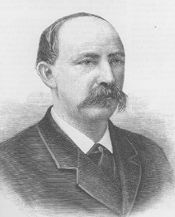
Samuel Dibble
Former U.S. Representative · South Carolina District 1 · 1881–1891 · Democratic
Samuel Dibble represented South Carolina's District 1 in the United States House of Representatives (1881–1891) for the Democratic party. The page below collects sourced biographical facts, term history, committee roles, and provenance for Dibble.
Bioguide ID: D000300
Key facts
- Full name
- Samuel Dibble
- State
- South Carolina
- District
- District 1
- Party
- Democratic
- House service
- 1881–1891
- First House term
- 1881
- Status
- Left office
- Current term ends
- —
- Born
- 1837
- Bioguide ID
- D000300
- Committee assignments
- —
- Dataset version
- 1.20260606
Biographical narrative
908 words · sourced from the Wikipedia REST extract
Samuel Dibble was a prominent figure in South Carolina's political landscape during the late 19th century, serving as a U.S. Representative for the state’s 1st congressional district. A member of the Democratic Party, he held office during a transformative period in American history, marked by the aftermath of the Civil War and the Reconstruction era. His career spanned five terms in the U.S. House of Representatives, where he engaged in various legislative activities and contributed to the governance of his state.
Early life and career
Samuel Dibble was born on September 16, 1837, in Charleston, South Carolina. He was the eldest son of Philander Virgil Dibble and Frances Ann Evans Dibble. His family had roots in both Connecticut and South Carolina; his father and uncle had moved from Bethel, Connecticut, to Charleston, where they established a business as hatters. Dibble's maternal lineage included French Huguenot and English ancestry, linking him to early colonial settlers. He was a direct descendant of Thomas Dibble, an early Puritan migrant to New England, who played a role in founding Windsor, Connecticut, in the 17th century.
Dibble's early education took place in both Bethel and Charleston, where he pursued a rigorous academic curriculum. He began his higher education at the College of Charleston in 1853, studying there for two years before transferring to Wofford College in Spartanburg, South Carolina. He graduated with an A.B. degree in July 1856, becoming the first graduate of Wofford College under the presidency of Rev. William M. Wightman. During his time at Wofford, he was an active member of the Calhoun Literary Society. Following his graduation, he received an honorary degree of LL.D. from the same institution.
After completing his education, Dibble embarked on a career in education, teaching at Shilow Academy and Pine Grove Academy in Orangeburg District from 1856 to 1857. He also served as an assistant teacher in the preparatory department at Wofford College in the spring of 1858. Simultaneously, he pursued legal studies under notable attorneys in Spartanburg and Charleston, ultimately gaining admission to the bar in December 1859. He began practicing law in Orangeburg, South Carolina, in January 1860.
Dibble's legal career was interrupted by the Civil War, during which he served in the Confederate States Army. He enlisted as a private in the Edisto Rifles, part of the First Regiment of South Carolina Volunteers, and rose to the rank of first lieutenant. His military service included participation in significant campaigns within the Army of Northern Virginia.
House tenure
Dibble's political career began after the Civil War when he was elected to the South Carolina House of Representatives in 1877 and 1878. He also served as a trustee for the University of South Carolina in 1878 and was a member of the Board of School Commissioners for Orangeburg County. His involvement in state politics laid the groundwork for his later congressional career.
In 1880, Dibble was a delegate to the Democratic National Convention, further solidifying his political connections. He first entered the U.S. House of Representatives in 1881, filling a vacancy created by the death of Michael P. O'Connor. His initial term lasted from June 9, 1881, to May 31, 1882, when the seat was ultimately awarded to another candidate, Edmund W.M. Mackey, following a contest.
Dibble returned to Congress after winning election to the Forty-eighth Congress, serving from March 4, 1883, until March 3, 1891. Throughout his tenure, he was involved in various legislative activities and served as the chairman of the Committee on Public Buildings and Grounds during the Forty-ninth and Fiftieth Congresses. His leadership in this committee allowed him to influence decisions regarding federal infrastructure and public works.
Despite his active role in Congress, Dibble chose not to seek reelection in 1890, concluding his five terms in the House. His decision to step away from electoral politics marked the end of a significant chapter in his public service.
Legislative focus and committees
During his time in the House of Representatives, Samuel Dibble's legislative focus encompassed a range of issues pertinent to his constituents and the broader national context. As a member of the Democratic Party, he aligned with the party's priorities, which often included matters related to states' rights, economic development, and infrastructure improvements. His role as chairman of the Committee on Public Buildings and Grounds highlighted his commitment to enhancing public facilities and managing federal properties.
Dibble's congressional career was not without controversy. He was involved in a notable incident in 1889 when he petitioned for the pardon of three black men convicted of lynching a white man. His position on this matter reflected the complex social dynamics of the time and the contentious issues surrounding race and justice in the post-Reconstruction South.
After leaving Congress, Dibble continued to engage in various business ventures, particularly in banking, in Orangeburg, South Carolina. His later years were marked by a return to private life, where he remained active in local affairs until his death on September 16, 1913, coinciding with his 76th birthday. He was interred in Sunny Side Cemetery in Orangeburg, South Carolina, leaving behind a legacy intertwined with the political and social history of his time.
Samuel Dibble's life and career encapsulate the experiences of a Southern politician navigating the complexities of a changing nation during the late 19th century. His contributions to education, law, and politics reflect a commitment to public service and the challenges faced by leaders in the aftermath of the Civil War.
Notable legislation
Sponsored and co-sponsored legislation for Samuel Dibble is pending operator curation. The biographical narrative above carries the same provenance trail until per-bill rows are written.
Sources
- [1]https://en.wikipedia.org/wiki/Samuel_DibbleWikipedia · retrieved 2026-06-06
Notable quotes
Sourced quotes for Samuel Dibble are pending operator curation. Narrative-scope provenance remains attached below.
Sources
- [1]https://en.wikipedia.org/wiki/Samuel_DibbleWikipedia · retrieved 2026-06-06
Key positions
Curated policy positions for Samuel Dibble are pending operator review. The biographical narrative above carries the same provenance trail until per-topic positions are written.
Sources
- [1]https://en.wikipedia.org/wiki/Samuel_DibbleWikipedia · retrieved 2026-06-06
Terms served
- 1881–1883U.S. House · Term 1 · Democratic
- 1883–1885U.S. House · Term 2 · Democratic
- 1885–1887U.S. House · Term 3 · Democratic
- 1887–1889U.S. House · Term 4 · Democratic
- 1889–1891U.S. House · Term 5 · Democratic
Sources & provenance
Every attributable claim above carries a per-section [N] marker that resolves to the corresponding URL below. Each entry records the upstream provider, the canonical URL, and the timestamp at which the source was retrieved by the ingest pipeline.
Key facts
- https://bioguide.congress.gov/search/bio/D000300bioguide · retrieved 2026-06-06
- https://www.govtrack.us/congress/members/403422govtrack · retrieved 2026-06-06
Biographical narrative
- https://en.wikipedia.org/wiki/Samuel_Dibblewikipedia · retrieved 2026-06-06
Find your representative
Every U.S. state elects representatives by district. Browse South Carolina’s delegation, the full former-representative roster, or explore the role and term length.
Related on The Candidate
- Preceded by Joseph RaineyEarlier holder of the South Carolina District 1 House seat · Republican.Open
- Succeeded by William BrawleyLater holder of the South Carolina District 1 House seat · Democratic.Open
- Arthur Ravenel Jr.Former U.S. Representative · South Carolina District 1 · RepublicanOpen
- Benjamin WhittemoreFormer U.S. Representative · South Carolina District 1 · RepublicanOpen
- Clara McMillanFormer U.S. Representative · South Carolina District 1 · DemocraticOpen
- Daniel WallaceFormer U.S. Representative · South Carolina District 1 · DemocraticOpen