
Historical · U.S. House · South Carolina · District 1
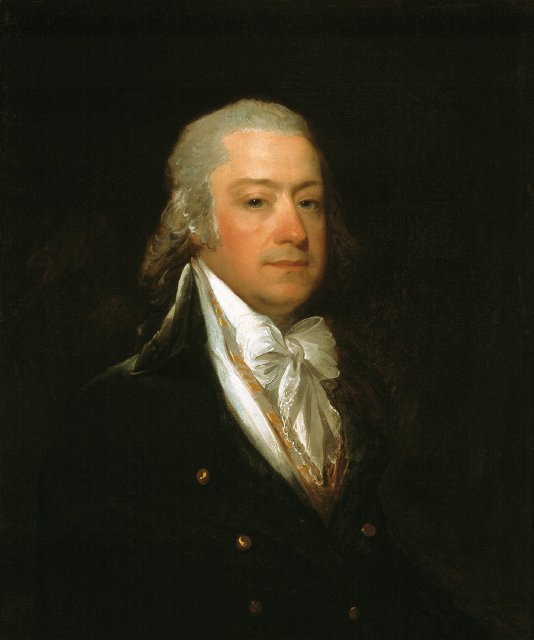
William Smith
Former U.S. Representative · South Carolina District 1 · 1789–1799 · Federalist
William Smith represented South Carolina's District 1 in the United States House of Representatives (1789–1799) for the Federalist party. The page below collects sourced biographical facts, term history, committee roles, and provenance for Smith.
Bioguide ID: S000633
Key facts
- Full name
- William Smith
- State
- South Carolina
- District
- District 1
- Party
- Federalist
- House service
- 1789–1799
- First House term
- 1789
- Status
- Left office
- Current term ends
- —
- Born
- —
- Bioguide ID
- S000633
- Committee assignments
- —
- Dataset version
- 1.20260606
Biographical narrative
958 words · sourced from the Wikipedia REST extract
William Smith was a prominent American lawyer, politician, and diplomat from Charleston, South Carolina. He served as a U.S. Representative for South Carolina's 1st congressional district from 1789 until 1797, representing the Federalist Party. Throughout his political career, Smith held various significant positions, including chairing the Committee on Ways and Means. His tenure in Congress was marked by his close collaboration with key figures of the time, including Treasury Secretary Alexander Hamilton. After resigning from Congress, he served as the United States Ambassador to Portugal before returning to South Carolina, where he continued to engage in public service until his death in 1812.
Early life and career
William Smith was born in 1758 in Charles Town, which was part of the Province of South Carolina. He was the son of Benjamin Smith and Anne Loughton. His father was a successful importer of British luxury goods, which allowed the family to enjoy a comfortable lifestyle. This wealth enabled Smith to pursue an education in Europe, where he studied law at the Middle Temple in London starting in 1774. He later continued his legal studies in Geneva until 1778, remaining abroad for the duration of the American Revolutionary War.
After returning to South Carolina in 1783, Smith was admitted to the bar in 1784 and began practicing law in Charleston. He quickly gained a reputation as one of the most skilled lawyers in the area. His legal acumen and public service began to intersect when he became a member of the South Carolina privy council in 1784. In 1786, he was elected as warden of the city of Charleston, a role akin to a modern city council member. His political career continued to develop when he served in the South Carolina House of Representatives from 1787 to 1788.
Smith was known for his strong support of George Washington and the Federalist principles. In 1788, he was elected as a Pro-Administration candidate to represent South Carolina's 1st congressional district in the First Congress. His election was contested by David Ramsey, who argued that Smith did not meet the constitutional requirement of being a U.S. citizen for seven years, as he had only returned to the United States in 1783. This case marked the first instance of Congress exercising its authority to judge the qualifications of its members, and ultimately, Smith was deemed qualified.
House tenure
William Smith's congressional career began in 1789, and he served a total of five terms in the House of Representatives, concluding his last term on March 3, 1799. During his time in Congress, he was reelected multiple times, first to the Second and Third Congresses and later to the Fourth and Fifth Congresses as a member of the Federalist Party. His political influence grew as he took on leadership roles, including chairing the Committee on Elections during the Third Congress and the Committee on Ways and Means during the Fourth and Fifth Congresses.
As chair of the Committee on Ways and Means, Smith became a significant figure in the Federalist Party and worked closely with Treasury Secretary Alexander Hamilton. He was instrumental in advocating for fiscal policies that aligned with Hamilton's vision for the nation's economy. Smith's leadership in this committee positioned him as a key spokesperson for the Federalist agenda in the House.
In addition to his legislative duties, Smith accompanied President Washington on tours of various states, including Rhode Island and the Southern states, further solidifying his role as a prominent political figure during the early years of the republic. His tenure in Congress was characterized by a focus on strengthening the federal government and promoting economic stability.
On July 10, 1797, Smith resigned from Congress to accept the position of United States Ambassador to Portugal. He held this diplomatic role until September 9, 1801, when he was recalled. Following his return to Charleston, Smith attempted to re-enter politics by running for Congress in 1804, 1806, and 1808, but he was unsuccessful in these elections, losing to the Democratic-Republican candidate Robert Marion.
Legislative focus and committees
Throughout his time in the House of Representatives, William Smith's legislative focus reflected the priorities of the Federalist Party and the broader concerns of the early United States. He was particularly active in matters related to national defense and fiscal policy. In a special session of Congress called by President John Adams in 1797, Smith introduced ten resolutions aimed at enhancing naval defense and fortifying coastal defenses in response to tensions with France.
Smith's political views were complex and evolved over time. Initially, he was a staunch opponent of the emancipation of slaves, arguing that it would not benefit either race and expressing concerns about the implications of intermarriage between blacks and whites. His views on slavery were reflective of the prevailing attitudes of many of his contemporaries, and he articulated these beliefs during debates in the House.
By 1808, Smith's political alignment began to shift. He moved away from his earlier support of Hamilton's policies and started to embrace the ideas of Thomas Jefferson, particularly in relation to the Embargo Act of 1807, which aimed to promote American self-sufficiency by restricting trade with foreign nations.
In addition to his legislative work, Smith was involved in various civic organizations after his political career. He served as president of the Santee Canal Company and held vice-presidential roles in the Charleston Library Society and the St. Cecilia Society. His contributions to both politics and civic life in South Carolina left a lasting impact on the community.
William Smith passed away on December 19, 1812, in Charleston, South Carolina, after suffering from an illness. He was buried in St. Philip's Churchyard, leaving behind a legacy as a significant figure in the early political landscape of the United States.
Notable legislation
Sponsored and co-sponsored legislation for William Smith is pending operator curation. The biographical narrative above carries the same provenance trail until per-bill rows are written.
Sources
- [1]https://en.wikipedia.org/wiki/William_Loughton_SmithWikipedia · retrieved 2026-06-06
Notable quotes
Sourced quotes for William Smith are pending operator curation. Narrative-scope provenance remains attached below.
Sources
- [1]https://en.wikipedia.org/wiki/William_Loughton_SmithWikipedia · retrieved 2026-06-06
Key positions
Curated policy positions for William Smith are pending operator review. The biographical narrative above carries the same provenance trail until per-topic positions are written.
Sources
- [1]https://en.wikipedia.org/wiki/William_Loughton_SmithWikipedia · retrieved 2026-06-06
Terms served
- 1789–1791U.S. House · Term 1 · Federalist
- 1791–1793U.S. House · Term 2 · Federalist
- 1793–1795U.S. House · Term 3 · Federalist
- 1795–1797U.S. House · Term 4 · Federalist
- 1797–1799U.S. House · Term 5 · Federalist
Sources & provenance
Every attributable claim above carries a per-section [N] marker that resolves to the corresponding URL below. Each entry records the upstream provider, the canonical URL, and the timestamp at which the source was retrieved by the ingest pipeline.
Key facts
- https://bioguide.congress.gov/search/bio/S000633bioguide · retrieved 2026-06-06
- https://www.govtrack.us/congress/members/410107govtrack · retrieved 2026-06-06
Biographical narrative
- https://en.wikipedia.org/wiki/William_Loughton_Smithwikipedia · retrieved 2026-06-06
Find your representative
Every U.S. state elects representatives by district. Browse South Carolina’s delegation, the full former-representative roster, or explore the role and term length.
Related on The Candidate
- Succeeded by Thomas LowndesLater holder of the South Carolina District 1 House seat · Federalist.Open
- Arthur Ravenel Jr.Former U.S. Representative · South Carolina District 1 · RepublicanOpen
- Benjamin WhittemoreFormer U.S. Representative · South Carolina District 1 · RepublicanOpen
- Clara McMillanFormer U.S. Representative · South Carolina District 1 · DemocraticOpen
- Daniel WallaceFormer U.S. Representative · South Carolina District 1 · DemocraticOpen
- Representatives from South CarolinaEvery former U.S. Representative who has represented South Carolina.Open